

Youth Climate advocate Oriana Wouters urges IPKO to shift from “reactive policy” to anticipatory governance
.jpg)
ORANJESTAD, Aruba--Climate advocate Oriana Wouters used her speaking time at the Interparliamentary Kingdom Consultation (IPKO) to call for stronger, more structured Kingdom-wide action on climate adaptation, arguing that climate change is no longer a distant risk but “governance in real time” with direct consequences for public health, economic stability, and fundamental rights.
Wouters’ appearance followed a formal request by youth representatives (herself included) from the Dutch Caribbean climate network asking the parliaments of Aruba, Curaçao, and St. Maarten to place climate adaptation on the IPKO agenda, including consideration of recent jurisprudence linked to the Bonaire climate case.
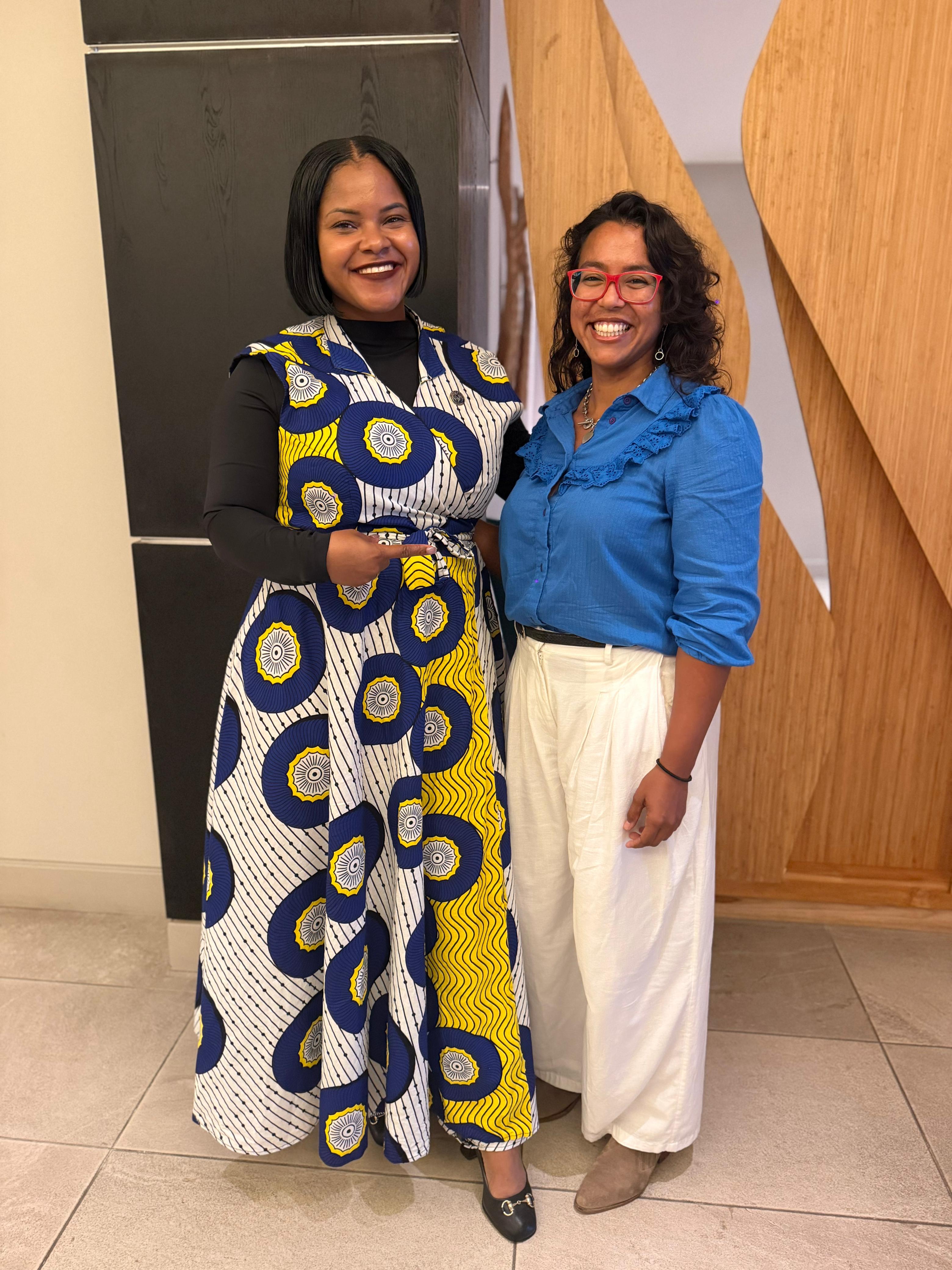
Wouters, speaking as both an Aruban advocate and a representative of the Dutch Caribbean Climate and Social Justice Group, said the network emerged after a climate justice camp in St. Maarten in 2024 and now includes representation from all six Caribbean islands, Bonaire, Curaçao, St. Maarten, Saba, St. Eustatius, and Aruba, as well as members of the diaspora in Netherlands and beyond. She said the group began with 15 individuals and has since grown to 51 members.
According to Wouters, the network includes biologists, lawyers, renewable energy engineers, policy experts, cultural practitioners, communication specialists, and community organizers who meet monthly, form working groups, and share expertise to amplify each other’s work across the Dutch Caribbean. She emphasized that the group’s purpose is collaborative, not adversarial, describing it as “not against the Kingdom, but for a stronger Kingdom.”
Projections and on-the-ground impacts
Wouters cited projections she attributed to the Royal Dutch Institute of Meteorology and an international coastal and delta scenarios body, stating that Aruba could be between 0.8°C and 1.3°C warmer by 2050, with warming potentially rising to 3.3°C by 2100. She said Aruba’s heat season, once concentrated in about three months, is projected to expand to seven months, and she argued that residents already experience something closer to five months.
On rainfall, she said Aruba currently receives about 500 millimeters annually, but under high-emissions scenarios, this could fall to below 300 millimeters, intensifying drought conditions. She also warned that sea level rise could approach one meter by 2100 for Aruba.
Wouters stressed that these figures translate into real vulnerabilities across the Caribbean parts of the Kingdom, pointing to risks faced by elderly residents without adequate cooling, and to athletes exposed to extreme heat on synthetic turf during midday play. She said the Caribbean islands face compounding risks in three areas: declining ecosystem health, changing demographic patterns including an aging population, and the fragility of tourism-dependent economies.
To illustrate the “slow burn” nature of climate impacts, she compared current development trends to driving a car without motor oil, a situation that can appear manageable for a time but eventually results in severe damage.
Climate adaptation framed as rights, governance, and Kingdom responsibility
Wouters highlighted the recent Bonaire climate case as a key development shaping the legal and policy landscape, saying it elevated an important principle about Kingdom responsibility. She referenced Article 43 of the Kingdom Charter, stating that safeguarding fundamental rights, legal certainty, and good governance is a Kingdom matter, and argued that inadequate protection from climate impacts can amount to a human rights issue.
She said the case reflects a deeper structural challenge: Caribbean islands contribute minimally to global emissions yet face disproportionate impacts, while their constitutional position limits direct access to climate finance, negotiation capacity, participation in loss-and-damage frameworks, and predictable adaptation funding flows.
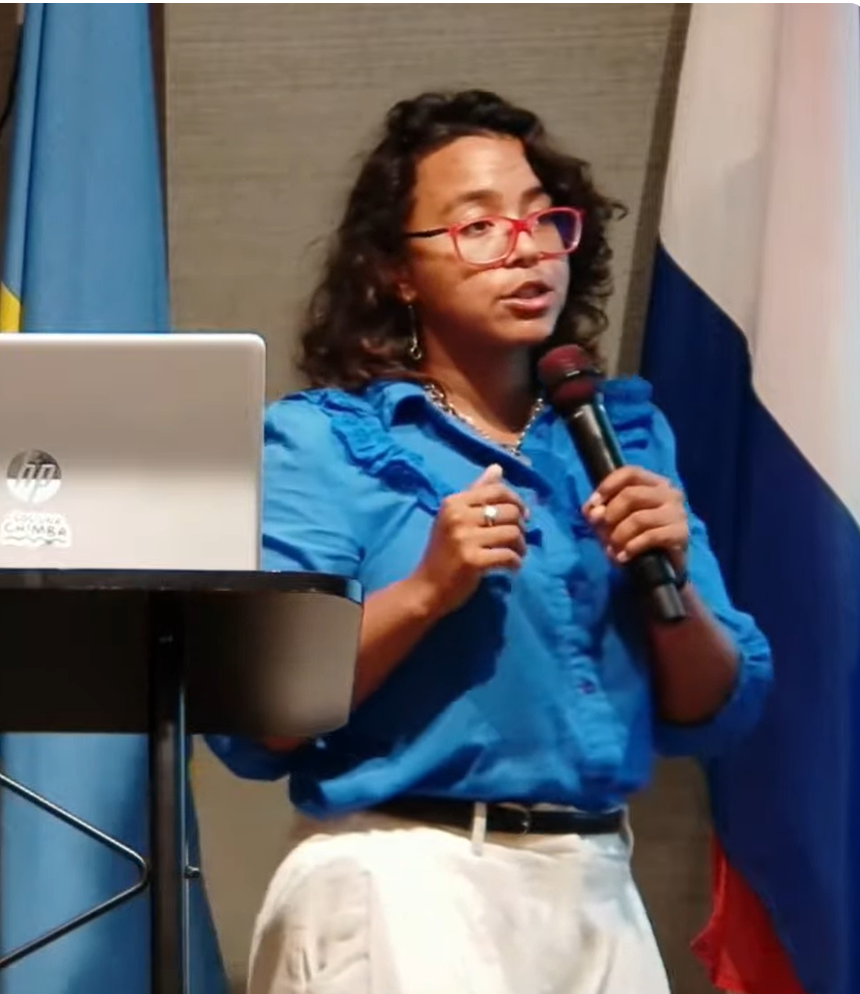
Wouters argued that youth inclusion has too often been ad hoc, noting that youth participation in international processes is sometimes self-funded or inconsistently integrated, even though climate impacts are consistent and region-wide. She urged more predictable mechanisms that allow youth expertise and local knowledge to strengthen policymaking.
Participation, capacity, and financing
Addressing recurring concerns about implementation capacity, Wouters said capacity “is not built by exclusion,” and called for predictable financing, stronger data infrastructure, institutional continuity, and co-development with local experts.
She pointed to examples where structured space for participation improved engagement, including involvement linked to the Dutch Kingdom’s submission to the International Court of Justice (International Court of Justice) process on state obligations in climate change, which she said included targeted learning and support for youth participants.
Wouters also described earlier engagement with Aruba’s government, saying doors were opened when youth and community experts came forward, and that this helped broaden engagement across Curaçao and St. Maarten while reframing climate adaptation from a distant policy topic into a present-day obligation.
A concrete policy proposal: climate as cultural heritage protection
Among her practical recommendations, Wouters urged members of Parliament in the Netherlands to review existing funding frameworks, specifically suggesting that climate mitigation and climate adaptation be made explicit eligible objectives within cultural funds.
She argued that for Caribbean islands, natural and cultural heritage are inseparable from economic survival, noting that the islands hold much of the Kingdom’s biodiversity and that traditions tied to harvest cycles, coastal ecosystems, fisheries, and tourism depend on climate stability. She also emphasized that coral reefs and mangroves play protective roles, reducing erosion and flooding risk, and that beaches and landscapes carry historic memory, including the legacies of deforestation that have shaped present vulnerabilities.
Wouters said recognizing climate action as part of cultural heritage protection would unlock community-based adaptation projects grounded in identity and stewardship, without, in her words, seeking “an extension of bureaucracy.”
Exchange on energy options, including nuclear
During the discussion that followed, a question was raised about nuclear power as part of future solutions, including smaller SMR-style units. Wouters responded that more local expertise would be needed, and she cautioned against repeating development models that treat health impacts and waste as externalities. She also noted that some adaptation measures are often dismissed as not “plug and play,” even though ecosystem protection can be essential to maintaining long-term tourism attractiveness and overall resilience.
Roseburg praises youth effort, urges preventive approach to Charter obligations
St. Maarten Member of Parliament Sjamira Roseburg publicly commended Wouters and the youth network for what she described as a bold step in asserting the need to “sit at the table,” while also underscoring the importance of reading Kingdom Charter provisions through a preventive lens.
Roseburg pointed to how Article 43 can be interpreted too narrowly if only the first part is emphasized, arguing that the Kingdom’s responsibilities often become clearer only after court intervention. She said the approach should be reversed, with earlier, preventive attention to obligations and risks.
Roseburg also gave special recognition to St. Maarten youth representative Riddhi Samtani for her ongoing work.