

The “Trump Corollary” to the Monroe Doctrine, and why Venezuela is suddenly central again
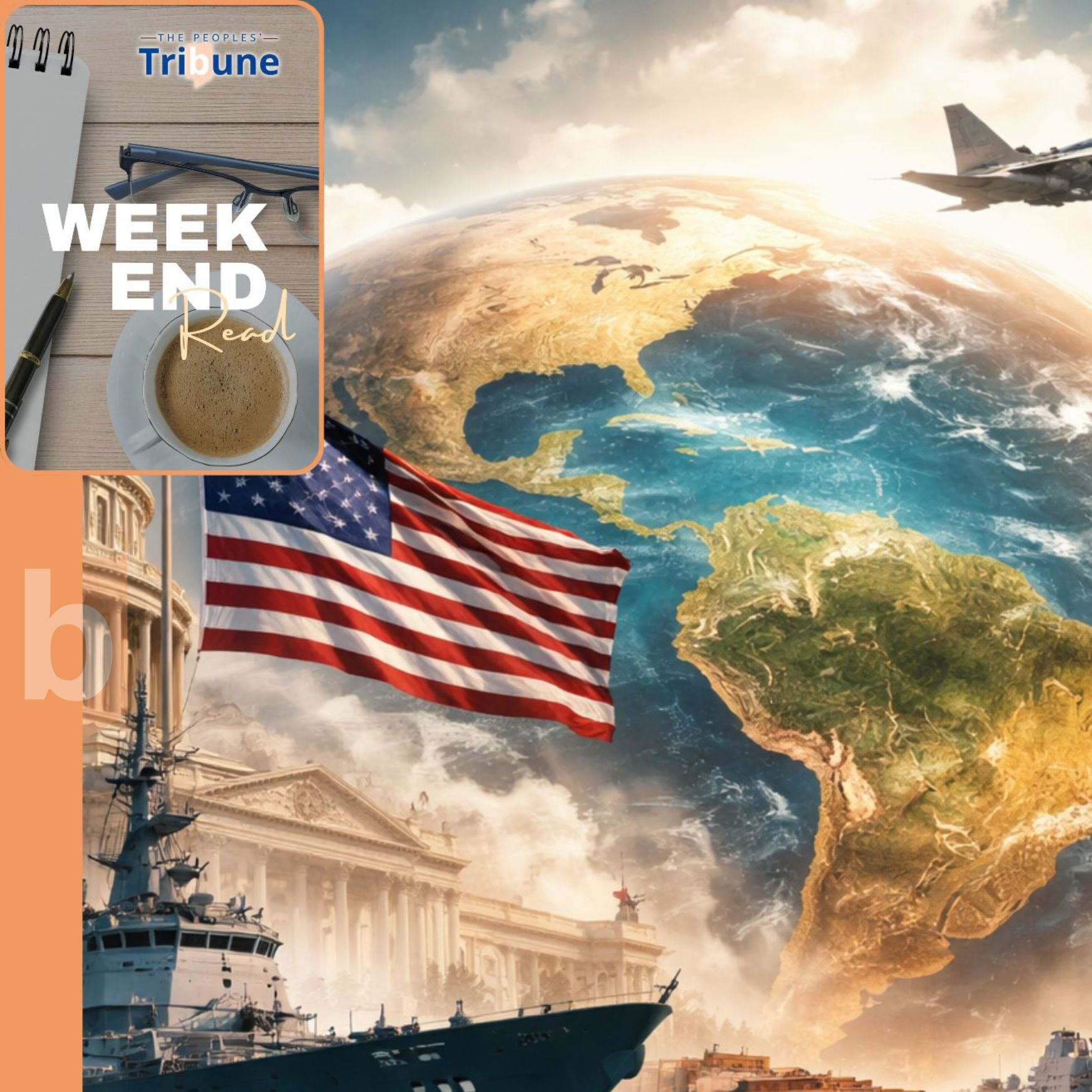
The White House’s 2025 National Security Strategy elevates the Western Hemisphere from a familiar talking point to a front-and-center organizing principle, framed explicitly as “A. Western Hemisphere: The Trump Corollary to the Monroe Doctrine.” What that subsection lays out is not a subtle tweak, it is a governing theory: U.S. security starts at home, and “home” begins with keeping the wider hemisphere stable, policed, economically aligned, and insulated from “non-hemispheric competitors” who might gain leverage through ports, infrastructure, strategic assets, or security footholds.
That framing matters because Venezuela sits at the intersection of nearly every priority the strategy lists: migration pressures, narcotics trafficking narratives, maritime control, energy geopolitics, and the question of outside influence in the Americas.
What the strategy actually says: reassert, deny, and condition
The subsection begins with an unambiguous thesis: the United States will “reassert and enforce” the Monroe Doctrine to restore “American preeminence” in the Western Hemisphere, protect the homeland, and preserve U.S. access to key geographies. It then defines a core operational intent: deny “non-Hemispheric competitors” the ability to position forces or threatening capabilities, or to own or control “strategically vital assets” in the hemisphere.
The strategy’s Western Hemisphere goals are summarized as “Enlist and Expand.”
“Enlist” means building a hemispheric enforcement network
Under “Enlist,” the strategy calls for recruiting “regional champions” to help create “tolerable stability,” including stopping “illegal and destabilizing migration,” neutralizing cartels, near-shoring manufacturing, and developing private economies. It also signals a political preference system: rewarding governments, parties, and movements “broadly aligned” with U.S. principles and strategy, while still working with governments that “want to work with us” even if their outlook differs.
The most operationally concrete part of “Enlist” is military and maritime posture. The strategy says the U.S. must “reconsider” its military presence in the hemisphere, listing four “obvious things”:
- a readjustment of global military presence toward hemispheric threats,
- a more suitable Coast Guard and Navy presence to control sea lanes and disrupt trafficking and “unwanted migration,”
- targeted deployments to secure the border and defeat cartels, including “where necessary the use of lethal force,”
- establishing or expanding access in strategically important locations.
Commercial diplomacy is treated as a security instrument
In the same breath, the strategy moves from guns and coast guards to tariffs and trade tools. It says the U.S. will prioritize “commercial diplomacy,” using tariffs and reciprocal trade agreements to strengthen U.S. industries while pushing partner nations to build their domestic economies. The logic is strategic: a more economically sophisticated hemisphere becomes a better market for U.S. commerce, and tighter hemispheric supply chains reduce dependencies while making it harder for outside competitors to grow influence.
Security partnerships are presented as the second track running alongside commerce: weapons sales, intelligence sharing, and joint exercises.
“Expand” is where the doctrine becomes conditionality
“Expand” is described as widening the U.S. network so other nations see Washington as “partner of first choice,” while the U.S. “discourage[s] their collaboration with others.” It then gets specific about how that is supposed to work:
- The National Security Council will launch an interagency process to identify “strategic points and resources” in the hemisphere for “protection and joint development” with partners.
- The “terms of our alliances” and “any kind of aid” should be contingent on winding down “adversarial outside influence,” including control of military installations, ports, key infrastructure, and purchases of “strategic assets broadly defined.”
- The U.S. will press the “hidden costs” argument against “low cost” foreign assistance, citing espionage, cybersecurity, and debt-traps, and it proposes using U.S. leverage in finance and technology to induce countries to reject such assistance.
- The strategy calls for reforming U.S. approvals and licensing to be faster, explicitly to win deals.
- It instructs U.S. embassies and officials to treat helping American companies “compete and succeed” as part of the job, and it lists government financing channels meant to support acquisitions and exports.
- It says the U.S. must resist targeted taxation, unfair regulation, and expropriation that disadvantage U.S. business, and it goes further: for countries where the U.S. has the most leverage, agreements “must be sole-source contracts for our companies,” while pushing out foreign firms building infrastructure.
Taken together, the subsection reads as a doctrine of hemispheric gatekeeping, enforced through a mix of maritime control, security partnering, commercial pressure, and economic deal-making designed to outcompete or eject rival powers.

Where Venezuela fits: the test case in real time
Venezuela becomes an obvious stress point under this framework because it is simultaneously:
- an oil state with outsized resource gravity,
- a sanctions and sanctions-evasion battlefield,
- a country Washington links to trafficking and transnational crime,
- a symbol in the wider contest over external influence in the Americas,
- and a regional factor in migration flows and political polarization.
Over the past week, U.S. actions and Venezuelan responses have made that link unusually explicit.
Escalation by pressure campaign: sanctions, tankers, and maritime force
On December 31, 2025, the U.S. imposed sanctions on firms operating in Venezuela’s oil sector and designated additional tankers, with U.S. officials describing them as part of a “shadow fleet” serving the Maduro government. Reporting also described U.S. tanker seizures off Venezuela’s coast, pursuit actions, and deadly strikes on alleged drug-smuggling boats across the Caribbean Sea and eastern Pacific.
Whether one agrees with the policy or not, the pattern maps cleanly onto the strategy’s “Enlist” language: increased maritime enforcement, disruption of flows, and the assertion that the hemisphere’s sea lanes are a U.S. security concern, not a peripheral issue.
Caracas answers with the resource argument and an offer to talk
In a New Year interview aired around January 1 and reported January 2, President Nicolás Maduro said Venezuela is willing to hold “serious” talks with the U.S., including cooperation against drug trafficking and openness to U.S. investment in Venezuela’s oil sector. He also framed the pressure campaign as an attempt to seize Venezuela’s natural resources, including oil, gold, and rare earths.
That rhetoric is not new in Venezuelan politics, but it lands differently when the U.S. strategy itself frames hemispheric policy around controlling strategic locations, controlling critical assets, reshaping supply chains, and using commercial leverage. In other words, Maduro is not just spinning, he is counter-framing the doctrine as resource-driven dominance.
The Chevron carve-out, and why it matters
Even amid maximalist language, the real-world U.S. approach has shown selective exceptions. Reporting noted that Chevron continued operating under a U.S. license framework even as sanctions tightened elsewhere. That creates an important dynamic: Washington can keep a controlled economic aperture open, while using sanctions and maritime interdiction as pressure tools.
Congressional analysis has also reflected how the U.S. toolbox expanded beyond traditional sanctions into trade penalties that can hit third countries, noting that, since April 2, 2025, countries importing Venezuelan oil may be subject to a 25% tariff on their exports to the U.S., and that the measure faced legal challenge. If enforced aggressively, that kind of mechanism fits the strategy’s broader insistence on tariffs and commercial tools as instruments of national security.
What “Trump Corollary” implies for the U.S.–Venezuela relationship going forward
The subsection’s real significance is that it makes the hemisphere the primary theater where Washington believes it can, and must, produce results quickly that U.S. voters can feel: reduced migration pressure, disrupted drug flows, and visible deterrence of rival powers. Venezuela, by geography and by symbolism, is a place where the administration can try to demonstrate each of those.
Three plausible trajectories follow from the strategy’s own logic, with Venezuela sitting near the center of each:
1) Negotiation under coercion
The strategy’s mix of force posture and commercial leverage creates a bargaining environment designed to produce concessions rather than mutual normalization. Maduro’s comments about “serious” talks and oil investment suggest Caracas is signaling openness to a deal, or at least trying to split U.S. pressure from U.S. commercial interest.
In practice, any negotiation is likely to revolve around combinations of:
- trafficking and maritime enforcement cooperation,
- sanctions relief sequencing,
- and rules around oil flows and payment structures, including how revenue can and cannot touch the Venezuelan state.
2) Escalation at sea, especially if “results” become the metric
When a strategy explicitly emphasizes Coast Guard and Navy presence, control of transit routes, and a willingness to use lethal force against cartel-linked targets, the risk of incidents rises. Recent reporting already described deadly strikes, tanker seizures, and claims of a CIA-linked strike on Venezuelan soil. Even if Washington frames these actions as counter-narcotics, Caracas can portray them as violations of sovereignty and use them to consolidate domestic narratives of siege.
3) A wider hemispheric squeeze tied to outside influence
The “Expand” section is not only about Venezuela, it is about the region’s decision-making ecosystem: ports, telecoms, energy grids, and the financing behind them. Under that model, pressure on Venezuela can be paired with pressure on neighbors and intermediaries: shipping, trading firms, insurers, logistics hubs, and governments that facilitate access.
This is where the strategy’s conditionality language becomes decisive. If aid, partnerships, and favorable commercial terms become contingent on winding down external influence and choosing American firms, then the Venezuela file becomes part of a bigger negotiation with the hemisphere itself.
The strategic bet, and the strategic risk
The bet inside the strategy is straightforward: the Western Hemisphere is the one region where the U.S. can plausibly enforce primacy, deny rivals, and achieve measurable security outcomes, because geography favors Washington. Venezuela is a natural arena to test that bet.
The risk is also straightforward: primacy language, especially when combined with explicit efforts to “discourage” other relationships and push out foreign companies, can generate backlash among governments that do not want to be treated as terrains of contest rather than sovereign partners. That backlash does not have to be ideological to be consequential, it can show up as quiet noncompliance, diversification of partners, or domestic political pressure on regional leaders who are seen as yielding too much.
In the Venezuela context, the central question becomes less about whether Washington can apply pressure, and more about whether pressure produces a stable endpoint: reduced trafficking, reduced migration drivers, and a Venezuela that is less of a regional destabilizer, without creating new triggers for confrontation at sea or a deeper humanitarian slide that amplifies the very migration pressures the strategy says it wants to curb.