

The Anglican church and its dark history of slavery
.jpg)
A historical investigation published on February 8, 2026, by Uzonna Anele examines how the Anglican Church became materially embedded in the transatlantic slave economy across the Caribbean, not only through theological influence, but through direct ownership, investment, and state-backed compensation.
In the article, “How the Anglican Church Became One of the Largest Slave Institutions in the Caribbean,” Anele argues that while slavery is commonly traced to European governments, planters, and merchant networks, a major Christian institution also operated as a slaveholding economic actor. The reporting describes a system in which church-linked bodies owned plantations, profited from forced labor, promoted religious narratives that reinforced plantation order, and later benefited financially when slavery was abolished, even as formerly enslaved people received no compensation.
Continues below..
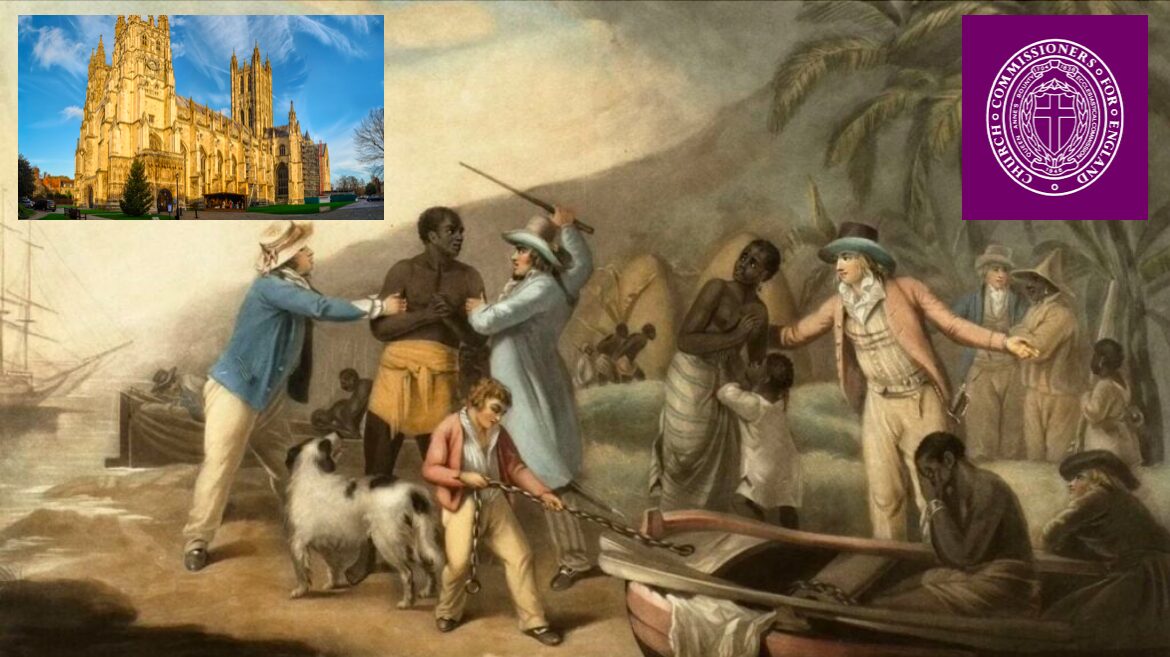
A plantation economy inside a missionary institution
At the center of Anele’s account is the Society for the Propagation of the Gospel in Foreign Parts, founded in 1701 as the missionary arm of the Church of England. The article recounts how, in 1710, the SPG received a major bequest from Sir Christopher Codrington: two sugar plantations in Barbados, along with the enslaved Africans forced to work them.
Anele reports that the bequest explicitly required that the estates remain intact and enslaved labor remain permanent, including the stipulation that the plantations be “continued entire… with three hundred negroes at least kept always thereon”. Rather than dismantle slavery on the estates, the article states that SPG operated them like any other sugar concern, using the proceeds of plantation production to support its wider missionary work across the region and in parts of North America.
The article further describes the daily reality of that institutional ownership as coercive and violent, rooted in forced labor regimes typical of the plantation economy. Anele points to archival material describing enslaved Africans being branded with the word “Society,” a physical marker that reflected the SPG’s direct claim of ownership.
Religion as reinforcement for a brutal economic order
Anele’s article argues that institutional ownership was only one part of the Anglican Church’s involvement. The analysis describes how Anglican clergy and missionary leadership helped shape religious narratives that could normalize slavery, framing submission as virtue and suffering as spiritually meaningful, particularly in societies built around human property.
The article also discusses edited biblical materials associated with plantation environments, often referred to as “slave Bibles,” which omitted or minimized passages about liberation while elevating messages of obedience and submission. In Anele’s framing, these were not neutral editorial choices but tools that supported social control in a system where enslaved Africans had no legal autonomy.
A Caribbean-wide pattern, not a single case
Although the Codrington estates serve as a key case study, the article positions them as part of a wider pattern across the British Caribbean. Anele describes how, in multiple colonies, clergymen and church-adjacent figures held plantations, inherited enslaved people through estates, or acted as trustees for plantation wealth.
The article cites examples and research threads tied to University College London projects that document slavery-era compensation claims, stating that nearly 100 Anglican clergy received compensation payments after abolition. Anele also highlights a high-profile example involving the Bishop of Exeter and compensation tied to hundreds of enslaved people on plantations in Jamaica. The broader point, as presented in the article, is that church-linked participation in the slave economy extended beyond a few isolated individuals and into the financial and social leadership class of the era.
Abolition and the compensation system that rewarded enslavers
A central focus of Anele’s article is the moral contradiction at the heart of British abolition policy. When the Slavery Abolition Act was passed in 1833, the British government ended legal slavery across most of the Empire, including the Caribbean, while simultaneously creating a compensation scheme for slaveholders.
Anele reports that the compensation fund totaled £20 million, described as a substantial share of the Treasury’s annual budget at the time, and that more than 40,000 payments were issued to planters, clergy, and institutions. In that framework, the article states that the SPG received nearly £9,000 in compensation tied to the Codrington estates. No equivalent compensation was provided to those who had been enslaved, and Anele emphasizes that emancipation often arrived alongside economic hardship and restrictive labor systems, including exploitative apprenticeship arrangements.

Investment links to slave trading and the “respectability” of slavery-era finance
The investigation also extends beyond plantation ownership to examine institutional investment streams. Anele discusses Queen Anne’s Bounty, established in 1704 to supplement incomes for poorer clergy, and describes how its funds were invested in the South Sea Company, a corporation connected to the transatlantic transport and sale of enslaved Africans.
In the article’s analysis, this reveals how slavery profits moved through “respectable” channels, including investment vehicles, donor networks, and endowments that were later treated as normal institutional wealth. The implication is that colonial slavery was not only a plantation system but also a financial system that rewarded institutions perceived as moral authorities.
Modern reckoning, apologies, and contested repair
Anele closes by examining contemporary acknowledgment of this legacy. The article notes that the Church of England has issued apologies for its historical role, and that church bodies and successor organizations have launched reconciliation initiatives.
The article references the missionary agency now known as United Society Partners in the Gospel and reports on reparative projects in Barbados focused on descendants and historical commemoration. It also cites the Church Commissioners for England and the announcement of a £100 million reparative justice fund structured through grants and impact investments, described as a modern acknowledgment of the Church’s financial ties to slavery-era wealth.
Anele notes that the initiative has sparked debate, including questions about purpose, precedent, and whether such efforts can adequately address harms that were both economic and intergenerational. The article’s core conclusion remains that Anglican institutions were not merely present in slave societies, they were embedded in the machinery of slavery and, later, in the financial architecture of abolition.
Why this story matters for the Caribbean now
For Caribbean societies still navigating the long aftereffects of colonial extraction, Anele’s reporting reframes the story of slavery by centering institutions often regarded as guardians of morality. The article raises modern questions that remain unsettled across the region: how inherited wealth is accounted for, what institutional accountability requires beyond apology, and what repair should look like when organizations profited during slavery and again at abolition.
It also challenges educators, historians, religious institutions, and public leaders to grapple with how belief, power, and finance interacted to sustain chattel slavery, and how those legacies persist in property, funding structures, and public memory.
𝘚𝘰𝘶𝘳𝘤𝘦 𝘯𝘰𝘵𝘦: 𝘛𝘩𝘪𝘴 𝘱𝘳𝘦𝘴𝘴 𝘳𝘦𝘭𝘦𝘢𝘴𝘦 𝘪𝘴 𝘣𝘢𝘴𝘦𝘥 𝘰𝘯 𝘵𝘩𝘦 𝘍𝘦𝘣𝘳𝘶𝘢𝘳𝘺 8, 2026 𝘢𝘳𝘵𝘪𝘤𝘭𝘦 “𝘏𝘰𝘸 𝘵𝘩𝘦 𝘈𝘯𝘨𝘭𝘪𝘤𝘢𝘯 𝘊𝘩𝘶𝘳𝘤𝘩 𝘉𝘦𝘤𝘢𝘮𝘦 𝘖𝘯𝘦 𝘰𝘧 𝘵𝘩𝘦 𝘓𝘢𝘳𝘨𝘦𝘴𝘵 𝘚𝘭𝘢𝘷𝘦 𝘐𝘯𝘴𝘵𝘪𝘵𝘶𝘵𝘪𝘰𝘯𝘴 𝘪𝘯 𝘵𝘩𝘦 𝘊𝘢𝘳𝘪𝘣𝘣𝘦𝘢𝘯” 𝘣𝘺 𝘜𝘻𝘰𝘯𝘯𝘢 𝘈𝘯𝘦𝘭𝘦.