

Social media, more than screen time alone, may be reshaping teen attention
.jpg)
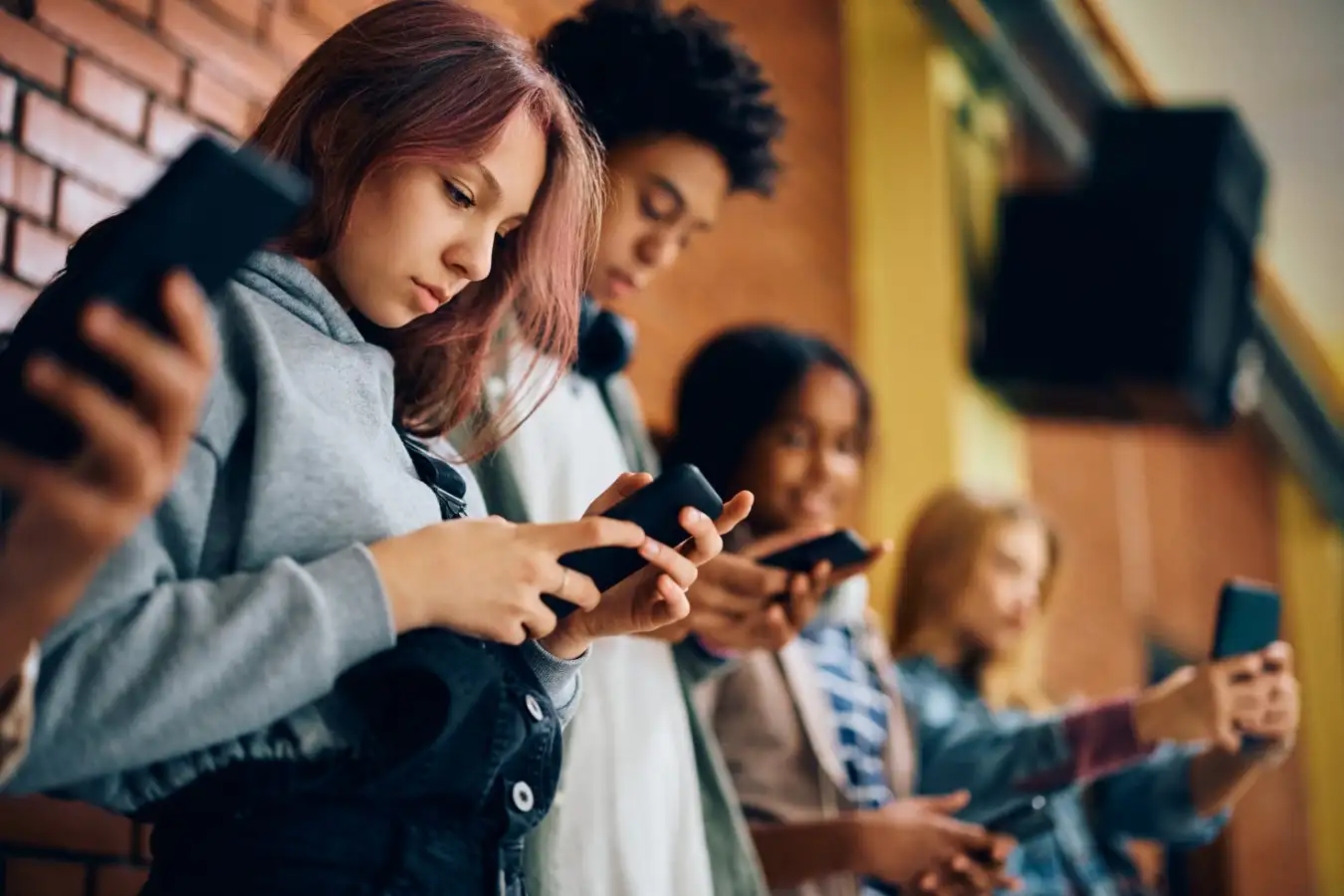
For years, the public debate around children and screens has been too blunt. Phones were blamed, tablets were blamed, video games were blamed, YouTube was blamed. The assumption was simple: more screen time must mean more cognitive harm. A new study is pushing back on that broad-brush view. Its warning is narrower, but more unsettling. The real problem may not be screens in general. It may be social media in particular.
Researchers from Karolinska Institutet, writing in Pediatrics Open Science, followed more than 8,000 children over several years, tracking them from about age 10 to 14. They grouped digital behavior into three buckets: social media, gaming, and TV or online video. Their core finding was that higher social media use was linked to a gradual increase in inattentiveness over time. Gaming and TV or video viewing were not linked to the same pattern.
Inattentiveness is one of the two central symptom clusters associated with ADHD. The study did not say social media single-handedly causes ADHD, and the researchers were clear that the effect at the individual level was not huge. But they also made a population-level point: when a small shift affects millions of children, the cumulative effect can become significant.
In other words, this is not a claim that every teenager who scrolls TikTok is on a path to a diagnosis. It is a claim that a steady, widespread rise in social media exposure may be nudging overall attention in the wrong direction. That is a much more serious public-health question than the usual panic about “kids and screens.”

What makes social media different
The study’s most important contribution is that it separates social media from other forms of digital activity. That distinction is overdue.
Gaming often happens in defined sessions. A child sits down, plays, and stops. Even if the game is intense, it usually demands sustained focus on one task. Watching videos can be passive, but it is still often a contained activity. Social media works differently. It is fragmented, ambient, and persistent. It is designed to interrupt.
The Karolinska researchers suggested that constant notifications, message anticipation, and the pull of checking whether something new has arrived may be part of the mechanism. Even when the phone is not actively buzzing, the expectation of a new alert can become its own distraction. Attention is not only broken by the message itself, but by the mental readiness for interruption. Over months and years, that may matter.
That point is especially relevant for teenagers, whose lives are now increasingly organized around platforms built to keep them returning in small, repeated bursts. Unlike a game that begins and ends, social media tends to leak into the full day: before class, during class, after school, at dinner, before bed, and often during the night.
The result is not simply “too much content.” It is too much interruption. Too much fractured attention. Too little uninterrupted mental space.
Why this matters now
The urgency is not just the study itself. It is the scale of exposure.
Reporting on the findings noted that the average children in the study saw social media use rise sharply over time, from roughly half an hour a day at younger ages to much higher levels by early adolescence. Broader reporting on teen digital habits has also shown that many young people now spend hours a day online, with large shares describing themselves as constantly connected.
This is why the distinction between “small individual effect” and “large societal effect” matters so much. Public health is full of examples where a modest shift in risk, repeated across an entire population, changes the landscape. The researchers explicitly framed the social-media effect in those terms.
That is also why the common reassurance, that rising ADHD diagnoses may just reflect better awareness or less stigma, is not enough on its own. Better awareness may be part of the explanation. But better awareness does not rule out the possibility that the underlying attention environment for children has also changed for the worse.
The policy world is already moving
Governments are not waiting for a perfect scientific consensus.
Australia has already moved furthest. Under changes now in effect, age-restricted social media platforms must take reasonable steps to prevent users under 16 in Australia from creating or keeping accounts. The measure came into force on December 10, 2025, with enforcement tied to the country’s online safety framework.
That law is not just symbolic. Reporting from AP said platforms that fail to comply can face major penalties, and the enforcement model places the burden on companies, not parents, to implement age restrictions.
Other countries are moving in the same direction, though not always with the same legal model. Denmark has announced a broad move to ban mobile phones in primary and lower secondary schools and after-school clubs, explicitly linking the change to student wellbeing, concentration, and the need to reduce constant digital intrusion in learning spaces.
And as of today, Poland’s ruling party is reportedly preparing legislation to ban children under 15 from accessing social media, again framing it as a youth mental health and child development issue.
These policies are not identical. Some focus on social media access itself. Others focus on school-time device use. But they all emerge from the same growing recognition: digital life is no longer a neutral background condition for childhood.
What about the Caribbean
The Caribbean is not yet moving with the same kind of unified, hard-edged legal response seen in Australia. But the region is not standing still either. What is emerging instead is a mix of mental-health support, child online protection efforts, and school-level attempts to reduce distraction.
One of the clearest regional initiatives is Young Caribbean Minds, a digital mental health and protection hub developed by UNICEF with partners including governments, the University of the West Indies, and youth from across Caribbean countries. UNICEF described it as the region’s first comprehensive mental-health resource platform for children and young people, launched to serve youth across multiple Caribbean states.
That is not the same thing as regulating social media, but it is still relevant. If rising attention problems are part of a wider youth mental-health strain, then digital supports, coping tools, and youth-focused resources matter. The Caribbean’s first move may not be a ban. It may be building the support system first.
The regional mental-health picture suggests there is reason for urgency. A 2025 CARICOM-UNICEF report found troubling levels of anxiety and depression among Caribbean children and adolescents, underscoring the broader vulnerability of young people across the region. That report was not specifically about social media and attention, but it does strengthen the case that youth mental health in the Caribbean is already under pressure.
The OECS has also published child online protection guidance that specifically encourages parents to monitor online interactions across social media, chat rooms, and gaming platforms. Again, that is softer than a legal restriction, but it shows that online-risk awareness is already part of the regional policy conversation.
Elsewhere in the Caribbean, much of the response still appears to be at the level of school policy, family guidance, or public debate rather than sweeping national legislation. That may reflect the region’s realities: smaller jurisdictions, fewer enforcement resources, and legitimate concern about cutting children off from tools that also support communication, education, and opportunity.
A Caribbean response does not have to start with a ban
The lesson from the new study is not necessarily that governments should rush to prohibit everything. The stronger lesson is that policymakers need to stop talking about “screen time” as if all digital activity is the same.
If the research is right, the problem is not that children are using technology. It is that one kind of technology, social media, may be reshaping how attention is trained, interrupted, and worn down over time. That means the Caribbean has room to act intelligently, even without dramatic legislation.
A serious regional response could start with a few practical steps:
• tighter phone rules during school hours,
• digital literacy that teaches children how platforms manipulate attention,
• parent education that focuses on notifications, sleep, and constant checking,
• stronger age verification advocacy at the platform level,
• youth mental-health supports that address the emotional spillover of always-on social life.

The real question
The bigger issue raised by the study is cultural, not just medical. For a generation, adults have treated teen digital life as something inevitable, and therefore something beyond real control. But more and more evidence is pushing in the opposite direction. Childhood attention is not just being shaped by school, parenting, sleep, and nutrition. It is being shaped by platform design. And platform design is not neutral. It is built to capture, divide, and recapture attention as often as possible.
That should force a harder question, especially in the Caribbean where education systems already face strain, mental-health systems are still underbuilt, and families are navigating fast technological change with limited support:
If social media is not just entertainment, but an environment that may be training young minds toward distraction, how long can governments afford to treat it as a private family problem instead of a public policy issue?
The most useful takeaway from the Karolinska study is not fear. It is precision.
Not all screens are equal. Not all digital habits carry the same cost. And if policymakers, schools, and parents keep treating them as though they do, they may miss the real source of the problem while attention keeps slipping away.
𝘙𝘦𝘱𝘰𝘳𝘵𝘪𝘯𝘨 𝘱𝘢𝘳𝘵𝘭𝘺 𝘧𝘳𝘰𝘮 𝘛𝘩𝘦 𝘊𝘰𝘯𝘷𝘦𝘳𝘴𝘢𝘵𝘪𝘰𝘯