

Short-term rentals are reshaping the Caribbean travel market, and St. Maarten is part of it

Short-term rental properties, the villas, condos, and apartments booked through platforms like Airbnb and Vrbo, are increasingly central to how visitors experience the Caribbean. On St. Maarten, many hosts and property managers describe high-season calendars that fill early, especially for family-sized units and higher-end villas, and the wider regional data suggests that story is not an outlier, it is part of a structural shift in accommodation preference.
Across the Caribbean, hotel performance remains strong, but pricing power has also risen. CoStar data reported Caribbean hotel average daily rate (ADR) growth of about 5% year over year to roughly $341 overall in 2024 (excluding Cuba), with revenue per available room (RevPAR) growth driven largely by rate increases, not a surge in occupancy. That matters because the traveler who is price-sensitive, or value-sensitive, is now comparing a hotel room with a full residence, often with a kitchen, outdoor space, and multiple bedrooms.
The data points to a bigger, faster STR footprint than many governments track
One of the clearest signals that short-term rentals have moved from “alternative” to “mainstream” is how quickly inventories have expanded, and how unevenly regulation has kept up.
A World Bank report on Caribbean tourism notes that the short-term rental sector is expanding rapidly and that there is often a large gap between formally registered properties and the listings visible online, citing an example where Airbnb showed more than 9,000 accommodation options while the official register in Barbados was far smaller. The same report highlights St. Lucia as a striking case study: in 2024, the non-registered, short-term-rental-dominated sector was assessed as having a larger inventory of available rooms than the hotel sector (5,584 versus 4,449 rooms), and fewer than 10% of short-term rentals were registered with the tourism authority at the time.
Aruba’s public reporting provides another useful yardstick for what “mainstream” can look like. Aruba’s 2024 annual report notes that the market share of stay-over visitors choosing alternative accommodations, including short-term vacation rentals, increased from 29% in 2023 to 33% in 2024, while the share of visitor nights in alternative accommodations rose from 34% to 37%.
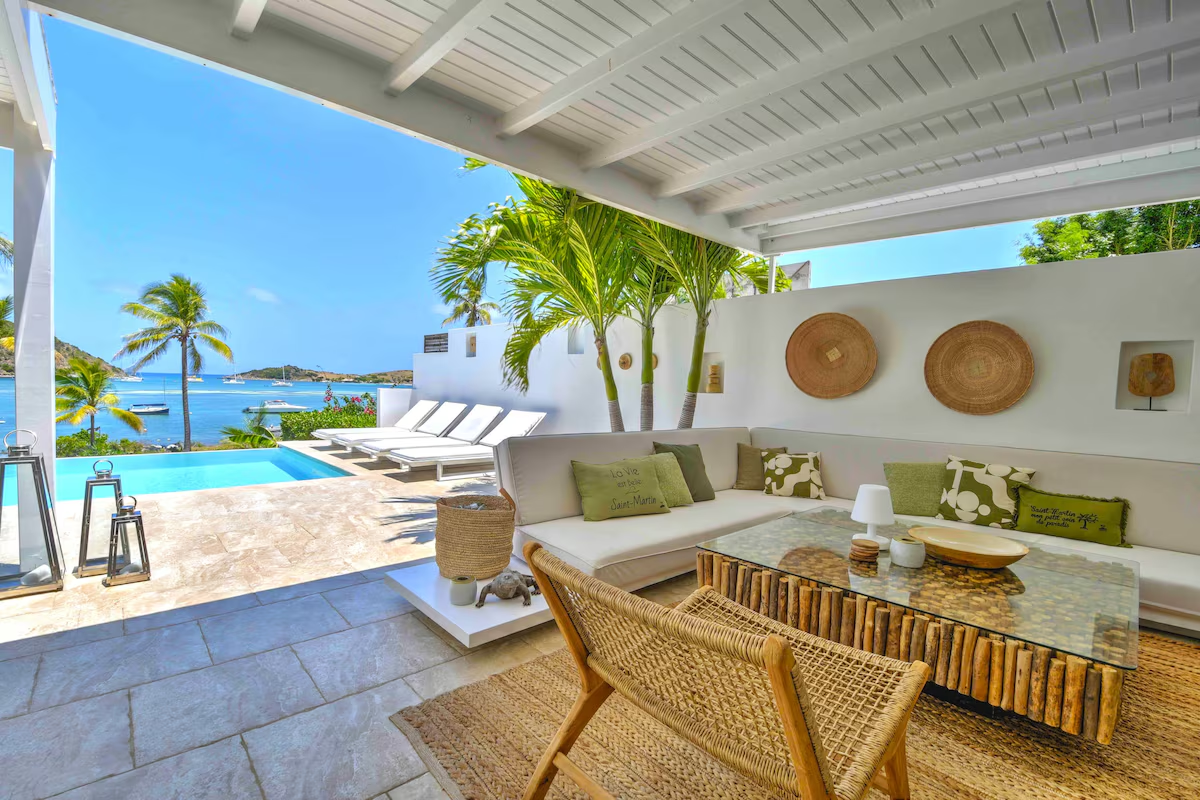
What St. Maarten’s STR market signals, even with conservative averages
Market trackers such as AirDNA estimate St. Maarten has roughly 2,600 active short-term rental listings across Airbnb and Vrbo, with an annual occupancy rate around 51% and an ADR in the low $400s. Annual occupancy averages can look modest because they include low season and owner-blocked calendars, but the pattern across the region is that peak-season occupancy runs well above annual averages, and that is often where the “booked solid” impression comes from.
Comparable Caribbean markets show similar demand strength in AirDNA snapshots. For example, Curacao is estimated at over 5,000 listings, with average occupancy around 61% and an ADR around $170. The key point is not that every island is priced the same, but that the category itself has deepened and normalized across multiple destinations.
Why travelers are choosing STRs over hotels
Hotels can be expensive in the Caribbean for reasons that are not always visible to guests: high energy costs, imported food and materials, staffing constraints, insurance, and post-pandemic debt loads. A Caribbean Hotel and Tourism Association (CHTA) survey of industry operators found that 87% faced higher operating costs in 2024, and 65% reported raising room rates to counter higher costs, with 63% anticipating room rate increases in 2025.
That pricing reality collides with a traveler expectation that has shifted. Many modern travelers want more control over their stay, and short-term rentals sell that control.
What STRs offer that hotels often cannot match
A short-term rental can outperform a hotel room on everyday convenience, even when the nightly rate is similar. The repeat reasons are consistent across markets:
- Space and layout for groups: families, friends, and multigenerational travelers can share one property, and the cost per person often beats multiple hotel rooms.
- Kitchens and “live like a local” routines: breakfast at home, groceries, late-night snacks, and dietary flexibility become part of the appeal.
- Privacy and personalization: pools, patios, quiet hours, and the sense of “your place” matter, especially for longer stays.
- Remote work travel: stable Wi-Fi, separate rooms, and a “work corner” are easier to deliver in a residence than in a standard room category.
- Neighborhood access: guests may want to stay outside resort zones, closer to beaches, restaurants, or family.
Aruba research underscores how this value proposition plays out at scale. A study on vacation home rentals there reported that vacation rentals provided more rooms than hotels, while also showing much lower ADRs than hotels in comparable periods, for example, ADR around $190 for vacation rentals versus $450 for hotels in January 2019. That type of spread, even if it varies by island, helps explain why price-conscious travelers, and even affluent ones seeking space, keep migrating into the STR category.
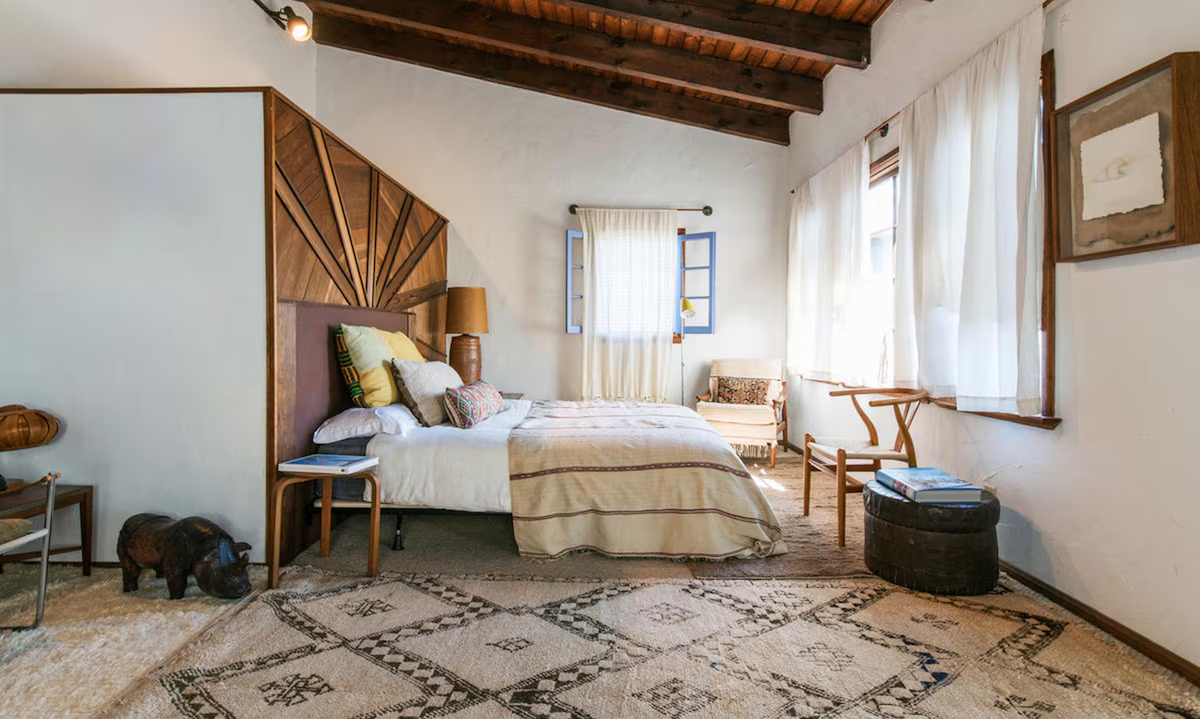
What traditional hotels are “lacking” in the new comparison set
Hotels are not failing in the Caribbean, occupancy and rates remain robust, and the region has significant pricing power. The challenge is that the comparison set has changed, and hotels are being judged against a different product.
Several gaps show up repeatedly in traveler behavior:
- Room size and flexibility: many hotels still sell “a room” as the core unit, while STRs sell “a lifestyle setup,” multiple rooms, laundry, kitchen, outdoor space.
- Fee complexity: resort fees, parking fees, and add-ons can make hotels feel unpredictable at checkout, even if the base rate looked competitive.
- Family and group economics: two or three hotel rooms can quickly outprice a single rental home.
- Personalization and autonomy: the ability to set your own schedule, eat when you want, host friends, or avoid crowded common areas.
- Design and content expectations: modern travelers often pick places that look good on camera, and STRs have pushed “aesthetic value” into the mainstream booking decision.
On top of that, hotels face operating cost pressures that push rates up, and the CHTA survey data indicates those pressures are expected to continue.
The next phase: more growth, but also more rules
Globally, the vacation rental market is projected to keep growing. Grand View Research estimates the global vacation rental market at about $89.32 billion in 2023, projecting roughly $119.0 billion by 2030, a 3.7% compound annual growth rate from 2024 to 2030.
For the Caribbean, the likely story is continued demand, plus a push toward formalization:
- More licensing and registration: the World Bank explicitly calls for short-term rentals to be licensed, counted, and integrated into tourism planning, noting the need for data collection and policy tools that level the playing field.
- More enforcement tied to housing and quality-of-life concerns: Aruba’s research highlights how vacation rentals can occupy a significant share of housing stock and raise affordability concerns, which is exactly the type of pressure that triggers regulation.
- More professional operators: more properties will be run like hospitality businesses, with standard cleaning, guest services, and dynamic pricing, which can raise quality and also intensify competition with hotels.
How hotels can respond without racing to the bottom on price
Hotels do not have to “become Airbnb” to compete, but they may need to compete on the strengths that short-term rentals cannot easily replicate:
- Better value packaging: breakfast-included, airport transfers, day passes, family bundles, fewer surprise fees.
- Room product redesign: more suites, connecting rooms, kitchenettes, laundry access, and true apartment-style inventory.
- Local experiences that feel real: hotels can partner better with local guides, chefs, and cultural groups, and sell that as a core product, not a brochure add-on.
- Frictionless tech: mobile check-in, fast service recovery, and transparent pricing.
On St. Maarten, where villas and condos are already a major part of the tourism landscape, the competitive question may be less about whether STRs will keep growing, and more about how the island balances growth with housing needs, neighborhood impacts, and fair taxation, while keeping the visitor experience strong across both hotels and alternative accommodations.