

Real journalism still threatens power, that’s why it’s being sidestepped

Across the Caribbean, including St. Maarten, the warning sounded by international journalism scholar and former BBC correspondent James Rodgers feels less like a distant critique and more like a daily reality: we are surrounded by more media than ever, yet the space for real questioning keeps narrowing. Rodgers argues that the flood of content has not produced more dependable information, and that governments and powerful platforms often succeed at controlling the message. In the Caribbean, that control increasingly takes a modern form, official communication built for social media first, and for questioning later.
To be fair, governments did not make this shift on a whim. The region has watched the emergence of casual “media” and “activist media,” pages that move fast, skip verification, and lean on outrage and click bait to win attention. When that content spreads, it can turn rumor into “fact” within minutes. It can also pressure officials to respond quickly and directly, without the guardrails of an interview or an established factual process. The problem is that legitimate journalism often suffers anyway, because it becomes the party expected to clean up the mess, correct the record, and still do it quickly enough to compete.
Even with those realities, the trend has consequences. Official announcements now arrive as a Facebook post, a short video, or a branded graphic with talking points. The public is expected to accept the narrative as complete. The press release, if it comes at all, often shows up after the message has already traveled through Facebook, Instagram, and WhatsApp groups. In many cases, legitimate media is treated as Plan B, while government pages are Plan A. By the time a release reaches the media, the framing is already set, and the content is often tailored as an info-mercial rather than a full public record.
Rodgers puts it plainly: “Today, we have access to more media than at any other time in human history. But this vast amount of information has not necessarily meant more reliable information.” That sentence is significant in island democracies, because bypassing independent outlets does not just change how people receive news, it changes how power behaves. When officials publish first to their own channels, they are not just communicating, they are also managing scrutiny. They can share “highlights” without contracts, “progress” without timelines, and “achievements” without addressing delays, costs, or competing claims.
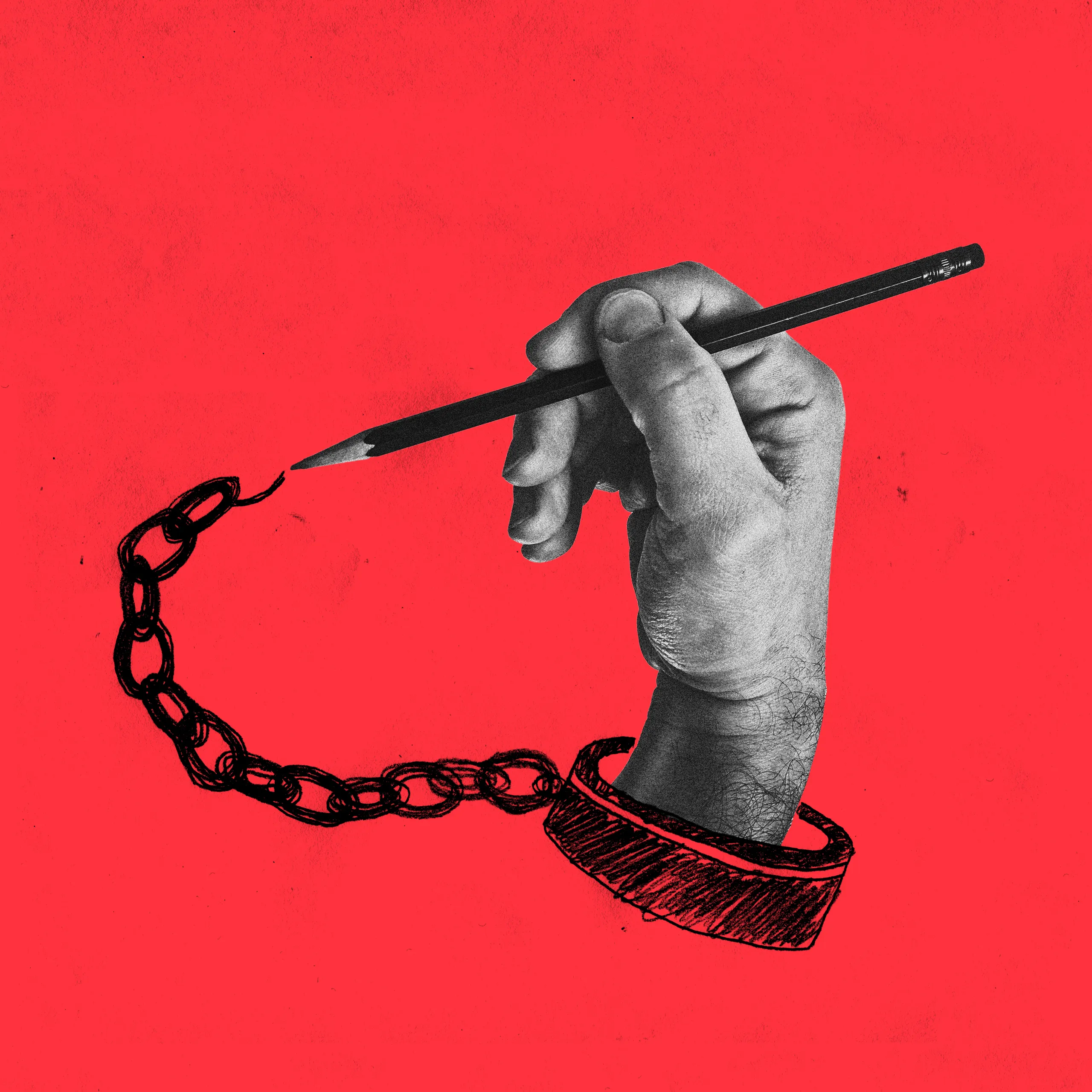
Rodgers frames his argument internationally, in a year that reached what he calls a “murderous milestone.” He points to data from the Committee to Protect Journalists showing record numbers of journalists and media workers killed, with 2025 matching 2024’s grim total while the year still had weeks to go. For Rodgers, that is not a statistic for press freedom seminars, it is a direct hit to what audiences can know about wars, climate pressures, and unstable politics. When journalists are killed, or blocked, or legally threatened into silence, the public loses independent witnesses.
He highlights that Palestinian journalists have “paid by far the highest price,” and he cites reporting about the scale of journalist deaths connected to the Israel-Gaza war. The larger point he is making is about access and consequence. When international journalists are prevented from entering a conflict zone, and local journalists face extreme danger for doing their job, the world receives fewer verified accounts and more competing narratives.
Rodgers stresses that controlling access has become a central tool. He points to the reality that international journalists have been unable to reach places where they need to report, naming Gaza and Russia as examples where access restrictions and political pressure shrink what can be independently verified. The details differ from country to country, but the logic is consistent: limit access, punish witnesses, and flood the public sphere with managed messaging.
The Caribbean is not Gaza or Russia, but the instincts of control can still appear here in softer, more socially acceptable forms. Officials do not need to ban reporters to reduce scrutiny, they can simply stop showing up where scrutiny is possible. The minister posts a statement and refuses interviews. The government page publishes “answers” without taking questions. Over time, that normalizes a one-way relationship between government and public, where governance becomes performance and accountability becomes optional.
Rodgers anchors the stakes in history, reaching back to the connection between information and freedom. He quotes Thomas Jefferson’s 1787 line: “Were it left to me to decide whether we should have a government without newspapers, or newspapers without a government, I should not hesitate a moment to prefer the latter.” In a Caribbean context, where political life is intimate and consequences travel fast, that idea still matters. It matters when people want to know why a tender went one way instead of another. It matters when communities ask why a project is delayed, who signed off, what was promised, and what changed.
Rodgers then adds a second Jefferson quote that is even more uncomfortable today: “But I should mean that every man should receive those papers and be capable of reading them.” He uses that line to underline a modern dilemma. On social media, content is cheap, instant, and everywhere. Reliable reporting can be harder to find. It may be buried by algorithms, drowned out by louder voices, or locked behind paywalls that many readers cannot justify in an already tight economy.
This is where the region’s two pressures collide. On one side, a noisy online environment rewards sensational claims, sometimes dressed up as “activism,” sometimes as “breaking news,” often with minimal verification. On the other side, governments learn they can protect themselves from uncomfortable questioning by publishing directly to audiences. In the middle, legitimate journalism is squeezed, expected to be faster than the algorithm, calmer than the outrage cycle, and still precise enough to stand up in the public record.
Rodgers is not romantic about the past, but he argues the trend line is moving in the wrong direction. He recalls a post Cold War period when international media had broader freedom to work in parts of the former Soviet bloc, and he argues that even imperfect decades can look better than what follows when control tightens again. He also references the argument of journalist and academic Peter Greste, who wrote that after 9/11 state power extended “into control over information and ideas,” helped along by looser definitions of “terrorism” and “national security.” Rodgers includes Greste’s experience to show how quickly reporting can be reframed as a threat when governments want broader control.
That theme should resonate in the Caribbean, where national security language, border debates, and political polarization can all become convenient cover for reduced transparency. Even when governments have valid reasons to communicate quickly and directly, the habit of publishing without questioning creates a pathway for message management to replace meaningful engagement.
Rodgers closes with a point that works as both warning and reassurance. “The restrictions placed upon journalists today may mean that governments seem to be winning at the moment,” he writes. Then he adds the line that explains why the fight continues: “Their desire to control confirms the power to challenge that journalism still holds.” In the Caribbean context, that rings true. If independent questions did not matter, there would be no incentive to avoid them.
𝘊𝘳𝘦𝘥𝘪𝘵: 𝘛𝘩𝘪𝘴 𝘢𝘳𝘵𝘪𝘤𝘭𝘦 𝘪𝘴 𝘣𝘢𝘴𝘦𝘥 𝘪𝘯 𝘱𝘢𝘳𝘵 𝘑𝘢𝘮𝘦𝘴 𝘙𝘰𝘥𝘨𝘦𝘳𝘴’ 𝘦𝘴𝘴𝘢𝘺, 𝘰𝘳𝘪𝘨𝘪𝘯𝘢𝘭𝘭𝘺 𝘱𝘶𝘣𝘭𝘪𝘴𝘩𝘦𝘥 𝘣𝘺 𝘛𝘩𝘦 𝘊𝘰𝘯𝘷𝘦𝘳𝘴𝘢𝘵𝘪𝘰𝘯.