

Public Service Obligations in the Dutch Caribbean: What exactly is it and what are the implications?
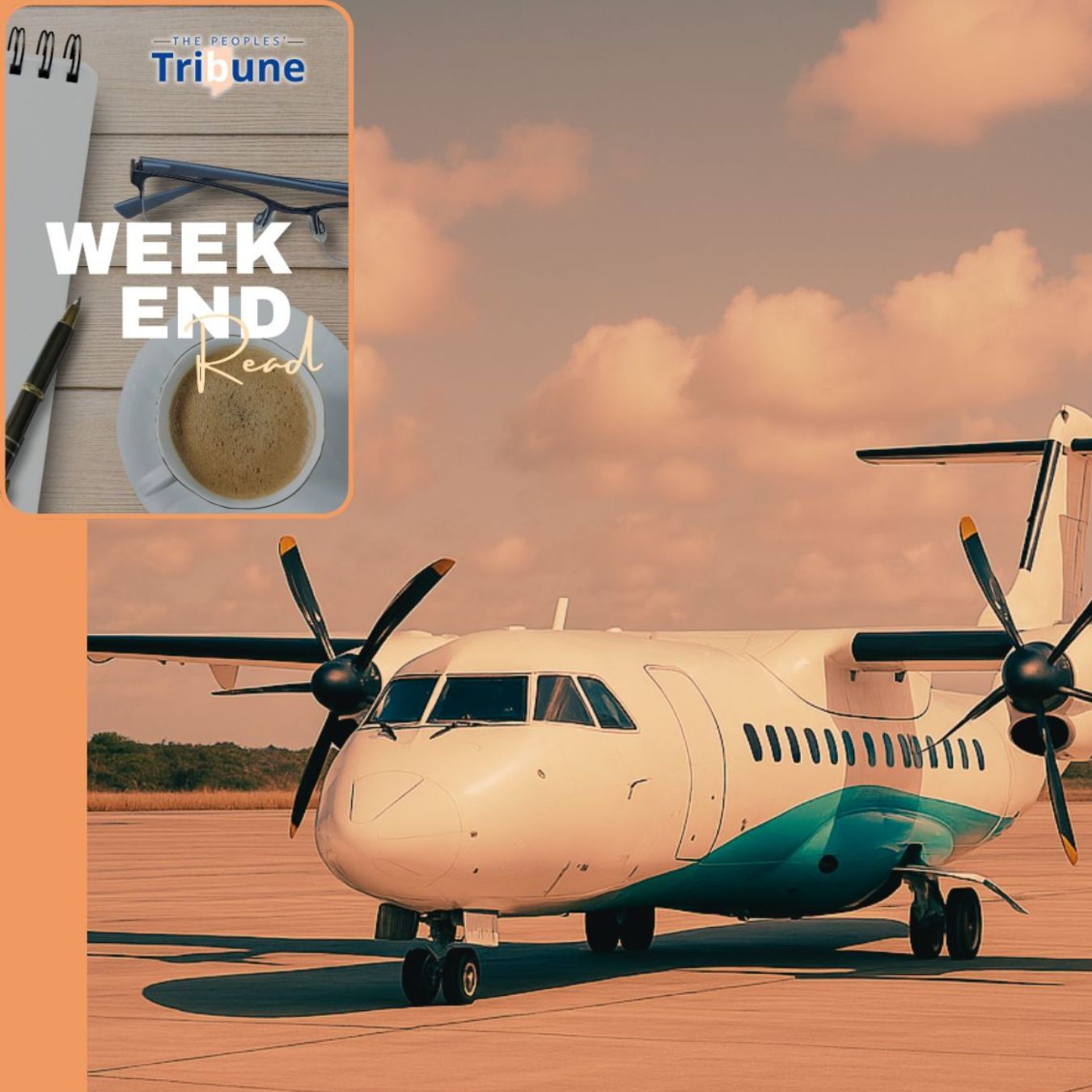
When people in the Dutch Caribbean islands hear about “PSO routes” they often hear one promise above all others: cheaper and more reliable flights. The proposed amendment to the BES Aviation Act would give the Dutch government a new tool to pursue that goal. The question is what that tool actually does in practice and whether it really means more competition, or less.
What is a PSO in this context?
A Public Service Obligation, or PSO, is a legal instrument that allows a government to step into a route where the market does not deliver socially acceptable service on its own. It is used on routes that are essential for a community, but commercially weak.
Under the proposed Dutch rules for the Caribbean part of the Kingdom:
- The Minister of Infrastructure and Water Management would first study a route like St. Maarten–Saba or St. Maarten–St. Eustatius.
- That analysis would look at access to hospitals, schools, courts, jobs, tourism links and whether ferries or cargo vessels are a realistic alternative.
- If the minister concludes that the air connection is essential, but too expensive or too unreliable, the route can be designated as a PSO route.
Once that designation is made, the minister can:
- Set minimum frequency, capacity and continuity requirements
- Cap ticket prices or set maximum fares
- Invite airlines with Kingdom traffic rights to operate under those conditions
- If needed, offer a subsidy to cover part of the losses that arise from meeting those conditions
In simple words, the state says: this route must exist, it must operate at a certain standard, and it must not become unaffordable. If no airline can or will do that on its own, the government fills the gap with a subsidy.
Two PSO models: open access or exclusive concession
The bill allows for two basic models.
- Open PSO:
Any airline that already has traffic rights in the region can choose to fly the route, as long as it respects the PSO conditions. In theory, several carriers could operate side by side under the same fare cap and service obligations. - Exclusive concession:
The state can also decide that only one carrier will operate the route, chosen through a tender. That carrier then receives the exclusive right for a number of years, often with a subsidy to cover the gap between regulated fares and real costs.
This second model is how PSOs are most often used in Europe. The government organizes a competition on paper, companies submit bids, then the winner enjoys exclusive rights for the duration of the contract. In that period there is no competition in the market itself, only regulation plus subsidy.
Why the Netherlands is moving to PSOs
The Dutch state already tried another method in the Windward Islands: becoming a shareholder in Winair. That experiment has been evaluated and judged unsatisfactory. The state wanting lower fares and the airline wanting profit proved to be a built in conflict.
Other options were studied, such as:
- Lower airport and air traffic control fees
- Direct ticket subsidies
Researchers warned that without binding obligations this can easily become a gift to airlines rather than a benefit to passengers. Costs go down on the airline side, but nothing forces carriers to pass the savings on to consumers.
A PSO route is meant to solve that problem. It ties financial support to hard conditions on price, frequency and service. It also gives the government a clear lever if an operator underperforms, because failure to meet the conditions is a contractual breach.
The promise: more reliability, possibly lower fares
For Saba and St. Eustatius, the theoretical benefits are real. A well designed PSO could:
- Lock in a minimum number of daily flights
- Introduce clear rules for cancellations and rebooking
- Put a ceiling on ticket prices, especially for residents
- Make medical travel and student travel easier to plan and budget
- Reduce the constant uncertainty that now surrounds these short but vital routes
From a public policy point of view, this makes sense. On a 12 to 20 minute flight, staff costs, maintenance, landing fees and air traffic control charges must all be spread over a very small number of passengers. That makes the “generalized travel cost” high, even when the distance is tiny. Without intervention, such routes tend either to disappear or to become luxury items that only a few can afford.
The uncomfortable side: PSOs do not exist to create competition
There is, however, a hard truth that needs to be stated clearly. PSOs are not designed to stimulate competition. In thin markets, they are usually designed to replace it.
On routes where demand is low and fixed costs are high, true competition often leads to one of two outcomes:
- Overcapacity and losses until one carrier pulls out
- Dominance by a single operator that can then raise prices once rivals are gone
Regulators across Europe accepted that reality years ago and used PSOs to stabilize such routes. They organize competition at the tender stage, then grant exclusivity to the winner. Once the contract is signed, other airlines are legally barred from entering that route for the duration.
If the Dutch government takes that same path in the Caribbean, the likely result on the Saba and St. Eustatius routes is not more competition, but less, possibly a single provider under contract.
Who would realistically win a PSO tender?
On paper, any airline with Kingdom traffic rights can bid. In practice, the field is much narrower. To operate these short-runway, short-sector flights safely and efficiently an airline needs:
- Suitable aircraft and crews already familiar with Saba and Statia
- Maintenance and dispatch infrastructure in the region
- Existing permits and safety approvals
- Financial and operational scale to absorb setbacks
Winair already has these pieces in place. Smaller or newer players that are now experimenting on other routes in the region generally avoid Saba and Statia for a reason: margins are thin, risks are high, and demand is limited.
A PSO does not change that economic foundation. It simply adds a framework for exclusivity and compensation. If a tender is held, it is difficult to imagine a realistic scenario in which another airline would outbid Winair on these specific routes without assuming a very high level of risk for relatively modest returns.
Risk for emerging alternatives
There is another consequence that is often overlooked. Once a PSO route is awarded as an exclusive concession, other carriers lose their legal right to serve that route at all during the contract period.
That matters for islands that are now cautiously exploring alternatives. New initiatives such as regional island-hopper services, niche operators from the Leeward or Windward islands, or experimental schedules built around tourism and trade, could be shut out completely if a PSO contract is in place.
For a small island trying to diversify its connectivity strategy, that can freeze innovation before it matures. A fragile but promising alternative may never get the chance to grow into a serious option.
What about the ABC islands?
The stakes are different, and arguably higher, on the Aruba–Bonaire–Curaçao corridor.
- Demand is much stronger
- Fares, while not cheap, are lower and more competitive
- Several local carriers depend on inter island traffic as their core business
If a PSO with exclusive rights were ever applied on such routes, the risk would be that one chosen airline receives a state backed monopoly and the others are effectively pushed out. History in the region has shown that a single dominant carrier, protected by policy, often leads to higher prices, average service and little incentive to improve.
In other words, the PSO model fits best where a route is truly marginal, yet socially essential. The further you move away from that situation, the greater the danger that the instrument will distort a market that currently has more genuine competition than it appears from outside.
Leverage cuts both ways
There is also the long term power balance to consider.
Once a company holds exclusive rights under a PSO contract, the government’s main tool is the subsidy. If costs rise or demand falls, the operator will argue that conditions need to be renegotiated or that the subsidy must increase. Politically, it is very difficult for any government to accept a sudden loss of air service to a small island.
In that situation, pressure often flows one way. Authorities can threaten, but if they actually terminate the contract, the island may be left without air service while a new tender is organized. Competitors will have disappeared, not because they lost on price or service, but because regulation barred them from the market.
So, more competition or less?
For the BES islands, a PSO is best understood as a tool to guarantee a minimum level of service at a controlled price, not as a tool to create a lively market. At the tender stage there can be a burst of competition on paper, yet once a contract is signed, the goal shifts from rivalry to stability.
On the St. Maarten–Saba and St. Maarten–St. Eustatius routes, the most honest answer is:
- A PSO could bring more predictability and possibly lower, more stable fares
- It is unlikely to bring lasting market competition
- It will almost certainly concentrate power in the hands of one chosen operator, most likely the incumbent
For residents who have endured years of high prices and unreliable schedules, that trade-off may still be acceptable, provided the conditions are tight and monitored well. But it should be understood for what it is: a decision to regulate and subsidize a necessary monopoly, not a way to open the skies to many new players.