

Native Nations SXM and Government Inter-Ministerial Work Group report major 2025 strides toward regulated cannabis framework for St. Maarten
.jpg)
GREAT BAY--Native Nations SXM has released a year-end synopsis outlining 2025 milestones achieved under its mandate as the entity contracted by the Government of St. Maarten to support the development of a comprehensive legal and regulatory framework for a controlled, safe, and sustainable cannabis industry.
Working in close collaboration with the Cannabis Legislation Inter-Ministerial Work Group (CLIWG), Native Nations SXM reported progress across legal framework development, farmer outreach and engagement, community outreach and education, stakeholder partnerships, and a socio-economic impact study projecting significant job creation and public revenue potential. The synopsis credits the collaborative efforts of the CLIWG, support of the Government of St. Maarten, and contributions from local and international consultants, legal firms, and community members as key drivers of progress.
Native Nations SXM stated that the work completed in 2025 has positioned St. Maarten to move confidently toward the next phase of cannabis regulation, emphasizing alignment between government, communities, and stakeholders around building a controlled and well-regulated industry that prioritizes safety, accountability, and long-term socio-economic benefit for St. Maarten.
Legal framework development
Native Nations SXM reported that it worked closely with the CLIWG to advance a comprehensive cannabis regulatory framework designed to be responsible, safe, and sustainable. The CLIWG includes representatives from the Ministries of Justice, VSA, TEATT, and Education, reflecting a whole-of-government approach to policy design and implementation.
By mid-2025, Native Nations SXM reported that significant legislative milestones were achieved and that a final draft law was submitted to government. Before submission, the draft underwent multiple rounds of internal review and was presented to the Council of Ministers and other key stakeholders, which provided policy guidance that allowed the framework to be refined and strengthened ahead of finalization. Stakeholder consultations were also conducted with community representatives, sectors, and institutions to further strengthen the framework. Native Nations SXM stated the work was carried out with legal experts and government officials, with emphasis on public health, safety, and social equity, and with an outlook to engage Parliament in 2026 after any remaining legal refinements.

Community outreach and public education
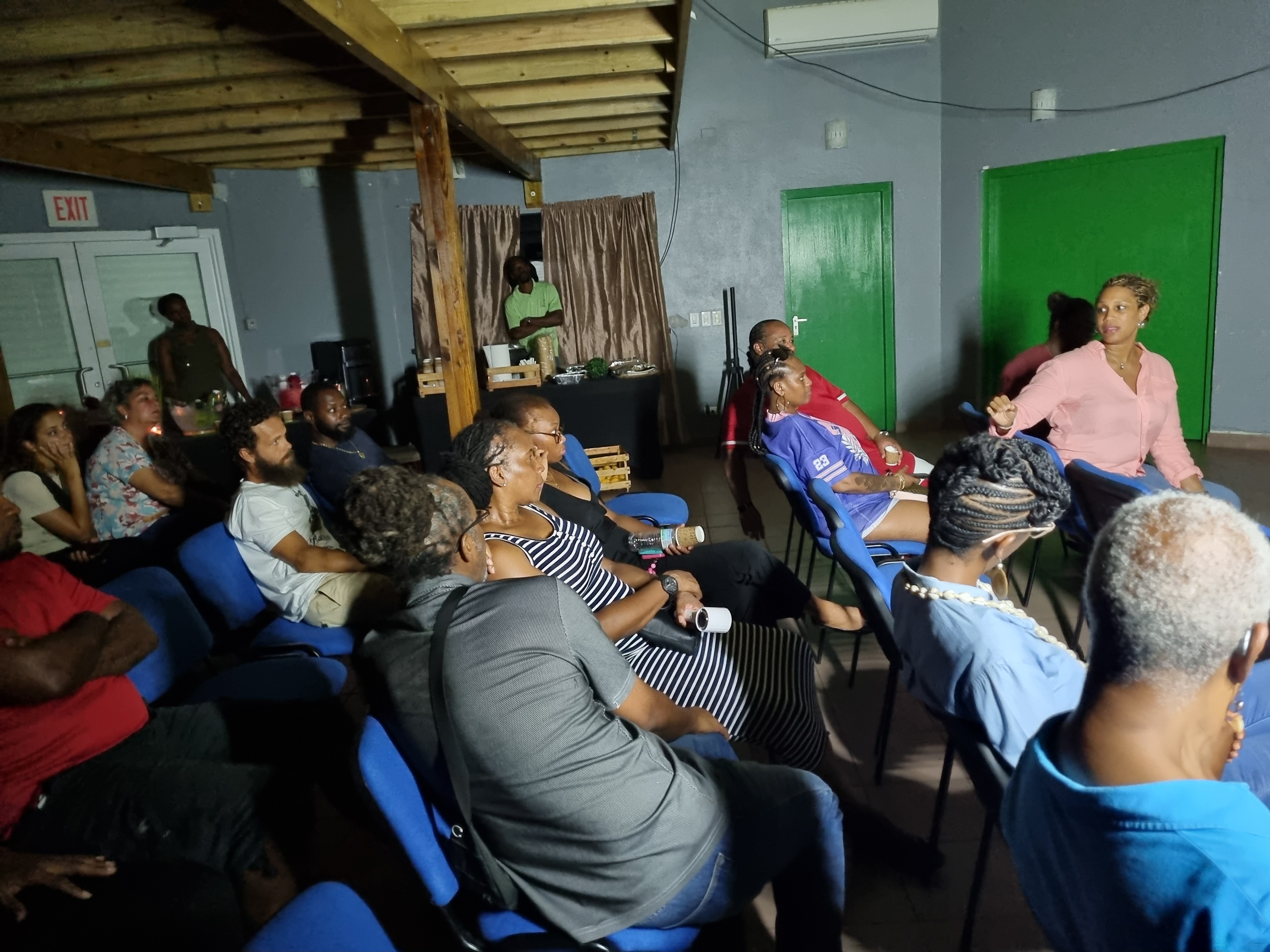
Native Nations SXM reported that its community outreach initiative began in 2024 and continued throughout 2025 in collaboration with the CLIWG, with the stated objectives of transparency, informed dialogue, addressing public concerns, and sharing fact-based information on opportunities, benefits, and risks tied to regulation.
Through town halls, public presentations, and engagement sessions, Native Nations SXM said it shared balanced information on the benefits of a regulated cannabis market, including improved public safety, medicinal values, economic opportunities, and product safety. The program also addressed health considerations, including risks associated with heavy use or early-age consumption, and discussed the risk of schizophrenia or psychosis for persons with predisposed conditions, along with the importance of prevention, doctor guidance, and education. Social experts, medical experts, and researchers were engaged to help define evidence-based risks, causes, and prevention mechanisms that can be built into a regulated market to reduce risks that exist in the current environment. Native Nations SXM also highlighted dangers associated with illegal markets, including fentanyl-laced and otherwise uncontrolled products.
The synopsis reports that Native Nations SXM and the CLIWG engaged over 600 community members and gathered feedback reflecting public interests, concerns, and needs, which was used to refine the approach and strengthen public involvement. By the end of 2025, the organization reported engagement with over 300 community members who expressed enthusiasm about opportunities in the cannabis industry.
Surveys indicate majority support and “working-age” readiness
Native Nations SXM reported that several surveys in 2025, including one conducted by The People’s Tribune, indicated public sentiment toward cannabis regulation. Across datasets, 74.4% of respondents expressed a positive view toward regulation, while 25.6% were opposed.
The synopsis notes that those opposed or holding more conservative views were concentrated primarily in the 65-and-older age group, and that within that group the split was almost 50-50 for and against. In contrast, strong support was observed among residents aged 18 to 54, described in the synopsis as the majority of the working, tax-contributing, economically active population. Native Nations SXM stated that the combined results indicate social and demographic readiness for regulation, with support concentrated among the core working-age population and opposition described as limited in size and impact.
Farmer outreach, agreements, and integrated food farming model
Native Nations SXM reported that in summer 2025, supported by the CLIWG, it met with the Farmers Cooperative and launched a “Call to Farmers,” delivering a presentation on its farming program to a wide group of local farmers. The initiative was guided by the principle that local farmers and entrepreneurs should play a central role in sector development, both as independent operators and as contributors to food security and economic resilience.
By the third quarter of 2025, the synopsis reports that agreements were signed with approximately 19 master farmers and growers who are expected to participate in a cannabis and food farming program, pending Parliament’s approval of the regulation. The synopsis states that under the regulation, master farmers and entrepreneurs would be awarded licenses by government and participate in a regulated farming program in which 100% purchase of their crops is guaranteed.
Each participating master farmer is estimated to employ or create approximately 10 job opportunities, which is presented as an estimated 190 jobs in this segment, with projections to increase over time.
Native Nations SXM also described an integrated food-farming approach using structured crop rotation between cannabis and food crops, supported by allocation to designated outdoor farming land for participating farmers where required. Plans also include the development of an on-site farmers market to enable daily sales of locally grown food produced through the rotation system. The synopsis states this approach is intended to strengthen local food access, support farmer income stability, and reinforce sustainable agricultural practices, noting that studies indicate cannabis cultivation can significantly improve soil fertility and enhance conditions for food crop production.

Community support programs executed in 2025
Native Nations SXM reported that alongside legislative development and outreach, it executed community support initiatives throughout 2025 as part of its commitment to reinvestment and positive social, cultural, and educational contribution. The synopsis states that support included national and cultural activities such as Carnival events and organizations and St. Maarten Day celebrations.
The synopsis further reports support for educational and research initiatives, including university-level studies and academic programs aligned with social development and public interest, as well as support for sports initiatives and youth-focused programs promoting healthy lifestyles, teamwork, and positive engagement among young and adult athletes. Assistance for vulnerable populations is also listed as a component of the 2025 community program, including contributions to senior citizens organizations, men’s mental health events, and targeted support to underprivileged children and families, including Christmas gifts and seasonal assistance, coordinated with local organizations and community partners to reach those most in need.
Socio-economic impact study: revenue and job projections
A key accomplishment cited was the initiation and progress of a comprehensive socio-economic impact study assessing potential benefits of a legalized cannabis market. Native Nations SXM reported that the study indicated projections including approximately 400 or more jobs and an increase in local tax revenue projected at USD 149 million in direct tax revenue over the next five years.
The synopsis states these employment projections are intentionally conservative, reflecting only immediately quantifiable roles tied to primary cultivation, processing, and regulatory activities. It notes the program is designed as a fully integrated industry rather than a single business, with additional opportunity areas cited as manufacturing, food and beverage production, wellness, construction materials, retail, logistics, tourism, education, and ancillary services that were not fully captured in baseline estimates.
Additional figures cited include:
- Total direct tax income (first 5 years): approximately USD $149 million
- Direct tax income (first year): approximately USD $25 million (conservatively)
- From 2026 to 2030, total expected revenue from cannabis sales forecast to exceed $500 million, attributed to robust local consumption and growing tourism-related cannabis purchases
Native Nations SXM reported that community members engaged in the study expressed positive sentiments about the findings, identifying potential benefits in control, safety, and economic stability. The study assessed impacts across employment, government revenue, economic diversification, and social outcomes.
Stakeholder engagement and partnerships
Throughout 2025, Native Nations SXM reported engaging government entities, financial institutions, NGOs, medicinal professionals, tourism institutions and leaders, and other community leaders to ensure the framework remained inclusive, transparent, and informed by multiple perspectives. The synopsis states stakeholder feedback was overwhelmingly supportive and that engagement strengthened institutional alignment, improved the quality of the proposed framework, and laid the foundation for continued collaboration during implementation.
Challenges and how they were addressed
Native Nations SXM stated that challenges included public misconceptions and regulatory hurdles. In collaboration with the CLIWG, targeted communication strategies and enhanced outreach were implemented to emphasize evidence-based education, transparency, and open dialogue, with the synopsis describing these challenges as opportunities to further improve the framework.
The synopsis also notes that regulatory complexities or coordination issues were addressed through structured inter-ministerial team leadership, regular reviews, and incorporation of legal and technical expertise to resolve issues efficiently while maintaining policy coherence.
Outlook for 2026 and beyond
Looking ahead, Native Nations SXM said it will continue supporting the next phase as the process advances toward Parliament and implementation. Priorities listed include final legal refinements where necessary, continued technical support to government, and structured engagement with Parliament to facilitate informed legislative review and decision-making.
In parallel, Native Nations SXM and the CLIWG said they will continue public education and stakeholder participation, while maintaining ongoing work and planning with farmers, dialogue with community organizations, consultations with financial institutions, and engagement with key stakeholders to support implementation readiness and align operational planning with regulatory requirements.
The long-term vision described is a controlled, well-regulated industry delivering measurable benefits, including improved public safety, enhanced oversight and traceability, responsible medicinal and therapeutic access, sustainable economic growth, job creation, and meaningful participation by local entrepreneurs and communities. Native Nations SXM stated it remains committed to providing technical, operational, and strategic support as the framework transitions from policy development to execution, emphasizing collaboration, accountability, and evidence-based decision-making.