

Jesus Was Born Into Fear, Not Calm, A Historian Reframes Christmas

The Christmas story is often staged like a postcard, a quiet village, a gentle night sky, a baby sleeping peacefully in a stable that looks clean enough for a family photo. Joan Taylor, a historian of Christian origins and Second Temple Judaism, argues that this familiar mood is not just sentimental, it is historically misleading. Even the soundtrack, she suggests, nudges people toward the wrong picture. “Every year, millions of people sing the beautiful carol Silent Night, with its line ‘all is calm, all is bright’,” Taylor writes, before adding that when she researched the early life of Jesus, that carol began to sound “jarringly wrong” for the world into which he was born.
Taylor’s point is not to drain meaning from Christmas, it is to return the nativity to its real setting, a Roman-ruled province where power was anxious, violence was public, and families who carried the wrong associations could become targets. The result is a sharper reading of the Gospel stories themselves, which, in her view, already contain danger and displacement if readers stop treating them like decorative scenes.
The stable was not a sweet place
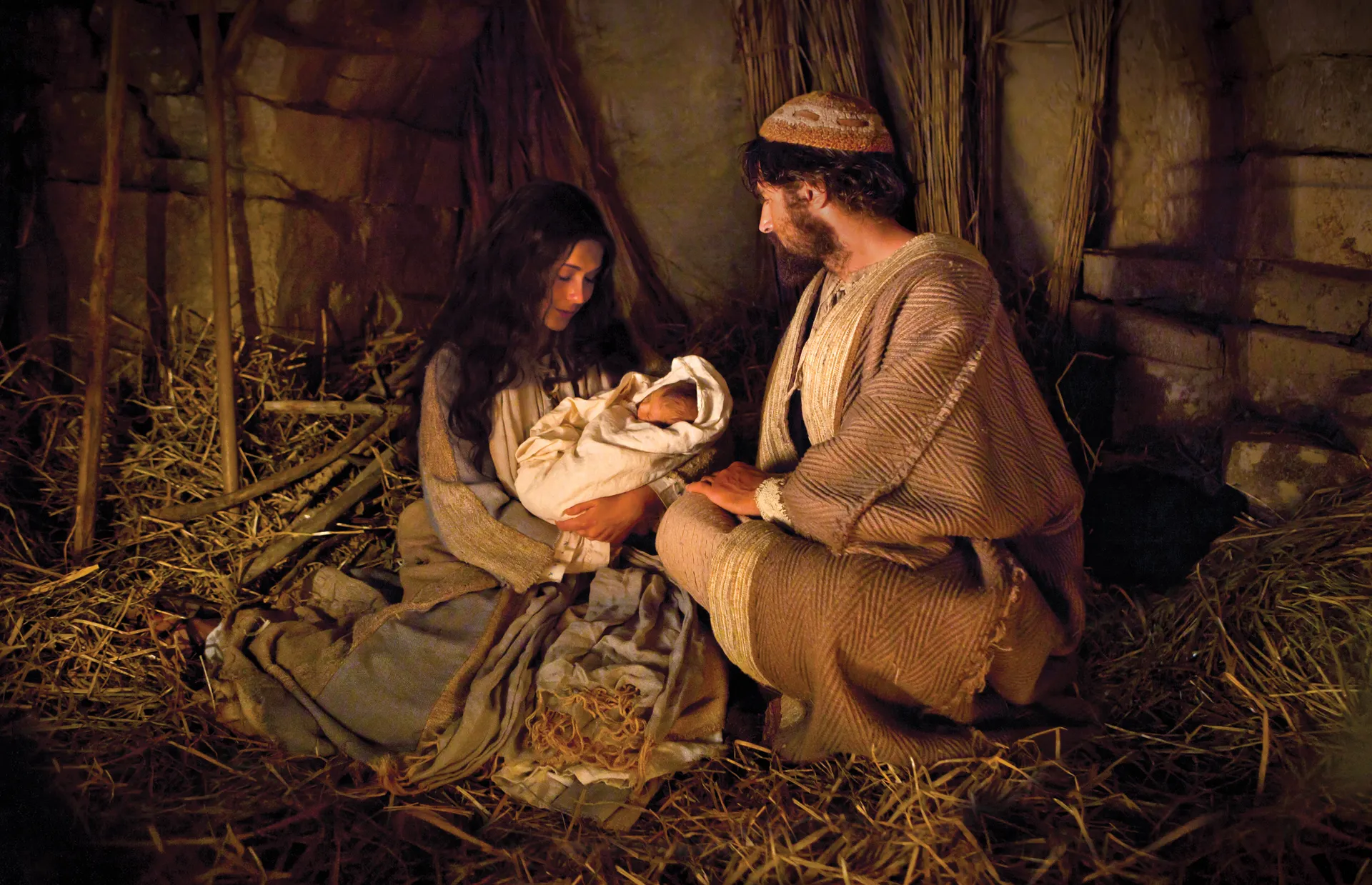
Taylor begins by taking aim at one of the most repeated images in the Christmas story: the “manger.” In modern retellings, it can feel like an improvised crib. Taylor stresses the physical reality. A manger was “a foul-smelling feeding trough for donkeys,” and placing a newborn in one was not a quaint detail, it was a stark sign. Luke’s Gospel frames it as a message to shepherds, who were outside at night guarding animals, exposed to threats that polite nativity plays rarely show. Taylor cites Luke 2:12 to underline that the sign is not sentimental, it is specific, and it lands in a world where survival required vigilance.
Her approach is to treat the nativity narratives less like a holiday script and more like evidence, stories formed in a particular time and place, carrying traces of what that place felt like. When those traces are taken seriously, the sentimental calm breaks apart quickly.
Herod and the politics of fear
Taylor argues that modern readers often encounter King Herod as a villain who needs no introduction, because the story has trained them that way. She notes something more historically grounded: Herod was a Roman appointment, a client ruler installed and supported because he served imperial interests. Taylor writes that readers are “supposed to know he was bad news,” but she also emphasizes why he endured, because “in Roman terms,” he was doing a reasonable job.
That framing matters because it explains how violence and state authority could be tightly linked. A client king survives by proving usefulness to the empire, and usefulness often means stability, tax flow, and suppression of rivals. In such a system, suspicion becomes policy. Taylor brings Jesus’ family directly into that political atmosphere by pointing to claims of lineage, the idea that Jesus’ family identified with the line of Judaean kings descended from David. She notes Matthew’s decision to open with genealogy, treating it as central to identity rather than a side detail.
In a tense political climate, genealogy is not just family pride. It can be read as a claim, or a threat, or at minimum a symbol that can attract attention. Taylor pushes readers to ask practical questions the Christmas story often skips: if a family carries an identity associated with kingship, how do they speak about the ruler installed by Rome? How do they interpret Roman power, and what stories do they pass down to their children?
Bethlehem was not sleepy, it was marked
Taylor’s most vivid move is to shift Bethlehem from a calm village to a politically loaded place. She describes how Herod’s relationship to Bethlehem, remembered as David’s home, became “more dangerous and complex.” In Taylor’s telling, Herod’s own rise to power involved regional conflict, including a moment when he was attacked near Bethlehem, fought back, and massacred attackers. Later, she writes, Herod built Herodium, overlooking Bethlehem, as a memorial to that violent victory.
Even without accepting every inferred emotion Taylor raises, the geography itself does important work. A town that lives in the shadow of a fortress-memorial has a different psychological texture than the one found on greeting cards. Herodium, in this framing, becomes a reminder that rule is enforced, and that memory is managed. Taylor’s question is straightforward: what does it feel like for local people to live beneath a skyline that celebrates their defeat?
She also challenges the idea of Bethlehem as a minor backwater by noting major infrastructure, including an aqueduct bringing water into the town. That detail is not decorative, it is a signal of importance. Empires and client kings build where power and population justify investment, and water control is rarely neutral. In Taylor’s narrative, Bethlehem is not simply where a prophecy must be fulfilled, it is a place where political memory, strategic building, and local identity collide.
Displacement is already in the story
Taylor’s reading insists that the nativity accounts contain displacement at their core. Families move because they must. Risk shapes decisions. Fear sits in the background, even when later Christian tradition wraps the scene in gold halos.
She points to what Matthew describes as a flight into Egypt, and then a return that avoids Judea. In her account, this is not merely a pious travel sequence, it reflects a map of danger. Herod’s death does not create safety, it creates instability. Taylor draws on Josephus’ account of unrest after Herod’s death, describing thousands taking over the Jerusalem temple and demanding liberation, followed by a massacre ordered by Herod’s son Archelaus. She also describes a wave of would-be rulers and revolutionary figures seizing control in different areas.
Taylor places Joseph and Mary’s later settlement in Galilee within this political moment. If the family returns and ends up in Nazareth, it is not simply because the story needs a hometown for adult Jesus, it can be read as a choice shaped by where power was weaker, or where a family might blend in, or where Rome’s local machinery felt less immediate.
Then the calm collapses again. Taylor describes Roman forces under Varus marching from Syria, destroying Sepphoris, torching villages, and crucifying large numbers of rebels, followed by what she calls Archelaus’s continuing reign of terror. In that picture, “peace on earth” becomes a daring proclamation rather than a description of conditions.
What this changes about the nativity
Taylor’s essay is not mainly about correcting holiday décor, it is about how people read the origins of a figure whose later message is often framed around moral choice, power, and the upside-down logic of the kingdom of God. If Jesus’ earliest years unfolded amid imperial control, political violence, and the reality of refugees, then later teachings about the poor, the oppressed, the hungry, the persecuted, and the fearful land with different weight. They sound less like abstract spirituality and more like speech formed in a world where soldiers could burn villages and public punishment was designed to terrify.
Taylor also invites readers to consider why the nativity has been softened in popular imagination. Societies prefer comforting origin stories. Churches, families, and cultures repeat what is soothing, especially when the holiday itself has become bound up with warmth, family, and a sense of pause. A turbulent nativity does not erase joy, but it shifts the tone. Joy becomes defiant. Hope becomes political in the deepest sense, a claim that a different order is possible in a world that keeps proving otherwise.
Her strongest contribution is that she returns the Christmas story to its own texture, and she does it using details many people already know but rarely hold together: a manger that is not clean, a ruler installed by Rome, a town marked by a memorial fortress, a family that moves in fear, and a region convulsed by revolt and retaliation.
In other words, Taylor does not argue that the nativity is less meaningful when it is less “calm.” She argues it may be more meaningful, because it places the story where it started, in a place where calm was not guaranteed, and where light mattered precisely because it was not easy to keep.
Credit: This article is based on Joan Taylor’s essay, originally published by The Conversation.