

Colonial roots, modern barriers: Why the Dutch Caribbean food trade still runs into the same roadblocks
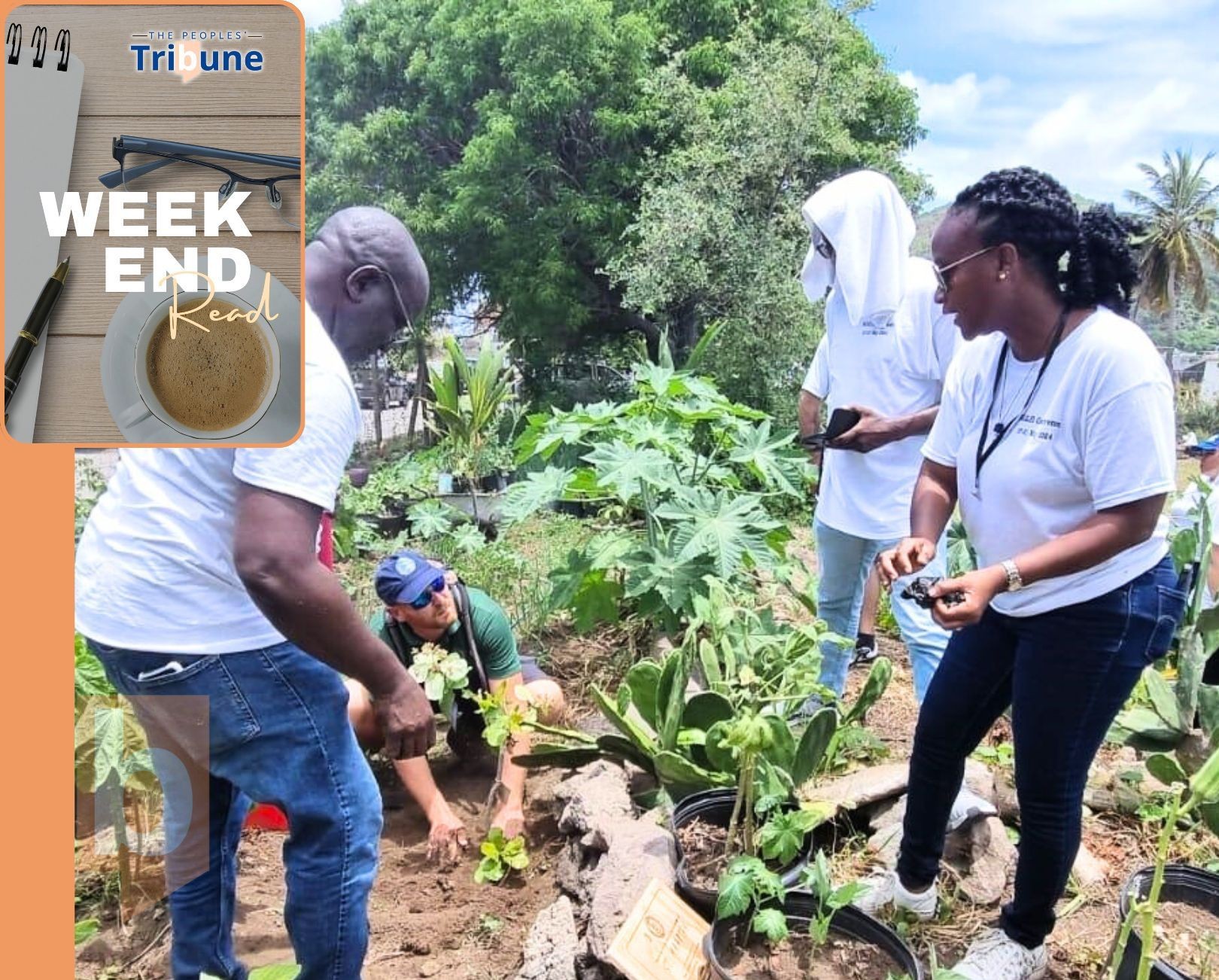
A Caribisch Netwerk feature published December 16, 2025, by Marit Severijnse, highlights a problem that many Caribbean farmers and consumers recognize immediately: moving food between islands of the Dutch Caribbean can be harder, and sometimes more expensive, than importing from far outside the region. Using examples from Bonaire and St. Eustatius, the report shows how separate inspection regimes, high freight costs, and limited cold-chain logistics continue to slow inter-island exchange, even as the Dutch Caribbean Agriculture, Livestock and Fisheries Alliance (DC ALFA), linking Bonaire, Aruba, Curaçao, St. Eustatius, St. Maarten, and Saba, works to grow local production, share expertise, and reduce dependence on imports. It also places today’s bottlenecks in a longer historical frame, arguing that colonial-era economic models favored export crops and built lasting import dependence, while disruptions to island economies and agriculture weakened local production over time.
High costs, fragmented rules, and a region that still imports from afar
“If I need an agricultural expert from Aruba, it costs me almost as much as a ticket to the Netherlands,” says Maurice Adriaens, coordinator of LVV (Agriculture, Livestock and Fisheries) Bonaire. He points to a wider contradiction that Caribbean farmers and fisheries actors encounter regularly: “And it is even stranger that vegetables sometimes come in more easily from outside the region than from a neighboring island. It is expensive and complicated to transport animals or products between the islands.”
Despite those barriers, Adriaens says there is increasing willingness to cooperate. The islands are now discussing joint import rules and the possibility of developing their own transport solution. “Ultimately, for example, we want to have our own boat or two boats. One for the Leeward Islands, one for the Windward Islands,” he says.
DC ALFA, six islands trying to build a shared food future
Three years ago, Bonaire, Aruba, Curaçao, St. Eustatius, St. Maarten, and Saba launched the Dutch Caribbean Agriculture, Livestock and Fisheries Alliance (DC ALFA). The aim is to increase food production, strengthen knowledge exchange, and reduce dependence on imports.
Adriaens argues that present-day production patterns are out of balance across the islands. “It is actually absurd that an island like St. Maarten has hardly any vegetable production of its own, while Statia sometimes has to throw away surpluses because they can't finish it with four thousand inhabitants,” he says. “That has to change.”
St. Eustatius, agriculture returns, but mostly as a side activity
That concern is echoed on St. Eustatius, where agriculture is becoming more visible again, though often alongside other work. “Most farmers and fishermen have full-time jobs and do agriculture as a hobby,” says Kimani Kitson-Walters, policy advisor for Agriculture, Nature and the Environment of the Public Entity of St. Eustatius.
Kitson-Walters has lived on Statia for more than eight years. He is originally from Jamaica and holds a PhD in marine science and biotechnology. For years, he worked as a Data Monitoring Officer at the Caribbean Netherlands Science Institute, where he had daily contact with fishermen.
“When you move from an island like Jamaica to an even smaller island, you automatically start thinking about sustainability,” he says. “Resources are limited on islands. What you lose doesn't come back.”
He describes the same vulnerability in agriculture. St. Eustatius has fertile volcanic soil, but production is costly because inputs must be imported. “Seeds, machines, fodder, everything has to be imported. With freight and taxes, you sometimes pay up to two hundred percent on top of the price.”
Even so, local farmers are producing tomatoes, cucumbers, sweet potatoes, pumpkin, watermelon, and herbs. “It's small-scale,” Kitson-Walters says, “but there is movement again.”
From livestock to training, cooperation is becoming practical
Within DC ALFA, cooperation is increasingly producing concrete results. A cattle specialist from Aruba recently provided training on Bonaire. Bonaire supported St. Eustatius in developing new agricultural plans. When Bonaire needed goats, they came from Aruba, and the cost difference was stark.
“Transport from the Netherlands costs six thousand dollars,” Adriaens says. “From Aruba two hundred. That saves money and animal suffering.”
Knowledge exchange has also moved in both directions. “We have learned a lot from Bonaire,” Kitson-Walters says, citing how Bonaire offers farmers space and guidance, a model St. Eustatius wants to apply. In return, Kitson-Walters supported Bonaire with data monitoring. “That's how we strengthen each other.”
The hard wall, different rules, weak logistics, and missing cold chain
Producers still face obstacles they cannot resolve alone. Each island has its own import rules and inspection requirements, which can make regional exchange unnecessarily difficult. “It is sometimes easier to get vegetables from a country further away than from a neighboring island,” Adriaens says.
Logistics are especially limiting for fresh products. “You need refrigerated storage,” Kitson-Walters explains. “But there is only one ship with refrigeration capacity, and that docks on the French side of St. Maarten. There is no refrigerated transport to the Dutch port.”
He adds that St. Eustatius is not yet producing enough for structural exports. “That's why we're now investing in wells, rainwater storage, machinery, and an agroprocessing facility,” Kitson-Walters says. “You can only compete with a stable supply.”
St. Eustatius, once a food basket, then a broken port and a shrinking population
Both Adriaens and Kitson-Walters link today’s constraints to historic disruption. “Statia was once a food basket for the region,” Adriaens says. “In the eighteenth century, food was produced here for other islands.”
Kitson-Walters adds that, “During the colonial period, the whole island was farmland,” and that more than twenty thousand people lived there then, compared with about three thousand today.
The feature describes an economic boom in that period, followed by a sharp break. In 1776, St. Eustatius became the first to salute an American ship, recognizing the independence of the United States. Five years later, in 1781, a British fleet led by Admiral George Rodney attacked the island, looting the port and confiscating goods and weapons. “Everything was destroyed, everyone fled,” Adriaens says.
Agriculture partly recovered afterward, but the island remained vulnerable. Farming continued into the 1960s, until the oil terminal created jobs that paid better and demanded less physical labor. “From that point on, agriculture became something on the side,” Kitson-Walters says. “Knowledge disappeared and imports took over.”
Colonial patterns still shape food systems across the islands
Adriaens argues the same pattern applies region-wide. “Colonizers did not stimulate export crops, such as sugar cane and tobacco, local food production. Dependence was part of the system.”
Former lecturer and political commentator Arthur Sealy describes how that legacy played out on Bonaire. “Agriculture, in corn, beans and peanuts, was here for a long time purely for survival,” he says. After slavery, people received small plots, but large parts of land ended up with wealthy families who exported to surrounding islands.
Sealy notes that attempts to establish new crops and products, including tobacco, cotton, dividivi (a tree whose pods were used to make leather), and cochineal (an insect that lived on cacti and produced a red dye for textiles), often failed due to drought, diseases, and a lack of knowledge. Bonaire remained dependent on what did succeed, “Salt, goats and aloe.”
On Curaçao, where markets and trade were better organized, agriculture persisted longer. Sealy describes how workers from Bonaire moved away to Cuba, Suriname, or Venezuela. “The women stayed behind, but traditionally did not work in the fields,” he says. He adds that many workers became ill with malaria and did not return, leaving plots abandoned.
After the Second World War, the economy shifted further toward industry and tourism, and agriculture became less attractive. “The enthusiasm is not there,” Sealy says. He recalls an earlier school agricultural project where young people responded, “No sir, I'm really not going to work in the sun.” Sealy says farm work is often linked to slavery, and, “It is associated with slave work. That runs very deep.”
A regional shift toward food security, and new ways to attract youth
Even with these constraints, the feature reports a growing awareness that food security starts with domestic production. Representatives of the six islands meet annually at the DC ALFA conference. “This year, a farmer, fisherman and livestock farmer from each island could come along,” Adriaens says, adding that enthusiasm is growing, including from the Netherlands.
Kitson-Walters sees the future in cooperation and innovation, especially approaches that appeal to younger people. “Not everyone wants to stand on the land with a machete,” he says. “But techniques such as hydroponics and aquaponics, in which plants are grown in water without soil, do appeal to young people, because they require less work in full sun and weather influences.”
His message is strategic and regional: “Each island must specialize in a few products and trade them among themselves. This is the only way to make us less vulnerable.”
Adriaens echoes that direction. “It's about producing local food professionally, strengthening each other and thus increasing food security, so that we are no longer dependent on imports. That is where the future of our islands lies.”
Information source: Caribisch Netwerk