

.jpg)



The Hague--Heera Dijk (D66) delivered her maiden speech in the House of Representatives during the Kingdom Relations debate this afternoon, drawing rare silence in the plenary hall and visible emotion among Members of Parliament.
Opening with a personal greeting to the Kingdom and a poem written by her twelve-year-old daughter, Enora, Dijk introduced the loss that marked her election period and the lessons she says now guide her work for the people of the islands. “My dear mother died suddenly during the election campaign. She just experienced that I was in 18th place for the D66 list. The pain and loss are enormous,” Dijk said, adding that she has learned “joy and sorrow can coexist close to each other,” even as “time still stands still for me.”
Dijk said she was grateful to deliver her maiden speech “on behalf of the largest D66 party ever,” and used the moment to describe her mother’s influence on her life and her politics. She shared her family history across the Kingdom and beyond, noting that her mother’s parents emigrated from Suriname to Curaçao, where her grandfather, Frans, worked at the Isla refinery. Dijk recalled a message passed down in the family, “Your diploma is your husband,” which she explained as a call to stand on your own two feet, and she named that as the first lesson she carried forward: “make sure you are independent.”
As a second lesson, Dijk pointed to her parents’ story, saying her mother came to the Netherlands at nineteen for her studies and “also followed love.” “That love was my father,” she said, describing him as born in Aruba to Surinamese parents, raised in Suriname, and still proudly calling himself “the Aruban,” before moving to the Netherlands to study in Delft and eventually obtaining his PhD. “The story of my parents brings me to my second lesson: dare to follow your heart,” Dijk said.
Dijk also spoke about identity, visibility, and the complexities of her family history. She said she is descended from enslaved people and argued that slavery took away identity in ways still felt in “the name, the language and in your own story.” “That is precisely why, Mr President, visibility is so important today,” she said. “Because no matter how hard some try to forget that history or make it smaller: you can't erase us. We are just there.” Dijk also acknowledged another part of her family history, “people who owned plantations, the plantation owners,” calling it “a complicated truth to bear,” and said it reinforced her belief that “you can only move forward if you dare to face the whole truth.”
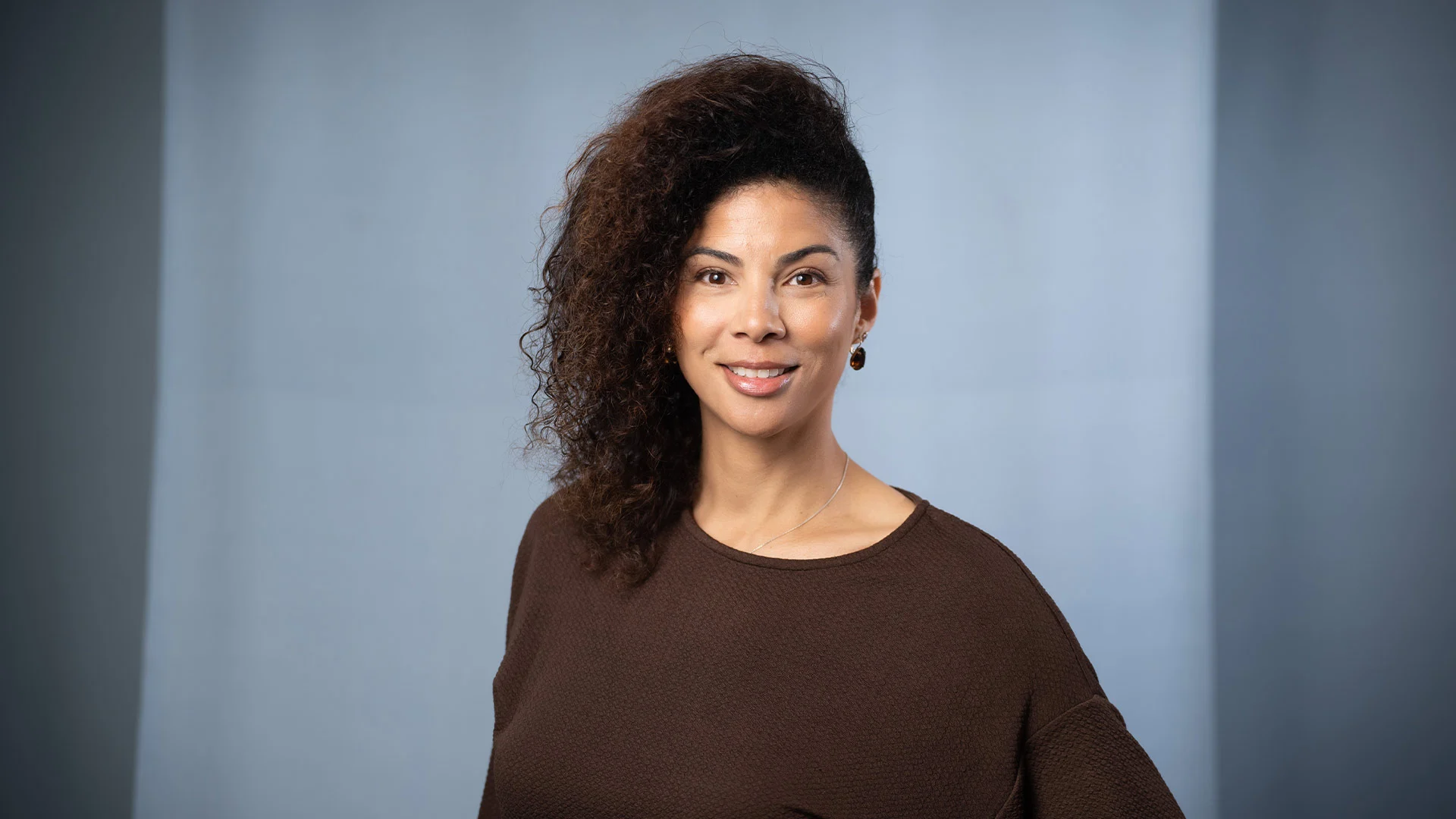
A third lesson, Dijk said, came from her mother’s ability to “listen without judgment.” She told Parliament she called her mother “the Buddha,” describing her as calm, patient, and deeply present, then summed up what she carried into public life: “be independent, follow your heart and listen without judgment.” Dijk said those lessons shaped her “as a woman, mother, teacher and politician,” and explained how her path into politics became concrete after she entered a modeling competition focused on diversity in the media. Seeking votes, she began sharing her story on social media, reflecting on being “one of the three ‘others’ in the class as a girl of colour,” and on experiences where people assumed she and others were “sisters” because of skin color. Dijk said the response to her posts helped push her into public office, including an old school friend’s message: “Lord, with what you say, you have to go into politics. Change starts there!” She described that moment as “the final push,” followed by her work in the Delft city council and her arrival in the national parliament.
Linking her personal framework to policy, Dijk said “Listening without judgment” is also how she approaches the Kingdom, whether in settings “15 years after 10/10/10,” at the Antillean Christmas market, or in conversations “on the street and on the islands.” She said one feeling repeatedly returns: “Amazement,” especially at “how long some problems have existed.” As an example, she pointed to the Salibon landfill on Bonaire, stating, “Every day, people on Bonaire and the environment are damaged,” and noting that “Nothing has changed since last year, says the Human Environment and Transport Inspectorate.”
Dijk used that context to question the current timetable for closing Salibon, welcoming the intention to speed up the process while asking why the target date is 2028, when she said an alternative waste processing location could be set up within 1.5 years. “What concrete steps will people and the environment protect until 2028?” she asked, also raising questions about access to medical examinations for local residents and whether “the mountain of waste” would “actually be cleaned up in 2028.”
She then broadened her focus to cost of living pressures, saying she hears “financial worries,” including worries about rent and groceries. While calling the social minimum “a first step,” she said it does not resolve the situation yet, and urged work toward “a truly liveable social minimum.” Dijk asked whether the State Secretary would commit to an immediate government response once new poverty figures are published in January, including the next steps for the social minimum. She also asked whether that response would include a possible extension of subsidies for electricity, drinking water, telecom, and the energy allowance, which she said expire at the end of 2026.
Dijk highlighted rent burdens, noting that “a large part of their income is spent on high, often private rents,” and contrasted a rental contribution pilot on Bonaire with the absence of such measures on Statia and Saba. She said tenants on Bonaire also do not know whether the contribution will become structural, and asked why differences persist between Statia and Saba, and when a pilot becomes structural. Citing that “more than 1,300 reports were received” last year, she asked whether the State Secretary would also establish a rental committee on Statia and Saba to better protect tenants.
Turning to governance and budgeting, Dijk said the Kingdom Relations budget relies heavily on “temporary resources, pilots and funds,” while many issues are structural. She questioned how residents on Statia, Saba, and Bonaire can trust the government if they cannot be sure whether support will continue for rent, groceries, and energy bills in the next year, and asked how the State Secretary intends to “build structural plans instead of tinkering with temporary pots and pilots.”
Dijk also emphasized education as a structural investment, noting she was a teacher until recently and describing education as decisive for a child’s chances. She said children on the islands deserve “exactly the same: the very best education,” and questioned why school meals in the Caribbean Netherlands are financed only until mid-2026, asking how the State Secretary explains that schools in the European Netherlands can continue offering meals while schools on the islands cannot.
In closing, Dijk addressed the broader theme of equality within the Kingdom. She said equality does not mean being exactly the same, but being worth the same, and warned that debates too often fall into “us-here” and “them-there” framing, rather than “us-here and us-there.” She also pointed to vulnerabilities linked to tensions around Venezuela, arguing that strong and equal cooperation within the Kingdom is essential.
As an example of what cooperation can achieve, Dijk cited Curaçao’s national football team, the Blue Wave, qualifying for the World Cup, calling it the result of years of investment and of rules allowing players with family ties to Curaçao, even if born in the Netherlands, to play for the team. She added that coach Dick Advocaat recognized that success did not come from imposing his own way, but from embracing “their energy, the music, the fun, the power of Curaçao.” Dijk said that story resonates with her personally because it reflects a message she did not always dare to feel as a young girl, “you don't have to choose between here and there. You are both,” adding, “even though I was born and raised here, I am a yu di Korsou.”
Dijk concluded her speech by returning to her mother’s influence, saying that while her mother is no longer alive, she is certain her mother would tell her: “Don't let yourself go crazy in The Hague. Do what you do best: ‘connect people’. Stay close to yourself. I know you can do it, go for it girl!”
Join Our Community Today
Subscribe to our mailing list to be the first to receive
breaking news, updates, and more.
