.jpg)



THE HAGUE--Member of Parliament Sjamira Roseburg has provided an update to the people of St. Maarten following her participation in the InterExpo 2025 Kingdom Relations Congress in the Netherlands, where she served as a panelist in a high level discussion moderated by Prof. Ernst Hirsch Ballin and took part in several working sessions on the future of the Kingdom and what all that entails, from justice, to human rights, to education and cooperation.
Roseburg explained that her main focus during the meetings was to push for honest dialogue that continues beyond the yearly conference and results in concrete follow up. She emphasized that InterExpo provides valuable space to talk, but that meaningful change requires a structural platform where the partners in the Kingdom meet regularly, look one another in the eye, and address both their differences and similarities. “Every year we come here and have good conversations, but then nothing happens. When we leave, there must be an agreement to keep talking in a structured way, otherwise we are not using this opportunity for our people,” she said.
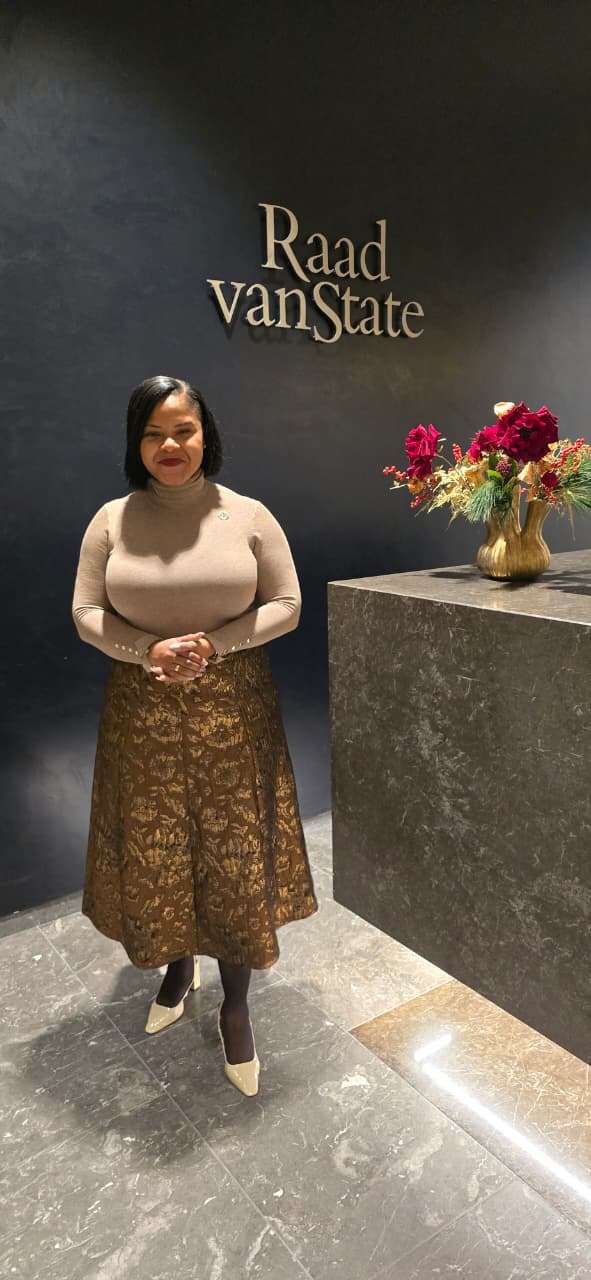
According to the MP, a recurring concern for her in The Hague was who is actually present at the table. She noted that only a very small number of Dutch Members of Parliament attended the justice focused sessions, despite the fact that decisions taken in the Netherlands directly affect residents in the Caribbean parts of the Kingdom. “We are all busy, but I made it my business to be here because it is important. If we are serious about moving from talking to action, then all the key players must be in the room,” she stated. Roseburg added that this lack of presence contributes to a sense of distance and fear between partners who do not know each other well enough.
Roseburg offered a simple idea to keep the InterExpo dialogue alive after everyone returns home, suggesting that MPs and stakeholders across the Kingdom exchange WhatsApp numbers and create shared groups so contact does not end when the conference does. Instead of waiting for the next formal meeting, she argued, partners should use everyday tools to continue sharing ideas, asking questions, checking in on progress and supporting one another throughout the year. In her view, a “structural platform” begins with practical steps like this, because real partnership is built in between the official sessions, through honest, ongoing conversations that make cooperation continuous rather than a once a year event.
Roseburg also used her interventions to call for a deeper discussion on how the Kingdom Charter is interpreted in practice, particularly articles such as 30, 36 and 43 that deal with assistance, responsibilities and conditions. She questioned why, in some cases, financial or policy support to the Caribbean partners is tied to conditions that go beyond what is applied in European contexts, and stressed that the starting point should be people and human rights, not a “dossier” of technical topics. “We are not talking about dossiers, we are dealing with people’s lives. We should not only look at human rights when a case reaches the European Court. The Charter already offers options, but the question is who is reading it and with what agenda,” she said.
For Roseburg, part of building a more equal relationship is also recognizing history and investing in real development. She welcomed the Dutch government’s 200 million euro commitment related to slavery history as a beginning, but made clear in the sessions that this cannot be treated as the conclusion of the discussion. She argued that genuine repair must include serious, long term investment in education, health, mental health and other areas that allow all countries in the Kingdom to become more self sustaining. “The wealth of the Netherlands was built on the labor of our ancestors. We cannot close our eyes to that. If we say we want equal partners, then we must invest in creating the conditions for that equality,” Roseburg told participants.
Another point she raised in The Hague was the role of language in building understanding. Drawing on developments in education where mother tongue instruction is increasingly recognized as a strength, Roseburg proposed that future InterExpo conferences should allow participants to speak in their native languages, such as Papiamentu or English, supported by translators into Dutch. She argued that important messages are sometimes lost when people are forced to speak in a language that is not their own and that the quality of the discussion would improve if contributors could express themselves in the language in which they think and feel most clearly.
Looking at the broader Kingdom relationship, Roseburg called for partners to stop focusing only on what they have in common and to begin working with their differences in a way that makes everyone stronger. She pointed to the Dutch reputation for structure and organization and the Caribbean islands’ strengths in social connection and community mindedness as examples of complementary qualities that could benefit the entire Kingdom if shared without strings attached. She also highlighted situations in which advisors accompanying Caribbean representatives have reportedly been rejected at meetings in the Netherlands, calling this unacceptable and urging all sides to safeguard each other’s ability to participate fully.
Roseburg stressed that she did not travel to the Netherlands “to waste time talking only among brothers and sisters who already agree,” but to ensure that the messages from St. Maarten and the other Caribbean islands reach those who most need to hear them. She encouraged the organizers of InterExpo to clearly document the commitments made during the 2025 edition and to distribute them to all stakeholders who were not present, so that the work can continue beyond the conference. She reiterated that for her, participation in future editions must be tied to visible progress in building the structural dialogue platform and follow up that so many participants have called for.
“My role as an MP is to represent our people wherever decisions are being discussed that affect their rights, their safety and their future. In The Hague, I made it clear that we want honest communication, equal partnership and a holistic approach to our shared challenges. Now the work continues to turn those words into real action,” Roseburg concluded.
Join Our Community Today
Subscribe to our mailing list to be the first to receive
breaking news, updates, and more.