
.jpg)
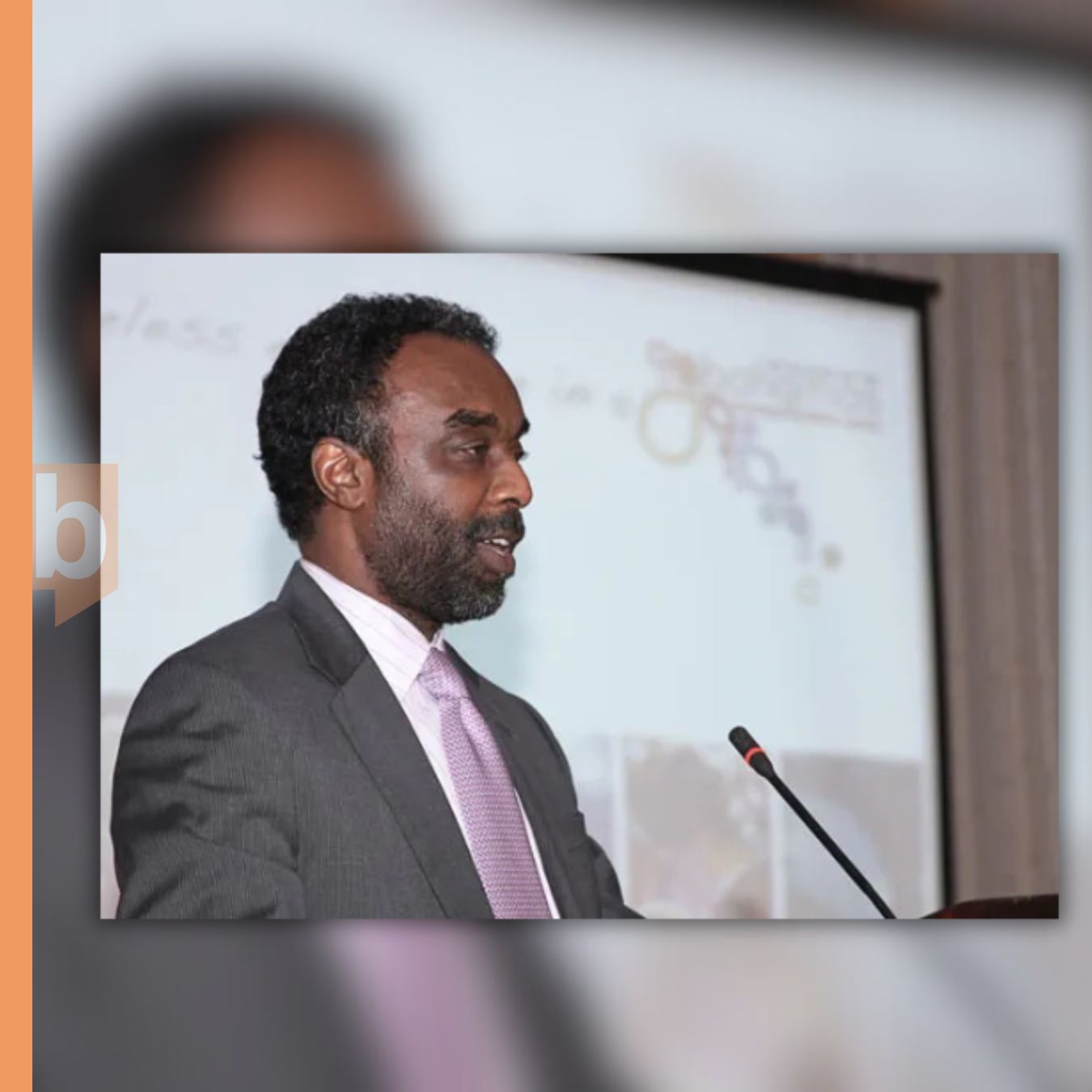



GREAT BAY, St. Maarten--At last week’s Strategic Economic Stakeholder Consultation Workshop hosted by the Ministry of Tourism, Dr. Vincent Vanderpool-Wallace urged St. Maarten to begin its Strategic Economic Development planning with a disciplined, data-led reality check and a shared system for owning and updating the metrics that guide decision-making.
In invited comments from 𝘛𝘩𝘦 𝘗𝘦𝘰𝘱𝘭𝘦𝘴' 𝘛𝘳𝘪𝘣𝘶𝘯𝘦, Vanderpool-Wallace said he opened his contribution with a blunt principle: “Management Without Metrics is Malpractice.” He cautioned that without metrics, it is not possible to arbitrarily define a credible data agenda. He also warned that “any agenda, plan or vision, without the clear capacity to execute that agenda, plan or vision is a hallucination.”
From that perspective, he recommended beginning with a data-led “reality audit” to understand current conditions, including available resources. He said the audit helps shape what is realistically possible and creates the foundation for creative, evidence-led planning.
He concluded that the most current data must be jointly owned through a private-public partnership between the public and private sectors of tourism, ensuring shared buy-in and consistent use of metrics to guide choices that the public can see reflected in policy decisions.
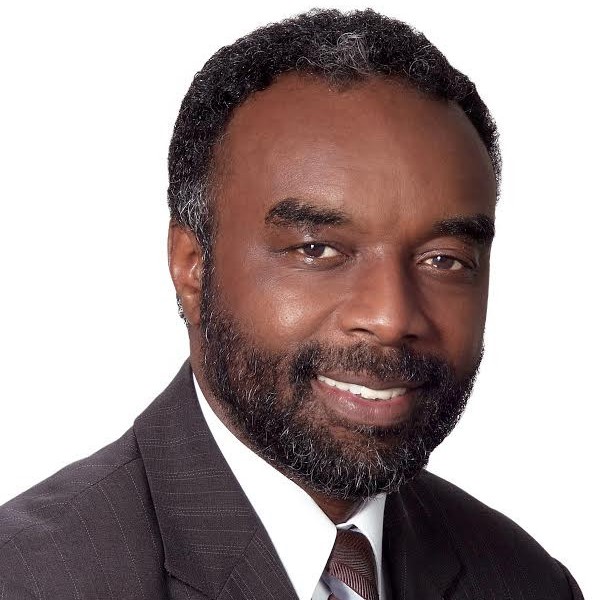
Dr. Vincent Vanderpool-Wallace is a veteran tourism executive and destination strategist with decades of experience in tourism policy, marketing, and management across the Caribbean and beyond. He is widely known for his work in destination leadership, stakeholder engagement, and evidence-led planning, with a focus on visitor experience, airlift and access, and aligning public and private sectors around measurable tourism outcomes. He served as The Bahamas’ Minister of Tourism and Aviation from July 2008 to May 2012.
He also previously served as Secretary General of the Caribbean Tourism Organization (CTO) and, earlier, as Director General of Tourism for The Bahamas. He is also the founder of the Bedford Baker Group, which provides advisory services in travel, tourism, and hospitality.
Core points and recommendations shared at the workshop
Beyond the data agenda, Vanderpool-Wallace outlined four central points for St. Maarten’s tourism direction.
Vanderpool-Wallace indicated that, “under the circumstances, St. Maarten has few options but to move in a direction that will attract more upscale visitors,” while maintaining clarity on what different visitor segments contribute to the economy.
Second, he highlighted the island’s geographic and transportation advantage, arguing that St. Maarten is positioned to act as a “base camp” for travelers seeking the pleasures of St. Maarten while also taking side trips to nearby destinations such as Saint Martin, Anguilla, Saba, and Saint Barthélemy. With Princess Juliana International Airport serving as the primary airport, he said the country is “perfectly located” to support multi-destination vacations that many cruise passengers crave, except in this model the traveler determines how much time to spend in each surrounding destination. In that context, he said St. Maarten should continue pursuing U.S. preclearance as part of its differentiation strategy.
Third, he stressed that the most influential “visitors” are the people already in the destination each day, because they generate word-of-mouth and electronic word-of-mouth through social media. As a result, he said the entire community of residents is responsible for tourism, not the Ministry of Tourism alone. He added that it is imperative for residents to understand the tourism business plan and how they can help, relentlessly.
Fourth, he said the community must come to see the high-income opportunities available in tourism, while recognizing that tourism impressions are created through direct interaction between service providers and visitors. He cautioned against moving top frontline performers out of guest-facing roles through promotion, stating that St. Maarten must stop removing “superstar” service providers from the frontline and instead find ways to keep them in place while continuing to reward them financially.
Communication that brings people along in a small society
In responding to questions about why reforms often stall once they meet real-world politics, Vanderpool-Wallace argued that many plans fail because they treat problems as purely technical, when they are often sociological in nature. He said studies can be “properly written by quite logical people,” yet still end up “sitting on shelves unexecuted,” because successful change requires the public to understand, trust, and see themselves inside the plan.
He recommended that proposed reforms be backed by “bulletproof studies” that can be shared with the public, alongside proposed changes that are clearly for the greater good. He added that St. Maarten’s scale is an advantage here, because reaching the full community in a small population is easier and less expensive than in larger societies.
To build shared understanding, he proposed the regular use of surveys that assess both visitor and resident views on key subjects. Where the results show alignment, he said the country can build on that “Common Knowledge,” referencing the concept discussed by Stephen Pinker, namely that there are things “everybody knows, and everybody knows that everybody knows.” Those shared truths, he argued, should be acted on quickly, supported by survey evidence.
Data as a “shield” and a “compass”
Vanderpool-Wallace also urged government to publish and routinely produce data that keeps policy debates anchored in evidence rather than opinion.
He recommended a tourism website with detailed information on visitors, including visitor spending, not only head counts. He stressed that an eight-hour visitor cannot be equal in value to an eight-day visitor, while also recognizing that eight-hour visitors generate income for an important tourism subsector. At the same time, he noted that an upscale visitor does not take more taxis at once, eat more breakfasts each morning, or sleep in more than one room, so volume still matters. In his view, what matters most is the detail behind the numbers and how that detail translates into economic impact.
He also called for publishing what he described as “The Voice of The Visitor,” meaning the trip evaluations visitors complete. He acknowledged that publishing such feedback requires courage, but said these evaluations should be routinely shared with the public.
Referring to Curaçao and its analysis of 2.8 million immigration cards, he said large datasets reveal actionable insights that intuition may miss, including which visitor types deliver the most value by origin, demographics, and activities, what accommodations they choose, how long they stay, and how they rate their experiences. He said these datasets reveal return on investment for marketing initiatives, guide decision-makers toward the strongest sources of value, and indicate which experiences should be reinforced, improved, eliminated, or changed.
On decision-making, he said indecision often comes from competing strong opinions and, without compelling data, the country can end up stalled. When a wrong decision is made, he added, data often shows fairly soon whether the course should be stopped or adjusted.
Join Our Community Today
Subscribe to our mailing list to be the first to receive
breaking news, updates, and more.
