.jpg)



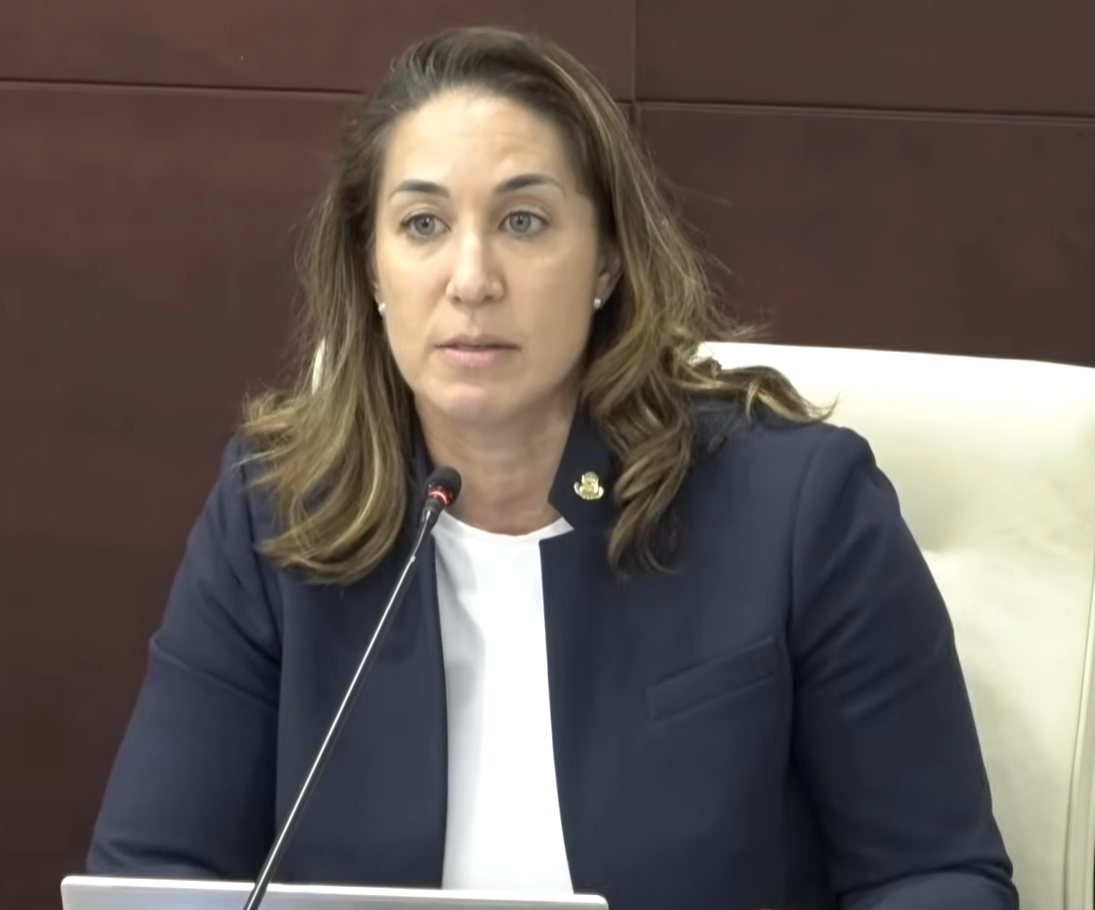
GREAT BAY--Long-running uncertainty for justice workers, from insurance coverage to retroactive payments, returned to the spotlight in Parliament’s Central Committee as Minister of Justice Nathalie Tackling delivered a detailed briefing and faced questions from MPs about timelines, union engagement, and why key files remain unfinished. While members pushed for clearer deadlines and quicker payouts, the Minister argued that government liability is anchored in law even without an active insurance policy, and said the ministry is moving toward a 2026 solution built on proper tendering, defined frontline risk categories, and tighter administrative follow-through.
Insurance
A major portion of the Minister’s presentation focused on insurance arrangements for frontline justice personnel. Tackling said confusion persisted in the public domain and among stakeholders, particularly following the May 2025 prison unrest and public claims that workers were being placed at risk. She said the Ministry responded in writing to the relevant union at the time and also disseminated information to the broader police force through internal channels.
Tackling explained that the legal foundation for compensation for police officers injured or killed in the line of duty is established in Chapter 10, Article 114 of the relevant regulation, which she said has been in effect since December 22, 2023. Under this framework, the government has a statutory obligation to compensate damages when an officer is injured or dies while lawfully performing duties. She stressed that the right to compensation comes from the law, while insurance serves as a financial risk-management tool to support timely payouts.
She further outlined how coverage differs across justice services. She said Chapter 10 applies directly to KPSM and specific other units, while other parts of the justice chain such as Customs, the Coast Guard, the Court of Guardianship, the prison, and others do not have a comparable article in their respective regulations. For those groups, she said the intention is to use collective insurance as a practical instrument to extend coverage, while emphasizing that the absence of an explicit article does not remove government’s employer duty of care under civil service law.
Providing historical context, the Minister said a group life insurance policy for police officers was in place from October 1, 2016, funded through a 20-guilder salary deduction, and renewed annually for five years. She said the Council of Ministers decided on October 13, 2022, to narrow coverage to frontline personnel in high-risk duties, removing administrative staff. The salary deduction was stopped and Salary and Wages was informed. The Ministry then initiated a tender process to secure a new insurer, but during the final stages it became clear that the Council of Ministers’ decision conflicted with draft legislation under preparation. Tackling said this could not be resolved without agreement through the CCSU, which was only reached in the third quarter of 2023, after the previous insurance had lapsed.
The Minister said the tender process was expected to be relaunched in 2024 with technical assistance, but that did not occur. Instead, she said the Ministry conducted an inventory of personnel to be covered, with department heads instructed to provide lists of frontline staff. She said progress was delayed again when the Ministry explored using the Crime Fund to finance coverage, but the Ministry of Finance rejected that approach. A specific budget post was later identified and the file was sent to the Governor, who returned it with comments requiring correction. Tackling said the decision was then taken to focus on 2026 to develop and refine coverage that matches operational reality and adheres to financial and legal procedures, including proper tendering.
She said the Ministry is now working toward expanding coverage based on risk categories, with the intent to include frontline justice workers beyond those formally covered in the regulation, including personnel such as correction officers, judicial bailiffs, probation officers, and others exposed to occupational hazards. She outlined preparatory steps, including defining policy objectives, defining “frontline worker” within the Ministry’s context, estimating the total number of personnel to be covered, conducting a risk and coverage analysis, reviewing past incidents and claims history, setting coverage and payout structures, and ensuring compliance with the regulation’s required amounts.
Later in the meeting, in response to MPs’ questions, Tackling clarified that there is currently no insurance policy in place and that there has not been insurance coverage since 2022. She reiterated that government remains liable under law, and referenced specific articles and payout provisions within the applicable regulation, including net maximum compensation amounts and defined percentages tied to invalidity and other circumstances. She explained that insurance is meant to support government’s ability to pay promptly, similar to how individuals use insurance to manage financial risk.
continues below..
Union communication and the CCSU framework
On the relationship between the Ministry and unions, Tackling said formal communication is conducted through the Committee of Civil Servants Unions (CCSU), which she described as the established platform for structured engagement. She said individual meetings with separate unions are not preferred because unions should receive the same information at the same time when matters affect their members. She said CCSU meetings are convened as needed rather than on a fixed schedule, and that the structure allows unions to request clarification and call meetings when necessary.
Tackling added that the Ministry responds to letters from unions, often within days depending on the information requested, and said she remains reachable to union leadership for urgent matters. She also expressed support for structured follow-up and reporting, stating she is willing to appear in Parliament and engage through press briefings, noting that the Ministry has “nothing to hide” and will continue providing information when it can be shared.
Placement process, retroactive payments, and outstanding matters
Minister Tackling provided an update on outstanding payroll and placement matters. She said Phase 1 of the placement process was completed by the Ministry in December 2025. She reported that batches 14 and 15 were paid out through the payroll in January, while batches 16 and 17 were awaiting the Governor’s signature. She said a small number of cases remain outstanding due to discrepancies that will require an additional final batch, expected to include approximately 20 individuals.
She described the remaining group as presenting complications, including former workers and individuals classified as “boventallig,” meaning their functions are no longer included in the new function book. She said this has affected placement letters and clarity for some personnel and requires reparative work, including amending sections of the function book where incorrect scales were applied or where critical functions were removed. She said the Ministry is engaged with central government support to correct these issues.
Regarding Phase 2, Tackling said the Council of Ministers approved legislation to proceed, but an issue emerged in how the law was published, and it did not legally allow for Phase 2 as intended. She said the cabinet corrected the legislation, worked with the Governor’s cabinet, followed advice provided, and moved the updated legislation forward so it would not need to return to Parliament.
She also reported progress on other outstanding payments, noting that jubilee payments have been reviewed and approved, with some finalized and others pending authorization. She stressed that execution of payments falls under the Ministry of Finance, even after the Ministry of Justice completes its part of the process.
She detailed completed and pending advice totals, including on-call allowances, jubilee payments, and retroactive overtime across various justice services, and said KPSM retroactive overtime was being worked on by HR departments in collaboration with financial controllers.
MPs questions
During the question period, MPs pressed for clarity on the distinction between legal liability and insurance coverage, timelines for remaining batches and Phase 2, and the practical implications for workers. MPs also raised issues about the status of union engagement, the use of the Crime Fund, administrative staff coverage, and whether budget constraints could delay payouts.
Minister Tackling pointed MPs to Articles 114 and 118 and said the compensation entitlements for police officers are set in law. She stated that in cases of invalidity, compensation is capped at a net maximum of NAf. 200,000, and in the event of death a surviving spouse may receive a net payout of NAf. 100,000, with additional percentage-based provisions tied to specific injuries.
She also gave a direct, standalone clarification on coverage status: there is no insurance policy currently in place, and there has been no insurance in place since 2022. She stressed that this does not remove government’s legal responsibility, because the right to compensation flows from legislation.
On financing, Tackling said there is a budget reservation for insurance and confirmed that insurance is budgeted for 2026, estimating the amount at around NAf. 400,000, while noting that the final premium will depend on the scope, definitions, and risk calculations still being finalized.
Addressing the Crime Fund, she said the fund is under the Ministry of Justice but expenditures must still follow the requirements of the accountability framework, including the usual procedures. She said an earlier proposal to finance insurance through the Crime Fund was rejected by Finance, and she explained that insurance is a structural expense that belongs in the national budget, while the Crime Fund is intended for project-based purposes.
On who would fall under future coverage, Tackling gave a clear “no” regarding administrative personnel. She said administrative staff are not included in the frontline coverage approach, which is being framed around risk-based frontline functions rather than general staff categories.
On whether budget constraints could delay payouts, Tackling said Finance has not communicated any halt to payments to her, and that payouts have continued. She referenced batches 14 and 15 being paid via the January payroll and said the remaining payments hinge on completion of the administrative steps, including signatures and payroll processing.
The meeting concluded with the Minister reiterating that the Ministry will continue engaging through the CCSU framework, provide updates based on verifiable progress, and return to Parliament as needed to account for developments affecting justice workers and administrative processes.
Join Our Community Today
Subscribe to our mailing list to be the first to receive
breaking news, updates, and more.