

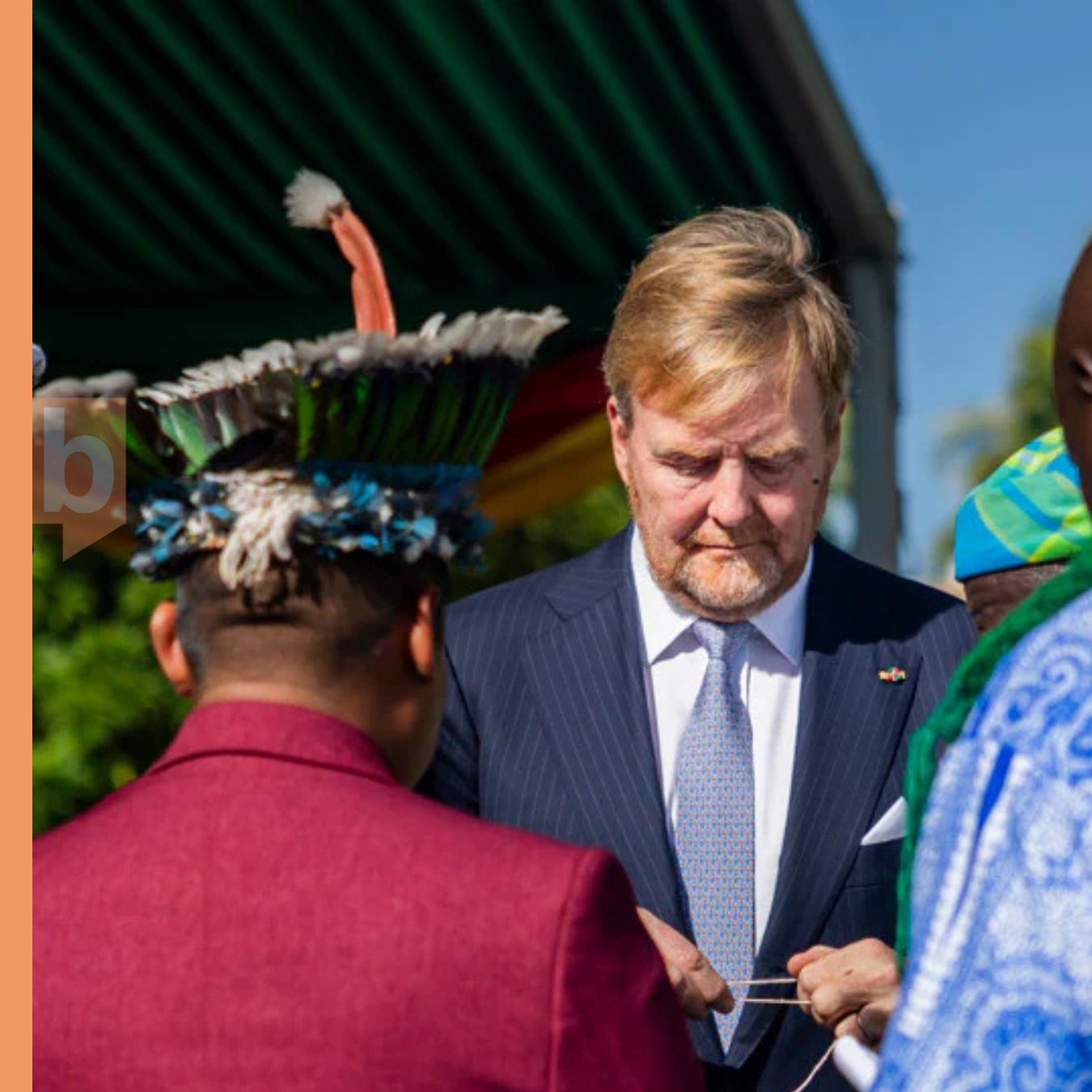



PARAMARIBO--Surinamese representatives of descendants of enslaved people have formally forgiven King Willem-Alexander for the Dutch royal family's role in slavery, marking a historic moment on the first day of the Dutch state visit to Suriname. The declaration came during a meeting with the king and Queen Máxima, where traditional and indigenous leaders expressed that they accept the monarch's earlier apology for the slavery past.
"We accept the apologies and the request for forgiveness," said a spokesperson for Fiti Makandra, a consultative structure of traditional and indigenous leaders in Suriname. The spokesperson said the group did so "in the full conviction that the king sincerely and with a clear conscience wants to cooperate in reconciliation and healing and recovery of the descendants in Suriname."
In 2023, King Willem-Alexander apologized for Dutch involvement in slavery and asked for forgiveness for the role his ancestors played in the slave trade. Those words were not repeated verbatim in Suriname. Instead, the king unveiled a plaque on which his 2023 apology is printed, confirming that statement in a permanent form. The Surinamese government unveiled its own plaque, stating that it is working with the Netherlands to address and process the shared past.
Earlier in the day, the king and queen attended a traditional ceremony on the banks of the Suriname River, intended as a symbolic farewell to the past. The king later said he had experienced the ritual as "very special." The formal conversation with representatives of descendants of enslaved people and indigenous communities took place afterward.
The meeting was held in a circle setting, described as special and intimate. According to those present, the king was visibly moved by the testimonies. He told the participants that he found it "special to experience the ceremony" with them and stressed that "we are all descendants of those who were involved in this." He said he was present as the person responsible for dealing with the legacy of his ancestors, and he emphasized that he wants to listen and help "build the future."
With the unveiling of the edict, the king again confirmed the apologies he made in 2023 for the Dutch role in slavery and the slave trade. He also spoke about healing as a shared task. During the meeting, representatives of descendants of enslaved people and indigenous peoples stated that they forgave him. They said they were very satisfied with the apologies for slavery and described the king as a real leader who understands what they feel when they speak about the effects of slavery.
Surinamese President Jennifer Simons told the gathering that she wants to continue the conversation about "recovery," referring to reparations from the Netherlands for slavery. Another attendee asked what the "healing" mentioned by the king would look like in practice. In response, the king indicated that he feels responsible for helping to build a detailed file "down to the decimal point," referring to the process that followed Prime Minister Mark Rutte's apology for the Dutch slavery past on December 19, 2022. At that time Rutte said the apologies were "not a period, but a comma," signaling that they should be seen as the start of a longer process.
The state visit itself is historic. It is the first Dutch state visit to Suriname in 47 years. Queen Juliana was the last Dutch head of state to visit the country, in 1978, three years after Suriname became independent. This visit now places formal forgiveness, continued dialogue about reparations, and the search for healing at the center of a renewed relationship between Suriname and the Netherlands.the end of a chapter, but a new beginning for an ongoing process of recognition and reparation, in which Suriname is crucial.
Join Our Community Today
Subscribe to our mailing list to be the first to receive
breaking news, updates, and more.
