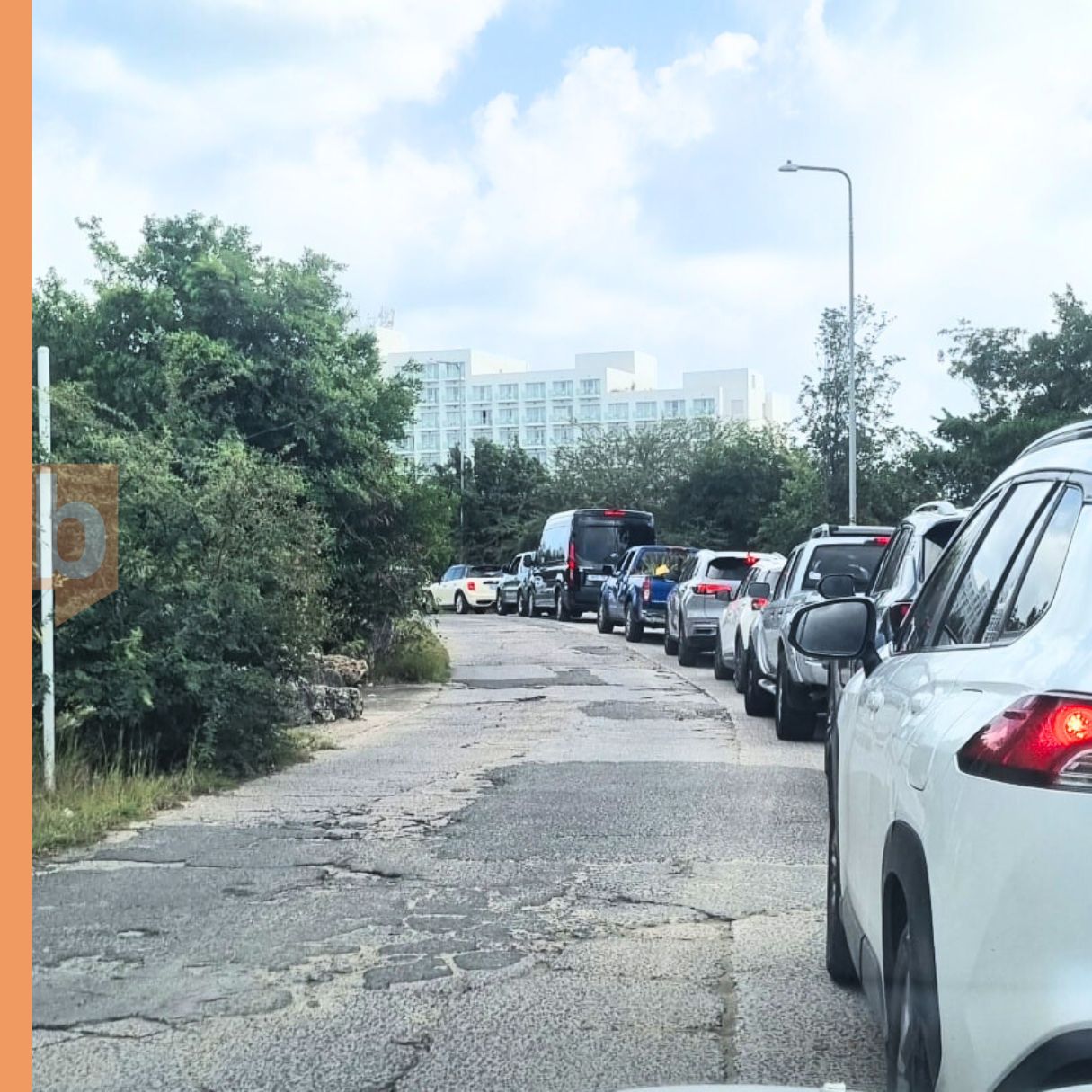



GREAT BAY--Prime Minister Luc Mercelina on Tuesday addressed growing public concern over traffic congestion, framing the issue as a structural challenge linked to limited road space, high vehicle density, and sustained growth in daily demand on the network.
Beyond near-term traffic interventions outlined below, the Prime Minister openly questioned whether St. Maarten may be approaching its development limits. He linked congestion to broader development pressures, including continued expansion in tourism and accommodation capacity, and suggested the country must evaluate whether future growth should be paced alongside improvements in infrastructure quality, efficiency, and public services.
Speaking on radio during The Breakfast Lounge with Lady Grace, the Prime Minister urged residents to view congestion through the lens of physical capacity, noting that St. Maarten is among the most densely populated territories globally and has limited land available for large-scale road expansion.
The Prime Minister stated that the country relies on approximately seven main roads, while accommodating an estimated 30,000 vehicles, in addition to roughly 2,700 rental cars. He also pointed to daily visitor movement related to cruise activity and airport arrivals as a factor that increases traffic volume and congestion during peak hours.
The Prime Minister said the government is considering multiple approaches, including:
Ferry transport and alternative routes
He referenced exploring ferry transport between key points as a way to move commuters and visitors off the roads and provide alternative mobility options during peak hours.
Traffic looping and one-way systems
He also described looping strategies and one-way systems for high-traffic districts, aimed at reducing choke points and improving flow. Such changes, if pursued, would typically require careful design, signage, enforcement planning, and public communication to prevent confusion and displacement of traffic into residential areas.
Public transportation reform
The Prime Minister raised public transportation reform as another possible part of the solution, while acknowledging that changes in the sector can be sensitive, particularly where licensing structures and business interests are involved. He indicated that any reforms would have to weigh practicality, fairness, and the broader public interest.
Vehicle growth and potential import controls
The Prime Minister also referenced the idea of a moratorium on car imports, describing it as politically sensitive. He framed it as part of a wider discussion on whether the country can continue expanding vehicle numbers without corresponding increases in capacity, enforcement, and supporting infrastructure.
The Prime Minister said the government will continue working toward practical solutions. The discussion signals a need for further technical assessment and public engagement to determine which measures could deliver measurable congestion relief without creating new bottlenecks elsewhere.
Join Our Community Today
Subscribe to our mailing list to be the first to receive
breaking news, updates, and more.