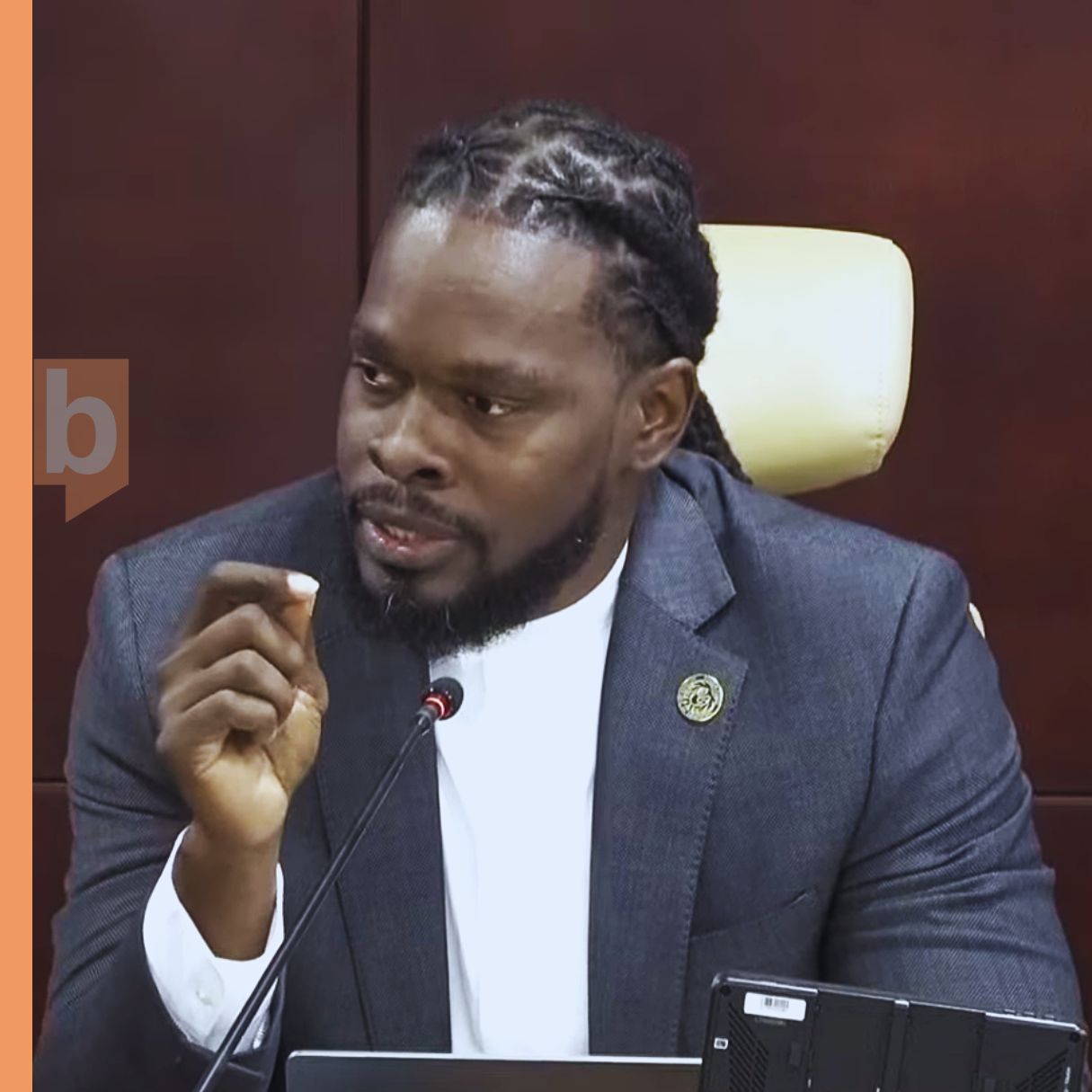



GREAT BAY--Member of Parliament Daryl York has published the government’s detailed responses to more than three dozen of his written questions on crime, prison operations, probation, and the wider justice chain. The Justice Ministry’s responses offer the public a clear snapshot of how the system is functioning under growing pressure.
York said the decision to release the documents stems from a simple principle. The public should not have to wait for a meeting or a microphone to know what government is doing in their name. Written inquiries are a tool for accountability and transparency, he noted, and when answers arrive, the people deserve to see them as they are.
Key Takeaways from the Minister’s 30 Plus Responses
• 7 prison officers have left over two years, worsening existing shortages.
• 15 new FTEs are budgeted for 2026 pending approval.
• Two vendors are owed over XCG 110,000 for prison services.
• Only 5 probation officers supervise about 40 clients each, far above the professional standard of 20 to 25.
• The department needs 12 officers to function effectively.
• 84 individuals owe a combined 7,596 community service hours.
• 25 ankle bracelets exist, only 12 are active.
• Murder resolution improved from 57 percent in 2024 to 67 percent in 2025 so far.
• Robberies fell from 140 in 2024 to 83 in 2025 according to official figures.
• 8 police officers remain on leave pending investigation.
• Joint training included 7 local recruits and 11 officers from Bonaire.
• Early release is discretionary, not automatic.
• Electronic monitoring is limited due to staffing, not equipment.
• No follow up exists once a sentence and supervision fully expire.
• Absenteeism among prison staff strains Pointe Blanche operations.
• Youth offenders are supervised within the same overstretched probation structure as adults.
While the responses cover a wide scope of issues, they also leave out one of the most critical indicators of police capacity: how many officers have actually left the force in recent years. That figure is essential to understanding why frontline presence feels reduced, yet it was not provided. The absence of this information leaves a notable gap in assessing the true readiness of law enforcement at a time when operational clarity matters most.
Taken together, the answers paint a picture of a justice system doing its best with limited capacity. Probation caseloads rose more than 20 percent in a year, work pressure climbed nearly 60 percent, and thousands of community service hours remain unenforced simply because there are not enough officers to track or manage them. Hiring solutions are deferred to the next budget cycle even as shortages are described as critical today, leaving the public to judge whether a system held together by dedication rather than resources is sustainable.
This tension becomes sharper when placed alongside crime statistics. Although the Ministry maintains that robberies and violent incidents have decreased compared to 2024, many residents struggle to reconcile these figures with everyday experience. Just this past weekend, 4 such incidents occurred within hours of one another. When official data and public reality move in different directions, confidence in the numbers naturally softens. True safety requires clarity both in reporting and in acknowledging what communities are actually facing on the ground.
Another concern emerging recently is the perception that until now, the Prime Minister had spoken more frequently and more forcefully on crime than the Minister of Justice herself. Her recent article, however, suggests she is prepared to engage more directly with the public on issues of crime and safety, and in moments like these, that type of steady communication is not just helpful but expected. York also encourages the Minister to adopt a more open door posture, as this can help narrow the perceived distance between leadership and the everyday justice worker. A minister who is accessible to her own chain often gains clearer insight into operational realities, and that kind of internal engagement can strengthen morale, improve coordination and ultimately benefit the public. Consistent visibility and accessibility from the holder of the justice portfolio can do more to reinforce public confidence than any statistic, especially in periods of uncertainty.
Looking ahead, York says he hopes to see justice finally prioritized and the realities the country is facing reflected in the next national budget. This is not said lightly, as it will require several ministries to sacrifice portions of their allocations for the greater good of the country. If Sint Maarten is serious about restoring safety and rebuilding public trust, this shift is necessary. Strengthening the justice coffers would allow for temporary or permanent support in high pressure departments such as Probation and make it possible to bring in reinforcement from the Netherlands, Curaçao, Suriname and other partners to boost police capacity at a time when numbers matter.
Equally important is resolving the cases of the 8 police officers who remain on leave pending investigation. Doing so would either return trained personnel to duty or create space for new recruitment. Leaving cases unresolved for years, and years is an understatement in some instances, does not serve the country’s present reality. These prolonged investigations stall operational capacity, undermine morale, and delay the return or replacement of trained personnel at a time when every officer counts.
If conditions continue to deteriorate, York notes that temporary military reinforcement with a zero tolerance posture should not be dismissed. Strategic, short term support could help stabilize frontline capacity and reinforce local law enforcement during heightened strain, ensuring that public safety is not compromised while structural issues are being addressed.
And while some may argue that resources are limited, York points out that government has previously secured over 1 million guilders for projects like Soul Beach and has creatively reallocated CAPEX funds for seasonal investments such as roundabout Christmas lighting. If that level of creativity was possible without external assistance, he argues, then the same urgency and imagination can be applied to financing the needs of the Ministry of Justice. A well funded justice system is not an expense but a safeguard. It is an investment in the stability and safety of every household, business and visitor on the island. Sint Maarten can no longer afford to treat justice as a secondary priority. In times like these, justice must not whisper. It must lead.
Join Our Community Today
Subscribe to our mailing list to be the first to receive
breaking news, updates, and more.