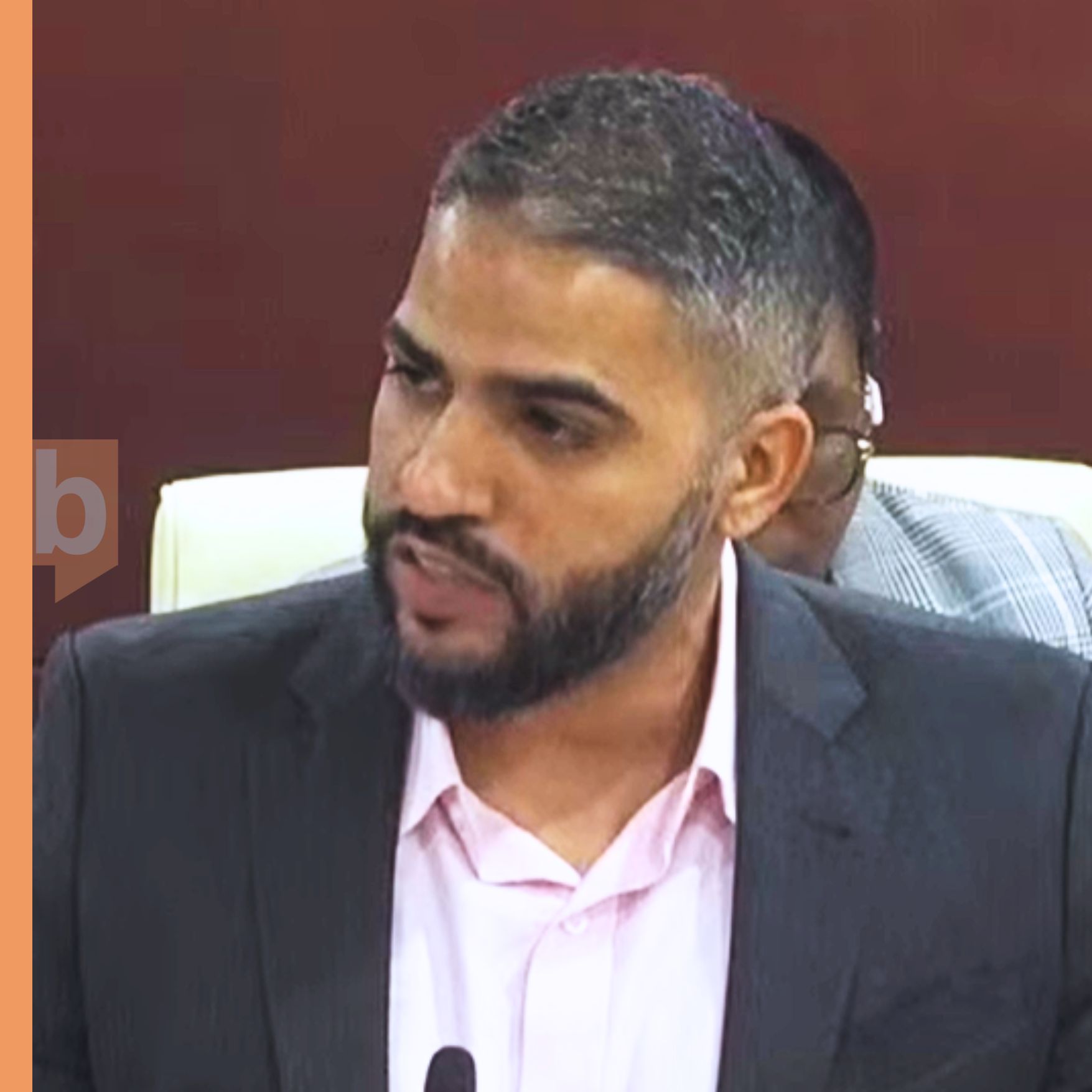



GREAT BAY--MP Viren Kotai today used the parliamentary discussion on Mullet Bay to propose a forward-looking financing approach that shifts the conversation from immediate government purchasing power to long-term national capacity to mobilize domestic savings for development.
MP Viren Kotai’s core argument was that St. Maarten should stop looking at Mullet Bay only through the narrow question of whether government has purchase funds today, and instead explore modern ways to mobilize “patient” local savings so ordinary residents can participate in financing major national assets, potentially including Mullet Bay, through tools such as asset tokenization and fractional ownership.
Kotai acknowledged that while St. Maarten holds the first right of refusal for Mullet Bay, there are currently no funds allocated for its purchase. He urged Parliament to broaden the lens by asking what the country’s banking and savings position looks like over time, including how total bank deposits have changed since 10/10/10 and what those deposit levels are today. Kotai’s underlying point was that if domestic deposits have not meaningfully grown, it signals a weak pool of local savings and limited “patient” capital that can be used to support national development in a sustained way.
In simple terms, Kotai described a chain reaction that can affect everyday people: if local savings in the banking system remain low or stagnant, banks have fewer low-cost local funds to lend out. When banks face higher costs to maintain required reserves and manage liquidity, those higher costs can show up in the form of more expensive loans for consumers and businesses. Kotai argued that this is why policies that encourage and incentivize residents to save, even modestly, matter for the wider economy, not only for individual households.
What Kotai meant by key terms
Kotai’s remarks included several technical concepts. In practical terms, they mean the following:
- First right of refusal: This refers to a priority right to purchase an asset before it can be sold to another party, if certain conditions are met. Kotai noted that having the right is not the same as having the funds available to act on it.
- Deposits per capita: This is a way of measuring average bank deposits relative to population. Kotai’s point was that a growing economy should ideally show signs of growing domestic savings, not only rising costs.
- Reserve requirements and cost of funds: Banks must keep a portion of deposits as reserves, and must also manage liquidity to meet withdrawals and payments. When deposits are limited or costly to attract, lending can become more expensive, and borrowers feel that through higher interest rates and fees.
- Patient domestic capital: Kotai used this to mean local money that stays in the country for longer periods, rather than moving quickly in and out, and can be used to support long-term projects.
- Tokenization: Kotai proposed exploring tokenization, which is the digital division of a real-world asset or project into smaller “units” that people can buy. In everyday language, it is a way to let many people own small slices of something big, instead of only a few people being able to buy in.
- Fractional ownership: This is the practical outcome of tokenization, it allows residents to own a fraction of a larger asset, rather than needing enough money to buy an entire property or investment.
- Liquidity and ability to “liquidate”: Kotai’s point here was flexibility. If ownership is divided into smaller parts, an investor could potentially sell a portion rather than being locked in, depending on how the system is designed and regulated.
- Central Bank digital currency: Kotai referenced that the Central Bank has shown interest in digital financial innovation. A Central Bank digital currency is a form of digital money issued by a central bank, and Kotai suggested this broader interest indicates readiness to explore modern tools, alongside the legal and regulatory safeguards required.
Connecting the idea back to Mullet Bay
MP Kotai argued that even with no immediate allocation for purchase and with legal and procedural hurdles still on the table, Mullet Bay could be re-examined through a modern funding lens where residents can choose to participate directly in the country’s development. His broader message was that St. Maarten should build systems that expand investment access beyond a small group, strengthen domestic savings, and give the middle class and working residents a real opportunity to benefit from national growth.
Join Our Community Today
Subscribe to our mailing list to be the first to receive
breaking news, updates, and more.