

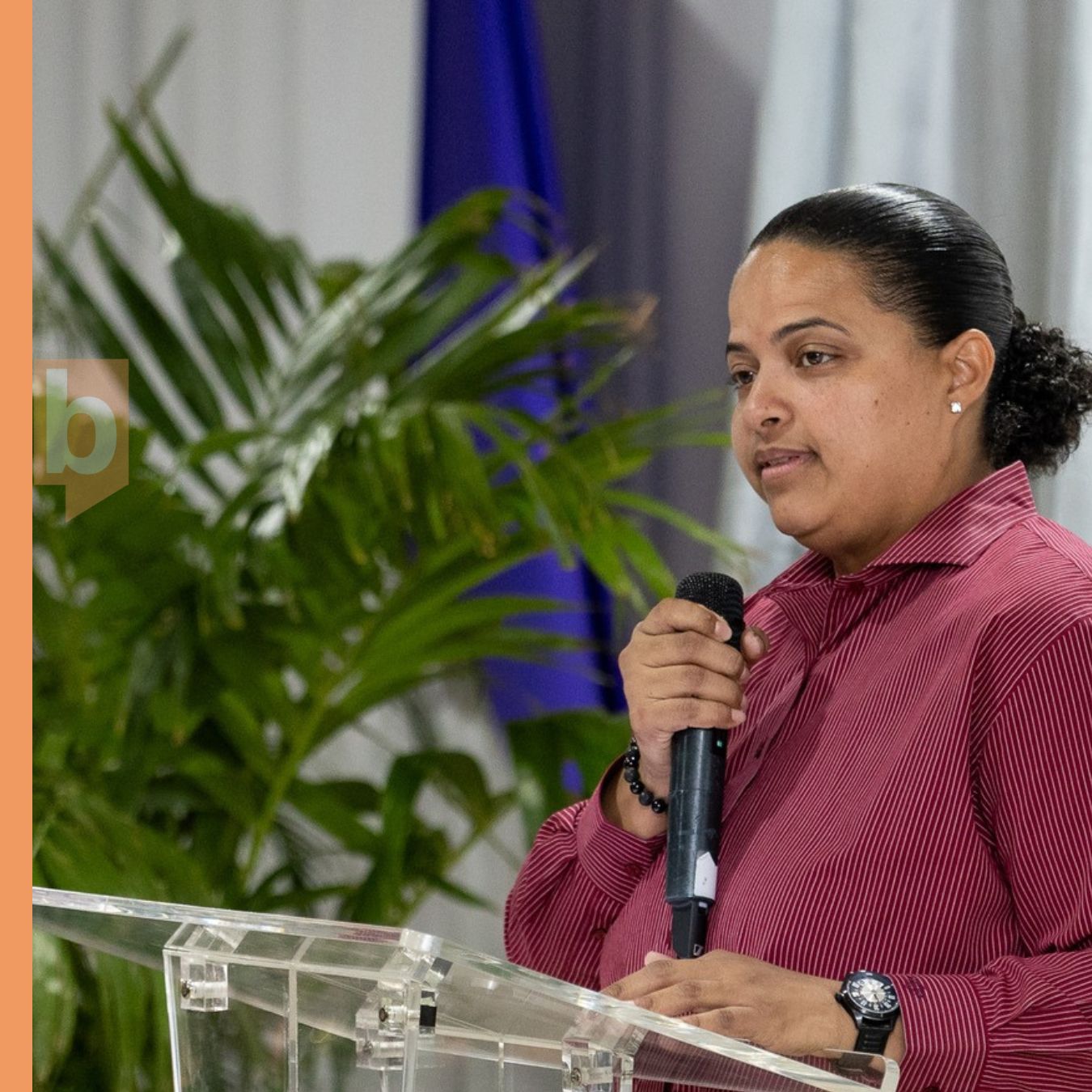



GREAT BAY--Minister of Education, Culture, Youth and Sport (ECYS) Melissa Gumbs has raised serious concern about the results of the recent Early Grade Reading Assessment (EGRA) and Early Grade Mathematics Assessment (EGMA), calling them a sobering warning for St. Maarten’s future workforce, public services, and overall social resilience.
The EGRA and EGMA were conducted with Group 3 and Group 5 pupils across the primary system. Group 3 corresponds roughly to grade 1, children around six years old, and Group 5 corresponds roughly to grade 3, children around eight to nine years old. The Group 5 students assessed this year are the same cohort that was in Group 3 two years ago, a group that began their foundational schooling during the COVID period.
According to the Minister, the results are not encouraging. A very high percentage of students are categorized in “emerging” skill levels. At six years old, many children are only now able to recognize certain letters, numbers and simple words. These challenges persist at eight and nine years old, which points to structural gaps rather than isolated issues.
Minister Gumbs placed these outcomes in a wider context. Declines in literacy and numeracy are not unique to St. Maarten, but are being reported across the region and internationally. She referenced reports from school districts abroad that are struggling with 13 year olds who cannot read at expected levels and who lack basic reading comprehension skills. She noted that similar gaps in reading comprehension are also visible in St. Maarten’s adult population.
The Minister stressed that reading comprehension is not only a language issue, but also central to performance in mathematics and technical subjects. Word problems such as “If Johnny has 10 apples and gives away 5, how many apples does Johnny have?” require students to understand what is being asked before they can apply basic arithmetic. If children do not develop solid reading comprehension, their ability to do math is also weakened.
She linked these early learning outcomes directly to long term employability and the functioning of everyday life. A child who struggles to read at six and eight years old, and who passes through the school system without adequate support, will later face difficulties as a worker and as a citizen. If someone cannot read well, they may not understand a menu, calculate a bill, interpret numbers on a gauge in a technical job, or follow written instructions. Even in practical vocations, workers must read measurements, understand manuals, and plan how to build or service equipment. All of this requires literacy and reading comprehension.
Minister Gumbs also pointed to her own experience in the private sector, where she saw declining literacy reflected in job applications. She recalled having to turn down applicants from St. Maarten while at UTS because they could not write a basic letter or correctly spell their own address. Errors like that do not stay on paper: they affect customer service when a company cannot locate a client because the address is wrong in the system. She described this as part of a revolving door of problems that will grow if literacy is not addressed now.
Beyond employment, she stressed that low literacy has implications for health and safety. If people cannot read or comprehend well, they may not understand a medicine bottle, a prescription, or other critical written instructions. That, in turn, affects their ability to care for themselves and for others.
The Minister also underscored the historical gap in system-wide assessment. St. Maarten shifted to Foundation Based Education in 2004. To her knowledge, 2023 was the first time such early grade assessments were conducted, which means that for roughly 21 years there was no comprehensive measurement tied directly to that academic structure. The current EGRA and EGMA results give the country, for the first time, a clear baseline of where early grade literacy and numeracy stand.
In response, the Ministry of ECYS is working with school boards, the Division of Public Education, teachers, student care coordinators, school managers and parents to design solutions that can improve outcomes for Group 3 and Group 5 pupils going forward. The Minister has already presented the results and message to school managers, teachers and related staff, and has stressed that all parties must collaborate to turn these figures around.
At the policy level, the Minister indicated that the cabinet is finalizing a trajectory to 2026 that will bring various initiatives together, make the necessary links across departments and programs, and engage stakeholders in a coordinated way. In the coming weeks, this trajectory will be further solidified, after which the Ministry intends to present it to partners and invite broad cooperation rather than competition on how to move forward.
The EGRA and EGMA results will be shared with schools as a tool to guide targeted interventions, and the Ministry plans to share the findings and the response plan with Parliament, with the aim of doing so in the first quarter of 2026. This will help ensure that the wider public is informed and that national decision-making reflects the urgency of the issue.
Minister Gumbs emphasized that her message is not intended to create panic or to criticize individuals or political opponents, but to serve as a clear call to action. She stressed that these children are the future caretakers, workers and civic participants of St. Maarten, and that improving literacy and reading comprehension is a collective responsibility that affects every sector of society.
Join Our Community Today
Subscribe to our mailing list to be the first to receive
breaking news, updates, and more.
