.jpg)



CARIBBEAN REGION--As 2025 opened, the Caribbean region had reasons to feel upbeat. That early optimism did not last long.
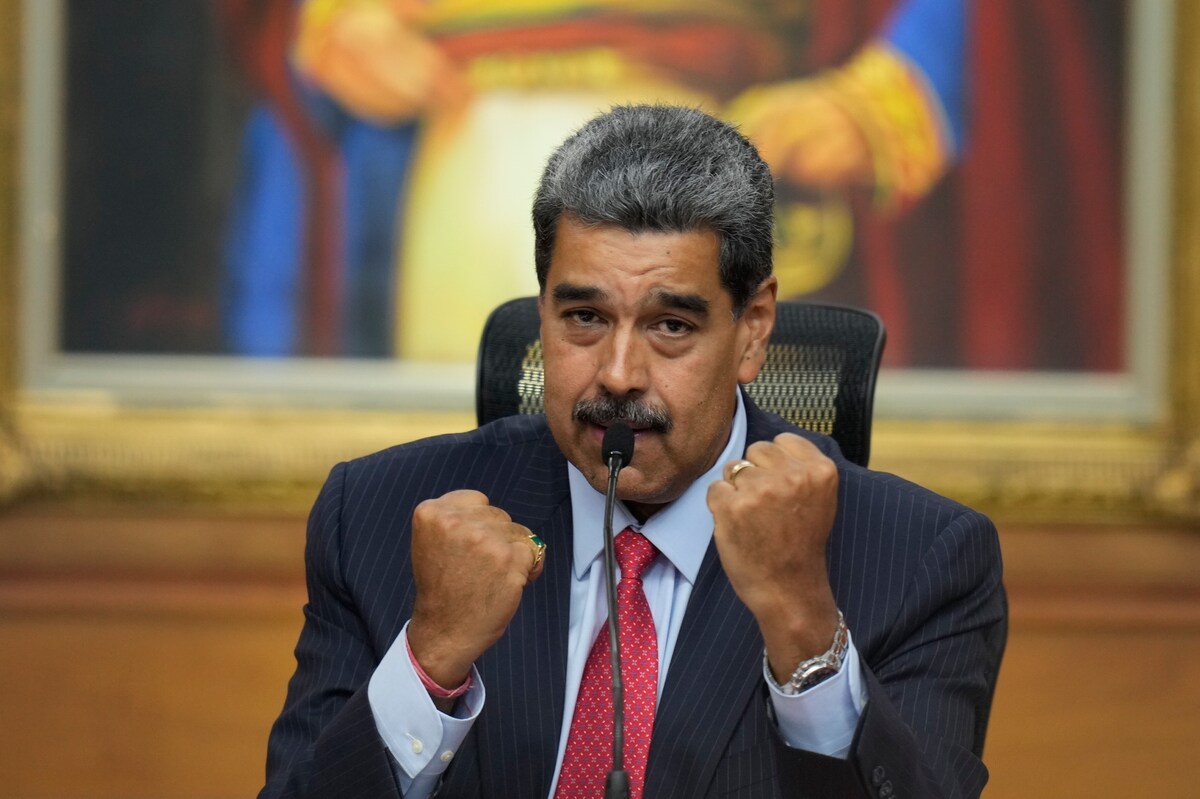
Venezuela’s President Nicolás Maduro was sworn in for a third term after a disputed 2024 election that sparked protests and mass detentions, then the United States shifted sharply in February as President Donald Trump’s administration began mass deportations. By year’s end, the Caribbean found itself squeezed between two powerful neighbors, watching a U.S.–Venezuela confrontation harden into a wider regional problem, with security, migration, and diplomacy all pulled into the same undertow.
Arts and culture: recognition, then a warning sign
Caribbean creativity still delivered the year’s clearest bright spots. Trinidad and Tobago’s Anthony V. Capildeo won the OCM Bocas Prize for Caribbean Literature and also picked up the Windham Campbell Prize. Writers with Caribbean roots also broke through on the Commonwealth Short Story Prize stage, with Guyana’s Subraj Singh and St. Vincent and the Grenadines’ Chanel Sutherland taking the regional and overall awards.
Music and visual arts carried their own signals. International Reggae Day centered climate justice, while Global Voices highlighted São Luís in Brazil, often called “Brazilian Jamaica,” as a place where reggae has become local identity. Jamaica-born Melissa Koby became the first Black artist to create imagery for the U.S. Open tennis tournament, and an exhibition in Trinidad and Tobago revisited indentureship and identity through contemporary art.
Then came the gut punch for the region’s literary ecosystem: the longtime title sponsor of the Bocas Lit Fest withdrew after 14 years. The decision landed as more than a budget line, it reopened an old argument about whether the region values its artists in practice, especially after the pandemic made clear how central art is to survival.
Climate justice: adaptation, pressure, and a brutal reminder
Across the region, climate action was a mix of innovation and recurring vulnerability. Stories ranged from the Dominican Republic’s push toward renewable energy, including hotels shifting to solar, to Guadeloupe’s Creole gardens and zero-waste efforts, even as Guadeloupe continues to face major agricultural waste challenges. Jamaica signaled interest in ocean renewables but faced funding constraints; Barbados’s fishing industry moved toward nature-based solutions as part of disaster preparedness; Guyana kept trying to balance new oil production with the reality that it also sits on a major carbon sink.
Alongside those efforts, the environmental strain showed up in familiar forms: development displacing shorebirds in Anguilla, projects pushing entire communities in Jamaica, and continued conflict over protected areas and plastics. Trinidad dealt with ongoing environmental degradation concerns, while Tobago faced warnings about an “imminent threat” to coral reefs.
When hurricane season arrived, Hurricane Melissa delivered the year’s harshest reality check, with Jamaica among the hardest-hit territories. Activists carried the moment into COP 30 in Brazil a month later, pushing their message directly into the global climate forum.
Caribbean coral reefs are in a dangerous state because rising ocean heat is now hitting them more often and with greater intensity, pushing bleaching from an occasional crisis into a repeating stress cycle. A recent regional assessment reported that Caribbean reefs have lost about 48% of hard coral cover since 1980, while average sea surface temperatures over Caribbean reef areas rose about +1.07°C between 1985 and 2024, a pace that increases the likelihood of extreme marine heatwaves that can trigger mass bleaching and mortality.
Sport: big wins, and two World Cup breakthroughs
Outside West Indies cricket, Caribbean sport produced a strong run of morale-boosting results, from multiple medals at the 2025 World Athletics Championships to the Jamaican bobsled team’s North American Cup triumph, which mattered even more against the backdrop of Hurricane Melissa’s impact.
The headline achievement, though, was football. Haiti and Curaçao both qualified for the 2026 FIFA World Cup, and Curaçao did it as the smallest nation ever to reach the tournament. Haiti’s qualification carried extra weight because the team has been forced to play “home” matches outside Haiti due to insecurity, and still ended its long World Cup drought.
Curaçao’s 2026 World Cup qualification became a global headline because it rewrote the record books: the island qualified as the smallest nation by population ever to reach a men’s FIFA World Cup, at roughly 156,000 people, surpassing the previous benchmark often associated with Iceland. The clinching moment came on November 19, 2025, when Curaçao secured the point it needed with a 0–0 draw away to Jamaica in Kingston, completing an unbeaten campaign and topping its qualifying group to punch a first-ever ticket to the finals in the United States, Canada, and Mexico.

LGBTQ+ rights: legal uncertainty and political backsliding
Old debates returned in new packaging. In Jamaica, anti-gay rhetoric resurfaced in politics, reviving questions about whether the country will ever decriminalize the buggery law. In Trinidad and Tobago, concerns about discrimination intensified after the Court of Appeal reversed a 2018 ruling that had struck down the buggery law, sending the matter toward the UK Privy Council.
In the Dutch Caribbean, LGBTQ+ rights continued to diverge sharply by constitutional status, even as court decisions and Dutch legislation kept pushing the Kingdom toward a more uniform baseline.
Beyond marriage, 2025 also brought movement on anti-discrimination protections in the Caribbean Netherlands, where the Dutch government reported that the Senate approved the Wet Bescherming tegen discriminatie for Bonaire, St. Eustatius, and Saba in October 2025, aimed at strengthening equal-treatment safeguards on those islands.
Losses: a year of major goodbyes
The region mourned cultural and public figures across generations: Trinidadian musician Roger Boothman, steelpan champion Mark Loquan, reggae icon Jimmy Cliff, and other reggae stalwarts including Max Romeo, Cocoa Tea, and Determine. Jamaica lost poet Velma Pollard, Trinidad and Tobago lost Glen “Dragon” De Souza, known for reviving moko jumbie walking, and Rex Lasalle, linked to the country’s 1970 army mutiny in support of the Black Power movement. The year also claimed respected journalists Rickey Singh and Jones P. Madeira, and filmmaker Danielle Dieffenthaller. Caribbean netizens also widely mourned Pope Francis.
Politics and the colonial afterlife: pressure from outside, fractures within
Regional political conversation kept circling back to colonial residue, identity, and sovereignty. Online debate ranged from celebration of a U.S. presidential pardon for Marcus Garvey to renewed calls to decolonize Trinidad and Tobago’s coat of arms. When the UK moved to introduce visa requirements for Trinidad and Tobago nationals, it reopened deeper regional discussion about ancestral trauma and unequal mobility.
Even on issues where leaders appeared united, fault lines emerged. CARICOM defended Cuba’s medical cooperation program after the Trump administration imposed visa restrictions on officials it described as “complicit.” Tensions sharpened further after U.S. military strikes on vessels in regional waters tested the bloc’s commitment to the “zone of peace” idea, and criticism intensified around Trinidad and Tobago’s Prime Minister Kamla Persad-Bissessar for supporting and facilitating the presence of U.S. troops in the region.
Inside Trinidad and Tobago, the dispute spilled into public debate about CARICOM itself. Persad-Bissessar said Cabinet had not discussed withdrawing from CARICOM, even as she criticized the bloc and described it as an “unreliable partner,” a flare-up that drew pushback from domestic political opponents and concern from business voices watching trade and regional stability.
Elsewhere in regional politics, St. Vincent and the Grenadines delivered one of the year’s biggest electoral shocks: Ralph Gonsalves, one of the world’s longest-serving democratic leaders, lost to Godwin Friday, ending a 24-year run in office and signaling a real shift in the Eastern Caribbean’s political landscape.

Aviation: routes shifting, connectivity still contested
While politics and climate dominated many headlines, airlift changes quietly shaped how the region moved. Late 2025 produced a mix of expansion and retrenchment: LIAT announced a new Antigua–Dominica–Punta Cana service aimed at tighter intra-Caribbean connections to a major leisure hub, while Caribbean Airlines disclosed route cuts that would end service to Tortola and San Juan from early 2026 as part of a network restructuring plan.
At the same time, other carriers leaned into inter-island opportunity. InterCaribbean detailed new service linking Tortola, Barbados, and St. Maarten, including new nonstop legs and increased connectivity via its Tortola hub. On the North American side, Avelo launched nonstop Wilmington–Punta Cana flights, another sign that smaller U.S. gateways are testing Caribbean demand beyond the usual big-airport pipeline.
The 2026 carryover
What the Caribbean “survived” in 2025 was not one storyline, but overlap: geopolitical pressure, climate shocks, cultural wins, legal battles, and shifting mobility. The region closes the year with stronger muscles in some places, exposed nerves in others, and a familiar hope that the next year brings fewer emergencies and more space to build, rather than simply endure.
With reporting by Global Voices and the Associated Press.
Join Our Community Today
Subscribe to our mailing list to be the first to receive
breaking news, updates, and more.