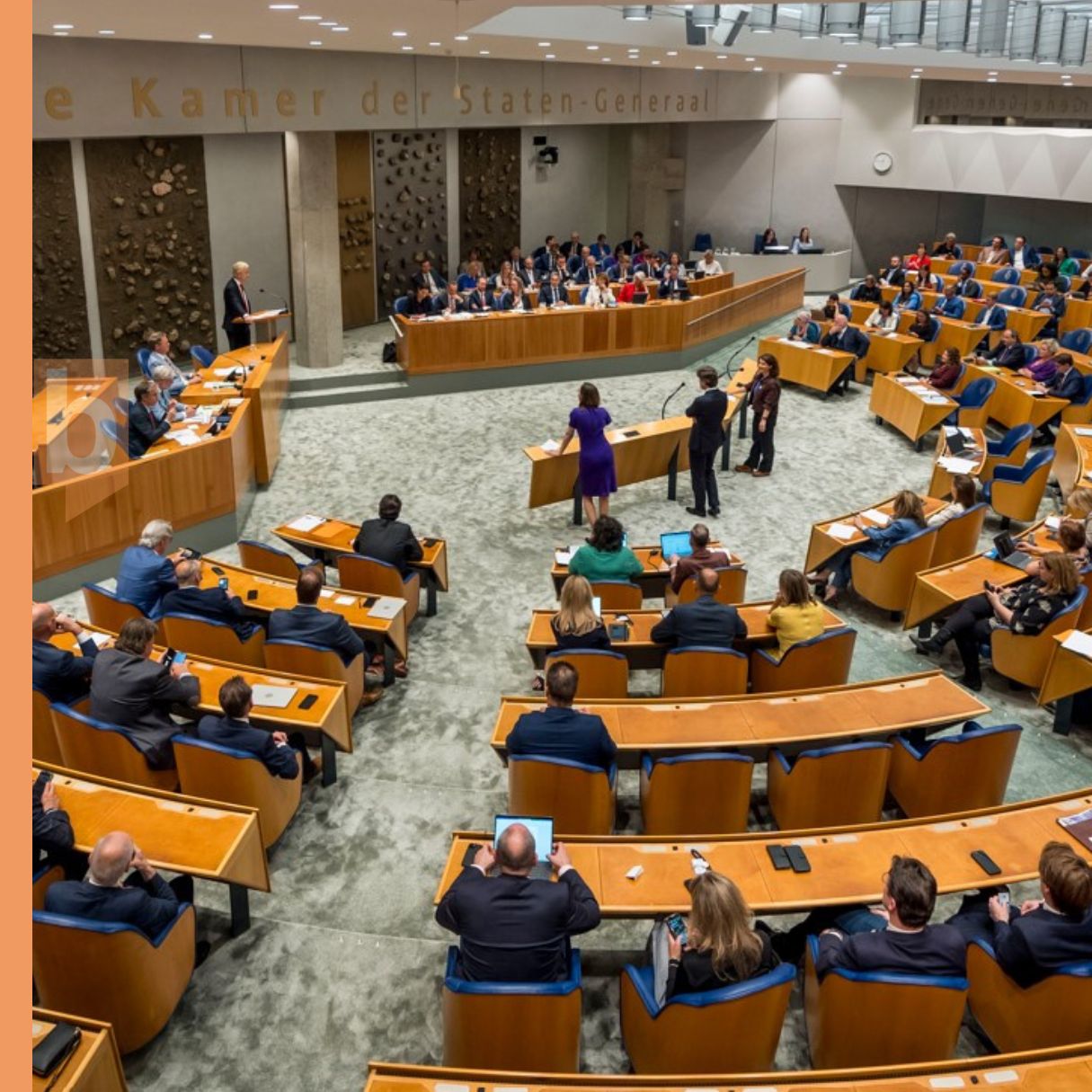



THE HAGUE--On Tuesday evening, the Dutch House of Representatives’ Committee on Foreign Affairs will hold a three hour debate on “the increasing tensions in the Caribbean and their implications for the Kingdom of the Netherlands.” The discussion comes at a time of heightened concern in the Caribbean parts of the Kingdom about recent U.S. military actions in the wider region.
Participating on behalf of the Dutch government are Minister of Foreign Affairs David van Weel, Minister of Defense Ruben Brekelmans, and State Secretary for Kingdom Relations Eddie van Marum. In written replies to questions from the GroenLinks-PvdA faction ahead of the meeting, the cabinet stressed that it currently sees no acute threat to the Kingdom.
The government wrote that it is aware of the concerns raised in the November 13, 2025 Nieuwsuur broadcast about rising tensions between the United States and Venezuela. It acknowledged that U.S. actions against suspected drug trafficking vessels in the Caribbean can understandably fuel unease on Curaçao, Aruba, and Bonaire. At the same time, the cabinet underlined that these operations are being carried out outside the Kingdom’s territorial waters and that there is no indication the islands themselves are at risk of being drawn into a possible conflict.
According to the cabinet, The Hague remains in close contact with the authorities of Aruba, Curaçao, and Bonaire. While it does not see an immediate danger, all parties are working through potential scenarios and preparing for possible consequences if tensions increase further. The Netherlands is also making its own preparations to provide assistance and support if needed.
Asked whether the Kingdom endorses criticism from international actors such as the United Nations and France, who have questioned whether the U.S. strikes comply with international law, the cabinet emphasized that the Kingdom is not a party to the American operation. The United States, it noted, is carrying out a nationally directed mission in international waters and bases its actions on a claimed right to self defense, arguing that transnational drug cartels pose a serious threat because of their violent and paramilitary character. Several cartels have been designated by Washington as terrorist organizations under U.S. law.
The Dutch government said it has taken note of the U.S. legal argument but reiterated its own view that self defense under international law requires an armed attack or an imminent threat. At this stage, it stated, it does not have enough information to independently determine whether that threshold has been met. The cabinet called on all sides to avoid further escalation and to respect international law, a position that is also reflected in the joint declaration from the recent CELAC-EU summit with Latin American and Caribbean countries.
On intelligence sharing, the cabinet responded that the Kingdom is not involved in the U.S. operation and that Washington has assured The Hague that information collected jointly under JIATF-S, the Joint Interagency Task Force South, is not being used for the U.S. national mission. As a matter of policy, the Ministry of Defense does not comment on specific forms of intelligence cooperation or data exchange.
Regarding the Cooperative Security Location at Curaçao’s Hato International Airport, the cabinet pointed to clear treaty arrangements that regulate U.S. activities. Under these agreements, the United States is allowed to carry out unarmed flights for surveillance, monitoring, and counter-narcotics tasks. These activities are limited to unarmed reconnaissance and do not support the national U.S. military operation. According to the government, no flights connected to that operation are taking place from Hato.
The cabinet also clarified that the Coast Guard for the Caribbean operates strictly within the Kingdom’s territorial waters and Exclusive Economic Zone. Its deployment is not coordinated with international partners in this context and does not contribute to U.S. activities in international waters or airspace.
On cooperation with local governments, ministers said developments are being tracked closely and that Aruba, Curaçao, and Bonaire receive regular briefings. Coordination focuses on scenario planning and logistical readiness as part of normal crisis management cooperation. These issues were also discussed during the recent crisis management week in Curaçao, held from November 24 to 28, which involved all Caribbean parts of the Kingdom.
The cabinet stated that communication with the public on the islands remains the responsibility of local authorities. To avoid confusion or mixed messaging within the Kingdom’s constitutional framework, the Dutch Minister of Foreign Affairs keeps the governments of Aruba and Curaçao, as well as the Island Governor of Bonaire, closely informed about geopolitical developments so that they can properly inform their populations.
The debate is scheduled from 8:30 p.m. Dutch time and can be followed live via the House of Representatives’ website.
Join Our Community Today
Subscribe to our mailing list to be the first to receive
breaking news, updates, and more.