.jpg)
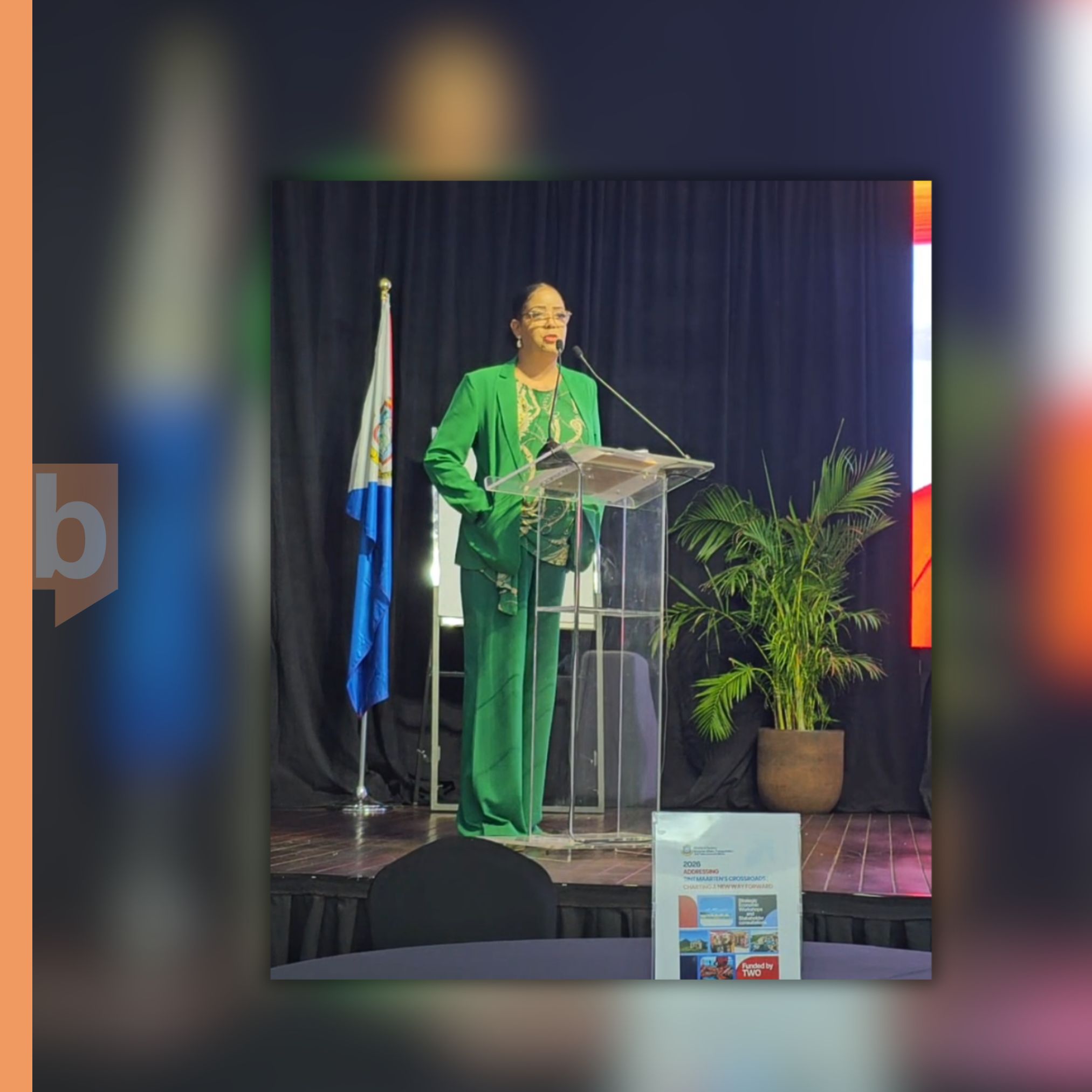



GREAT BAY--Peggy-Ann Dros-Richardson, Head of Labor Affairs for the Government of St. Maarten, delivered a stern warning at the Strategic Economic Stakeholder Consultation Workshop, saying the country is “not doing well” and that residents are being left behind despite record tourism and constant headlines about growth. Dros-Richardson was one of the keynote presenters during day-3 of the ongoing workshops this week.
She challenged the idea that large visitor numbers equal national progress, pointing to the reality that St. Maarten can welcome around 1.6 million passengers, receive cruise arrivals regularly, and even host the two largest cruise ships currently on the oceans, yet still fail the people who live here. She posed a direct question to the room: how well is the country doing at meeting the needs of its people. Her answer was blunt, St. Maarten is “grossly failing,” and she said the public should not confuse tourism volume with improved living conditions for residents.
She highlighted the country’s social safety net as an example of what she called systemic failure, stating that providing 734 guilders per month in financial aid is not a success story, it is a sign that government is failing those who need support most. She also called out the impact of the GEBE N.V. billing system, describing it as “crippling every household,” including households earning around 10,000 guilders per month.
Dros-Richardson said she was grateful to be at the session with peers and collegaues, but warned that the country has been in similar rooms and discussions before, repeatedly. In her words, “we’ve been here before,” and she suggested that without real follow-through, today’s meeting risks becoming another cycle of talk that changes little for ordinary residents.
“I’m exhausted” by buzzwords and empty partnership talk
Turning to the language that often dominates conferences and policy events, she said she is exhausted by the repeated use of terms like “resilience,” “strategic,” and “partnership and collaboration.” She argued that “partnership” is like any relationship and should be judged by performance and credibility.
In one of her sharpest points, she questioned who would realistically partner with a government that, in her view, cannot yet operate on an approved 2026 budget, cannot get tax assessments right, and is struggling with basic operational reliability. She said a serious investor looking to spend millions would hesitate to engage in long-term partnerships in a setting where core systems are not functioning properly, and "corruption" is being flung about casually on social media.
"Now excuse my explicit language just a bit. But who the hell is getting in partnership with a government that can't yet operate on an approved budget for 2026? Or private sector investor who comes here to invest millions and is interested in partnering with a government that can't get their tax assessments right. Nobody in their right mind is doing that," she said candidly.
Dros-Richardson said the country’s ability to support investment and growth is further undermined when employers cannot bring in needed labor because immigration backlogs are “all over the place.” She also pointed to the broader reputational damage caused by constant public talk of corruption, noting that when “corruption” is what dominates social media discussion, it becomes harder to convince serious partners that St. Maarten is ready for stable, long-term collaboration. She referenced the sentiment being voiced publicly that “the entire system” is corrupted, stressing that this is not a casual issue, it is a credibility crisis that affects the country’s prospects.
Tough choices ahead, people first, and accountability for everyone
Echoing the tone of earlier remarks in the session about difficult decisions ahead, Dros-Richardson said the country must get serious, serious for the people of St. Maarten, and center policy around residents rather than headlines. She also acknowledged personal emotion in her delivery, noting that she is tired of hearing familiar promises repeated over and over, and said some phrases and narratives are triggering for her, adding a brief reference to personal trauma while urging the room to stay focused on the country’s reality.
She closed that segment with a message that accountability cannot be demanded from government alone. She said residents also have a role and called for a “man in the mirror” moment, arguing that the country cannot keep complaining, expecting everything, and refusing to take responsibility where responsibility is due.
Labour Realities: “The Time for the People Is Now”
Closing the keynote segment, Dros-Richardson delivered a direct and unfiltered presentation on labour market realities, emphasizing that while data is widely available, the real challenge lies in how it is interpreted and applied.
Dros-Richardson spoke candidly about recurring policy cycles, noting that terms such as resilience, strategic, and collaboration have been used repeatedly over the years without always producing tangible change. Her presentation addressed the realities faced by the labour department, including instances where employment permit applications were denied due to qualified local candidates being available, yet recruitment practices favored foreign hires, a phenomenon she described as ethnic recruitment.
She further highlighted the legal and policy gaps that sometimes complicate decision-making, explaining that in certain cases, court rulings have upheld outcomes that expose weaknesses in existing policy frameworks. The presentation emphasized that balancing local protection, cultural dynamics, and investment remains one of Sint Maarten’s most pressing labour dilemmas, requiring decisive reform and stronger alignment between data, policy, and enforcement.
Join Our Community Today
Subscribe to our mailing list to be the first to receive
breaking news, updates, and more.