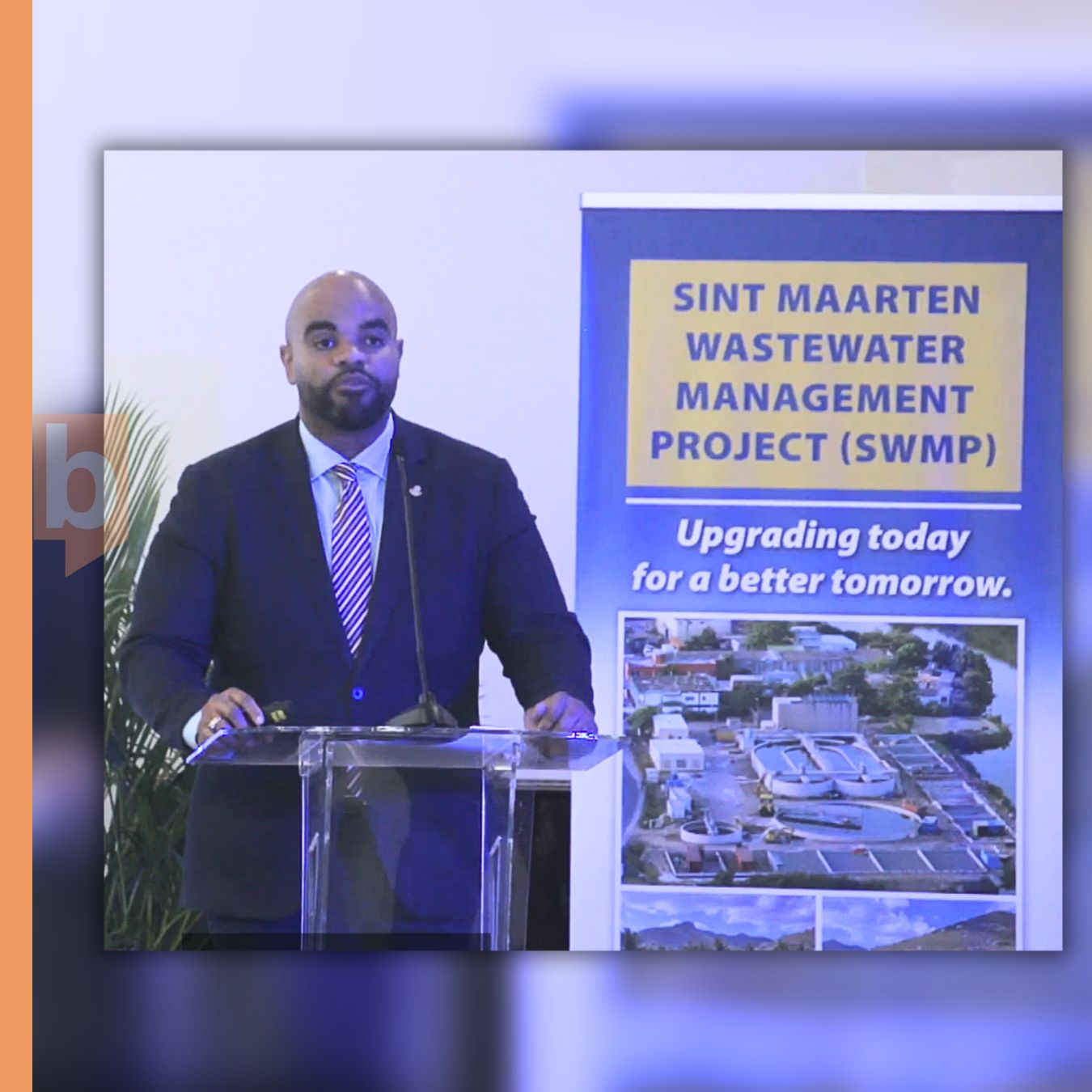



GREAT BAY--Minister of VROMI Patrice Gumbs and the National Recovery Program Bureau (NRPB) unveiled a comprehensive wastewater plan on Wednesday that will deliver approximately 1,400 new household connections in the Cul-de-Sac basin as part of the St. Maarten Wastewater Management Project, a US $25 million initiative that aims to cut sewage overflows, reduce nitrogen loads into ponds, and protect the island’s bays and beaches while improving day-to-day living conditions for residents. The public consultation on the St. Maarten Wastewater Management Project (SWMP) was held on Wednesday evening, December 10, 2025, at the Belair Community Center, with in-person and online participation.
Gumbs told residents that wastewater management is one of the country’s least glamorous discussions, yet central to quality of life. He reminded the audience that less than 11 percent of properties on the Dutch side are connected to the public sewer system, that many septic tanks overflow when it rains, and that an estimated 9,000 kilograms of nitrogen per year reach the Great Salt Pond through effluent and runoff. “Wastewater is not a government problem, wastewater is our problem,” the Minister said, stressing that illegal dumping of raw sewage into drains and open areas continues to damage neighborhoods, ponds and coastal waters.
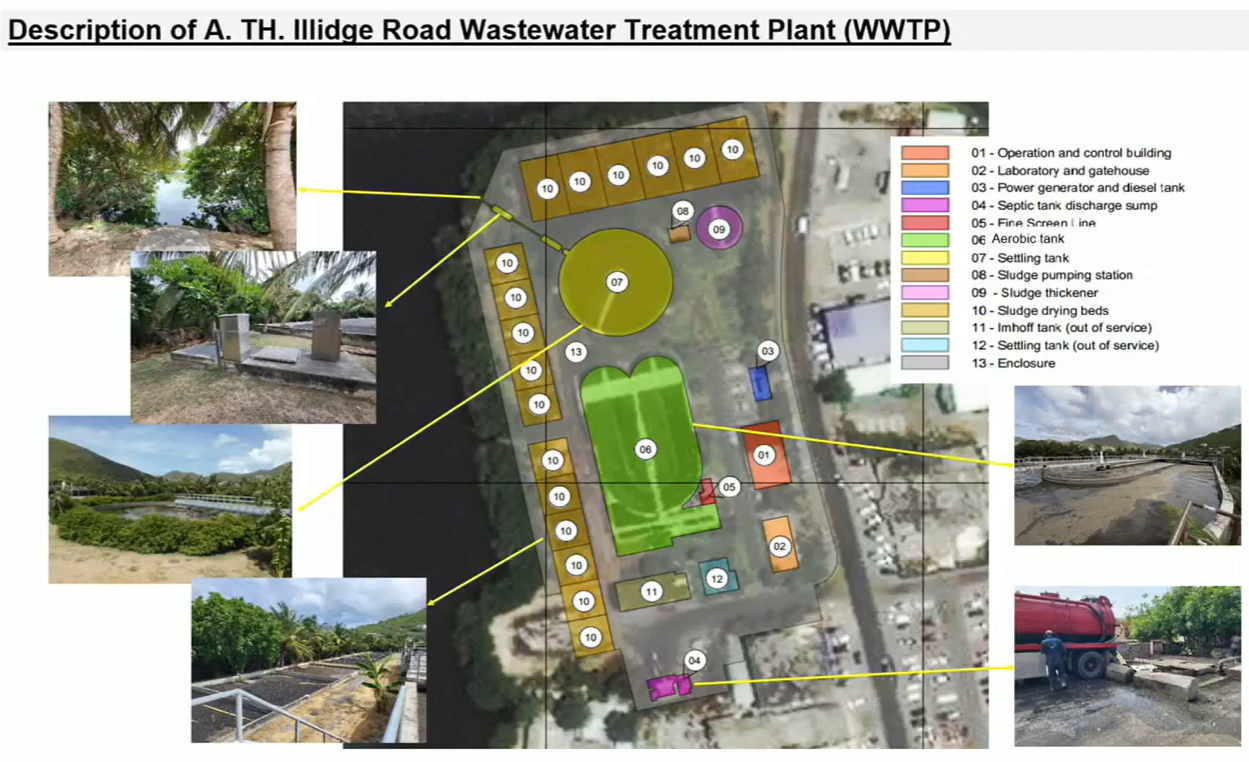
The SWMP is a city-wide, inclusive sanitation program focused on the Cul-de-Sac basin and the upgrade of the Illidge Road Wastewater Treatment Plant (WWTP). It represents a US $25 million investment, consisting of a US $10 million grant from the Trust Fund and US $15 million in counterpart financing by the Government of St. Maarten. Its core objectives are to protect public health and marine ecosystems, reduce sewage on streets and in storm drains, safeguard tourism, and provide reliable, climate-resilient sanitation for households and businesses.
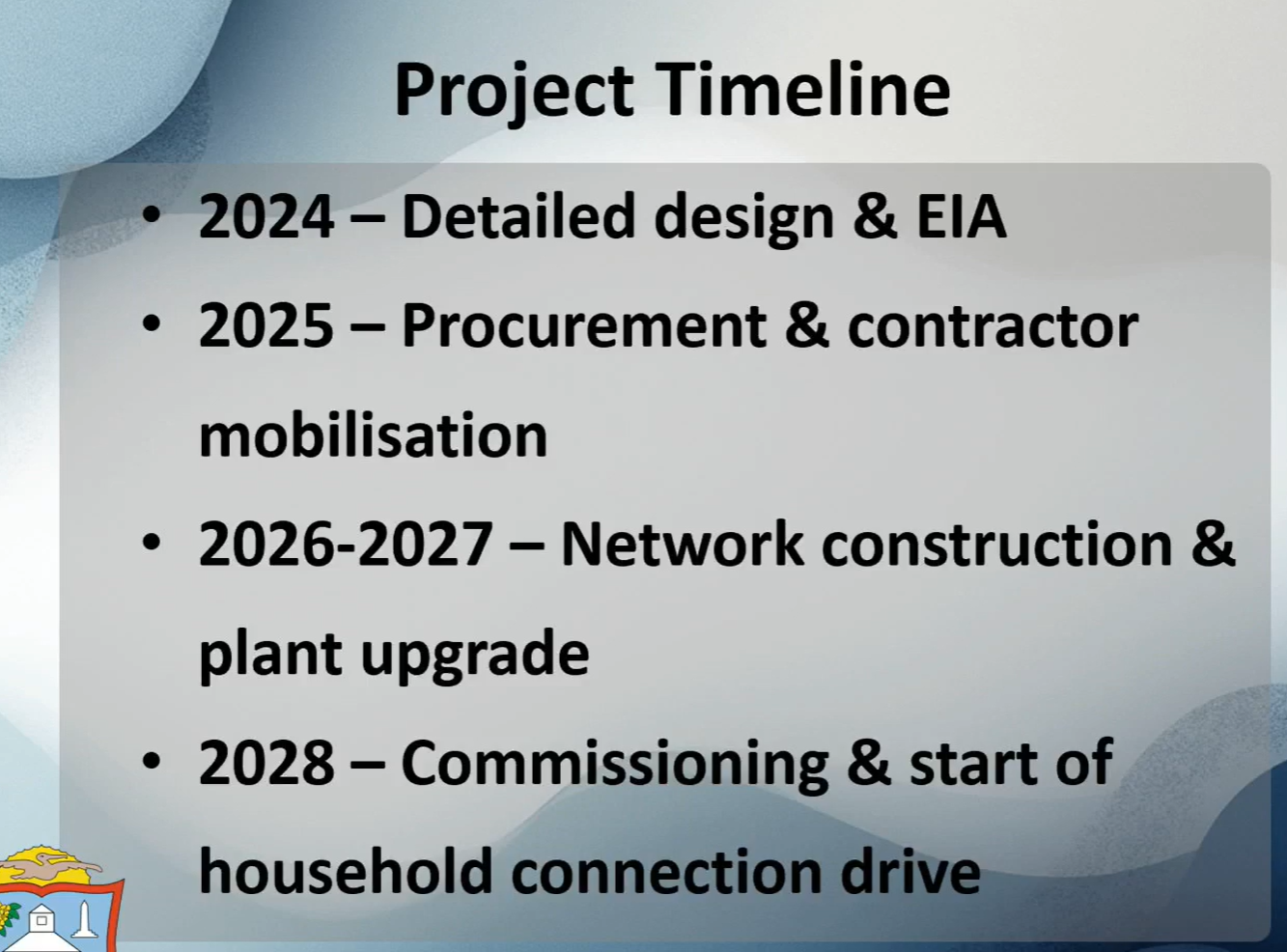
According to the project timeline, 2024 is earmarked for detailed design work and the Environmental Impact Assessment, followed in 2025 by procurement and contractor mobilization. Network construction in Cul-de-Sac and the upgrade of Illidge Road treatment plant are scheduled for 2026 and 2027, with commissioning of the new system and the start of the household connection drive targeted for 2028.
Looking beyond Cul-de-Sac, Minister Gumbs also announced that Government has signed an agreement under the 11th European Development Fund, in collaboration with the United Nations Office for Project Services (UNOPS), to extend sewer connections in Dutch Quarter. This includes finalizing the lifting station and connecting households that were not fully linked in earlier projects. These works will run in parallel with the Cul-de-Sac activities, and remaining works in Cole Bay, Simpson Bay and other areas will continue, with the long-term goal of achieving 100 percent safely managed sanitation early in the 2030s.
Technical designs presented at the consultation show that the proposed sewer network in Cul-de-Sac is planned to cover existing developed areas and allow for future expansion of built-up zones and population growth, within the project’s design horizon. The concept network, which remains subject to adjustment based on detailed design and feedback, consists of approximately 19 kilometers of PVC sewer pipes with diameters between 200 and 315 millimeters and is designed for about 2,830 new household connections in the basin.
At the Illidge Road WWTP, the project will build on the current design capacity of 38,759 population equivalent and hydraulic capacity of 4,715 cubic meters per day on a site of about 1.12 hectares. Today, the plant receives an average combined inflow of 1,743 cubic meters per day of municipal wastewater and septic sludge. On average, 55 septic trucks per day discharge at the plant, representing roughly 20 to 30 percent of the total influent, while about 15 trucks per month deliver sludge to the landfill.
The future design will allow the WWTP to treat wastewater from approximately 27,726 equivalent inhabitants in 2030, 33,345 in 2040 and 38,299 in 2055, with corresponding average flows of 4,613, 5,580 and 6,451 cubic meters per day respectively. The facility will remain within its current 1.12-hectare footprint. As more households connect to the sewer network, the number of septic truck discharges is projected to fall to about 17 per day. Sludge transported to the landfill is expected to equal roughly 22 truck movements per month, with trucks covered and sludge properly dehydrated. Overall, daily truck movements associated with plant operation are expected to drop from about 70 to around 39, reducing noise, odor and traffic impacts around the facility.
Construction aspects were also outlined. Works related to the WWTP upgrade will be limited to the existing facility, with the construction site contained inside the plant boundaries. The main activities will include land movement, civil works such as new concrete structures, and trenches for the hydraulic system. Construction waste will be properly managed, activities will take place only during daytime working hours, and a formal Community Grievance Redress Mechanism will be implemented so residents and businesses can register concerns and seek responses.
For Cul-de-Sac, the Minister acknowledged that the area is already one of the island’s most congested corridors, with thousands of residents, multiple schools and commercial activity. The project team and the Ministry of Justice will work together on traffic and safety plans, including possible alternative routes and strict scheduling of works, to manage nuisance during the 2026–2027 construction period. The construction phase for the WWTP upgrade itself is expected to last no more than 12 months.
The project team highlighted a range of benefits once the new infrastructure and plant upgrades are commissioned, currently targeted for 2028. These include reduced sewer overflows into surface waters, better sludge management, improved odor control, and higher quality treated effluent. The upgrade will also strengthen resilience and increase treatment capacity for households in Cul-de-Sac, Lower Prince’s Quarter and Philipsburg. Health impacts are expected to improve through fewer waterborne diseases, while cleaner bays and ponds will protect tourism revenue, reduce beach closure risks and improve the day-to-day experience of residents who swim and recreate in Great Bay and surrounding waters. The project is also expected to create an estimated 120 construction jobs and between 10 and 15 long-term positions for operation and management.
Institutional and financial reforms are part of SWMP. The Minister explained that Government is working on establishing a dedicated waste authority to manage wastewater and solid waste services in the future. He signaled that a sustainable financial framework is needed for operations and maintenance, including household contributions. While acknowledging that paying more is never popular, he underlined that the real cost of inaction is sewage on streets, in drains and on beaches.
Minister Gumbs called on residents to play an active role in the success of the project. He urged households to connect early once sewer mains reach their streets, so that as many connections as possible can be funded within the project budget. He reminded the public to keep oils, fats and grease out of drains and to report illegal discharges, and he encouraged persons not to see this as “snitching” but as being a good neighbor. Public feedback can be submitted via the QR code and contact channels shared during the consultation and will be used to refine designs and mitigation plans.
In closing, the Minister framed SWMP as a social contract between government and the community. “Wastewater management is community engagement management,” he said, stressing that cleaner water and a stronger St. Maarten depend on both new infrastructure and a change in collective behavior.
Join Our Community Today
Subscribe to our mailing list to be the first to receive
breaking news, updates, and more.