.jpg)



WASHINGTON--Venezuelan President Nicolás Maduro was taken into custody and flown out of the country after a major U.S. strike hit Caracas, a development that immediately throws Venezuela’s political future into question and refocuses attention on what may be the country’s most consequential asset, its oil.
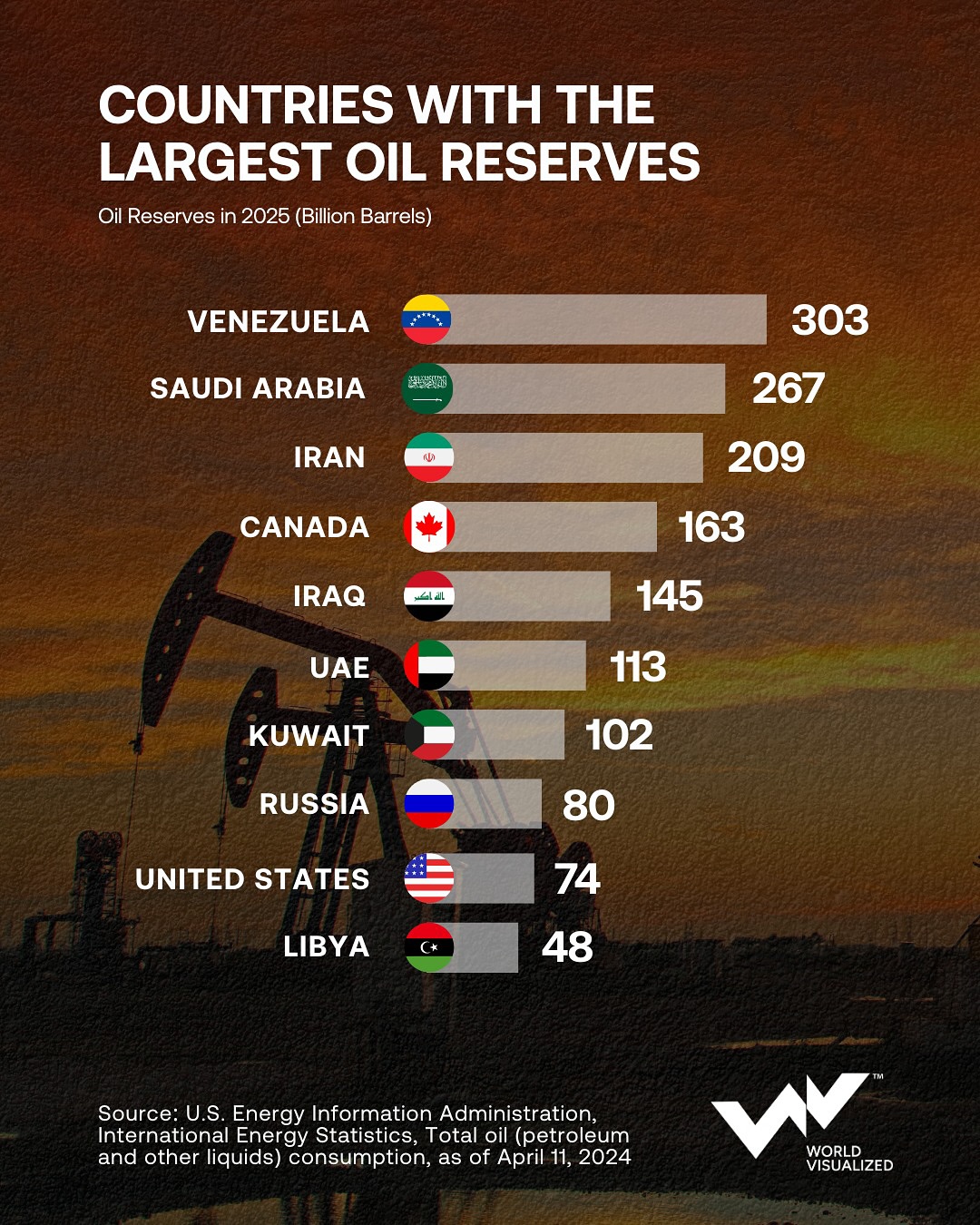
Venezuela holds an estimated 303 billion barrels of crude, roughly one-fifth of global reserves, according to the U.S. Energy Information Administration. Whatever comes next in Caracas, control and direction of that resource base will weigh heavily on the country’s trajectory and on how international markets assess risk.
Because oil futures do not trade over the weekend, the immediate price impact is uncertain and will largely depend on how the next few days unfold. Maduro’s socialist government has long been seen as hostile to the global oil industry, and years of mismanagement and underinvestment have left production and infrastructure weakened. In the near term, the critical question is whether a post-Maduro leadership keeps tight state control over a deteriorated sector or moves toward policies that invite investment and rebuild capacity with a more market-friendly approach.
“For oil, this has the potential for a historic event,” said Phil Flynn, senior market analyst at the Price Futures Group, arguing that the Maduro and Chávez eras severely damaged Venezuela’s oil industry.
U.S. Secretary of State Marco Rubio said the U.S. action had concluded after Maduro was captured. If Venezuelan Vice President Delcy Rodríguez, a senior figure in the political movement that has governed since 1999, takes over, a sharp policy shift may not be immediate.
Maduro’s removal could also create a power vacuum, leaving succession and legitimacy uncertain. The United States recognizes exiled opposition figure Edmundo González as Venezuela’s rightful president, backed by María Corina Machado, the 2025 Nobel Peace Prize recipient.
“The next 24 to 48 hours will be huge,” Flynn said, noting markets will closely watch whether the Venezuelan military backs the opposition or whether the country moves toward deeper instability. He warned that signs of internal conflict or civil war would likely push sentiment in the opposite direction.
Venezuela’s oil reserves, huge on paper, limited in current output
Venezuela has the world’s largest proven oil reserves, but its production is far below its potential. Output is around 1 million barrels per day, roughly 0.8% of global production, a level far below what the country produced before Maduro took office in 2013 and dramatically below the volumes pumped before the socialist movement came to power.
Sanctions and an extended economic crisis accelerated the decline, but so did chronic lack of investment and maintenance, according to the EIA. Years of deterioration have left Venezuela’s production capacity severely reduced.
That is one reason a sudden disruption to Venezuelan supply may not send oil and gasoline prices spiraling. The country’s current output is not large enough to dominate the global balance the way it might have in earlier decades.
Oil prices have also been relatively contained amid concerns about oversupply. OPEC has increased production, while demand has softened as the global economy continues to absorb inflation and affordability pressures after the post-pandemic price shock.
U.S. oil briefly moved above $60 a barrel when the Trump administration began seizing oil from Venezuelan vessels, but later slipped back to around $57, suggesting that even if investors view the strike as negative for supply, the price response may be limited.
“Psychologically it might give it a bit of a boost, but Venezuela has oil that can be easily replaced by a combination of global producers,” Flynn said.
The bigger question: could Venezuela’s oil become relevant again
Venezuela’s reserves are largely heavy, sour crude, which is harder to produce and requires specialized refining. International oil companies have the technical ability to extract and process it, but legal and political barriers have restricted much of that engagement.
The U.S., the world’s largest oil producer, largely produces light, sweet crude, which is well suited to gasoline but less useful for some refined products. Heavy crude like Venezuela’s is important for outputs such as diesel, asphalt, and fuels used in industrial equipment. Diesel, in particular, remains tight in many markets, a situation partly tied to restrictions on Venezuelan supply.
A reopening of Venezuelan production could be especially valuable to the United States. Venezuela is close, and its heavy crude tends to be cheaper due to its thick, difficult nature and the refining intensity required. Many U.S. refineries were built to run efficiently on Venezuela’s heavy oil and perform better using it than when substituting lighter domestic crude, Flynn argued.
“If indeed this continues to go smoothly and U.S. companies are allowed to go back and rebuild the Venezuelan oil industry, it could be a game-changer for the global oil market,” Flynn said.
Join Our Community Today
Subscribe to our mailing list to be the first to receive
breaking news, updates, and more.